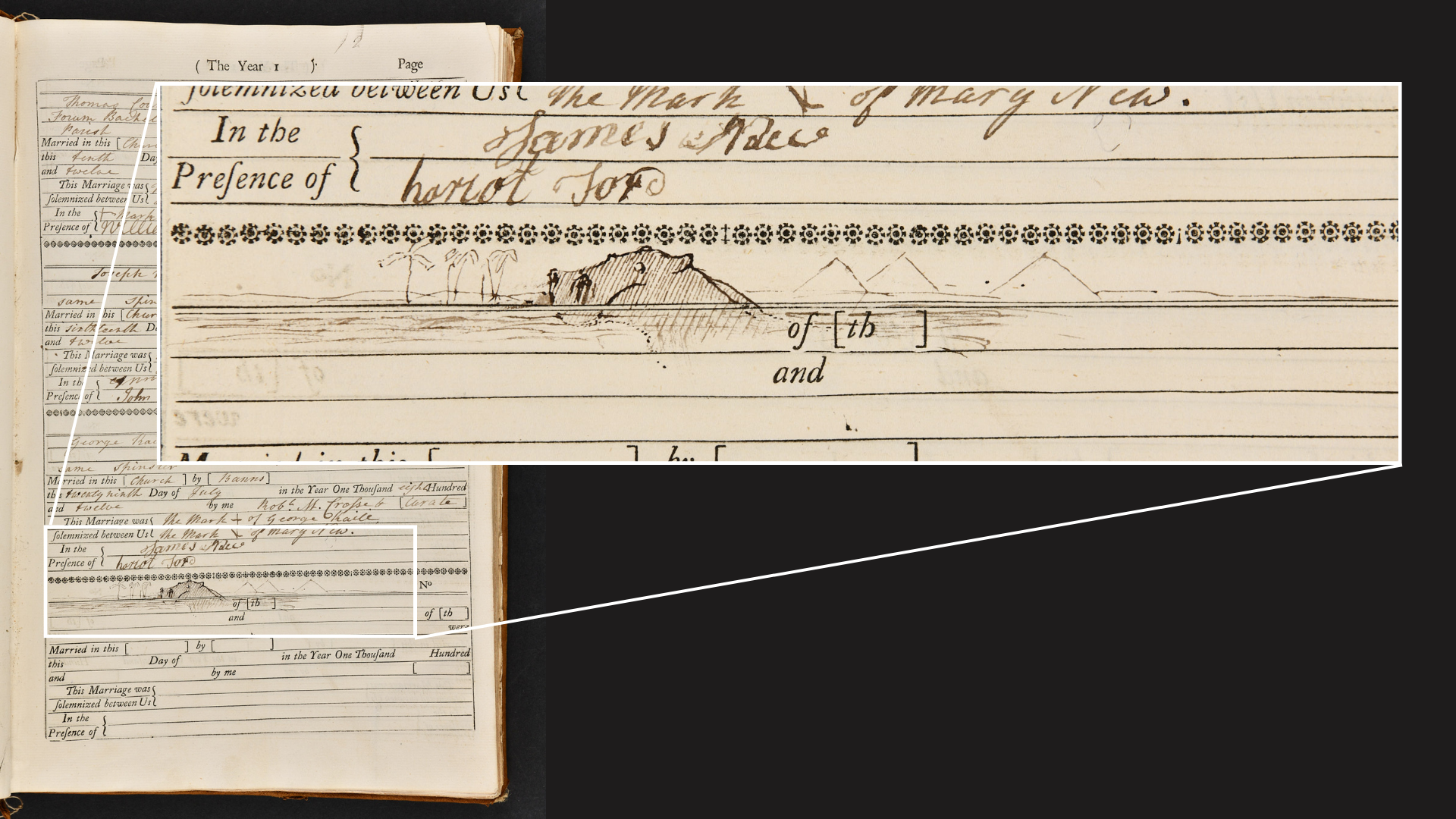
No one can resist doodling in the margins while sat in a dull meeting, and it seems this has been true for time immemorial. Here are some examples of sketches in parish records – some functional, but most are just for fun!
Sticker Book
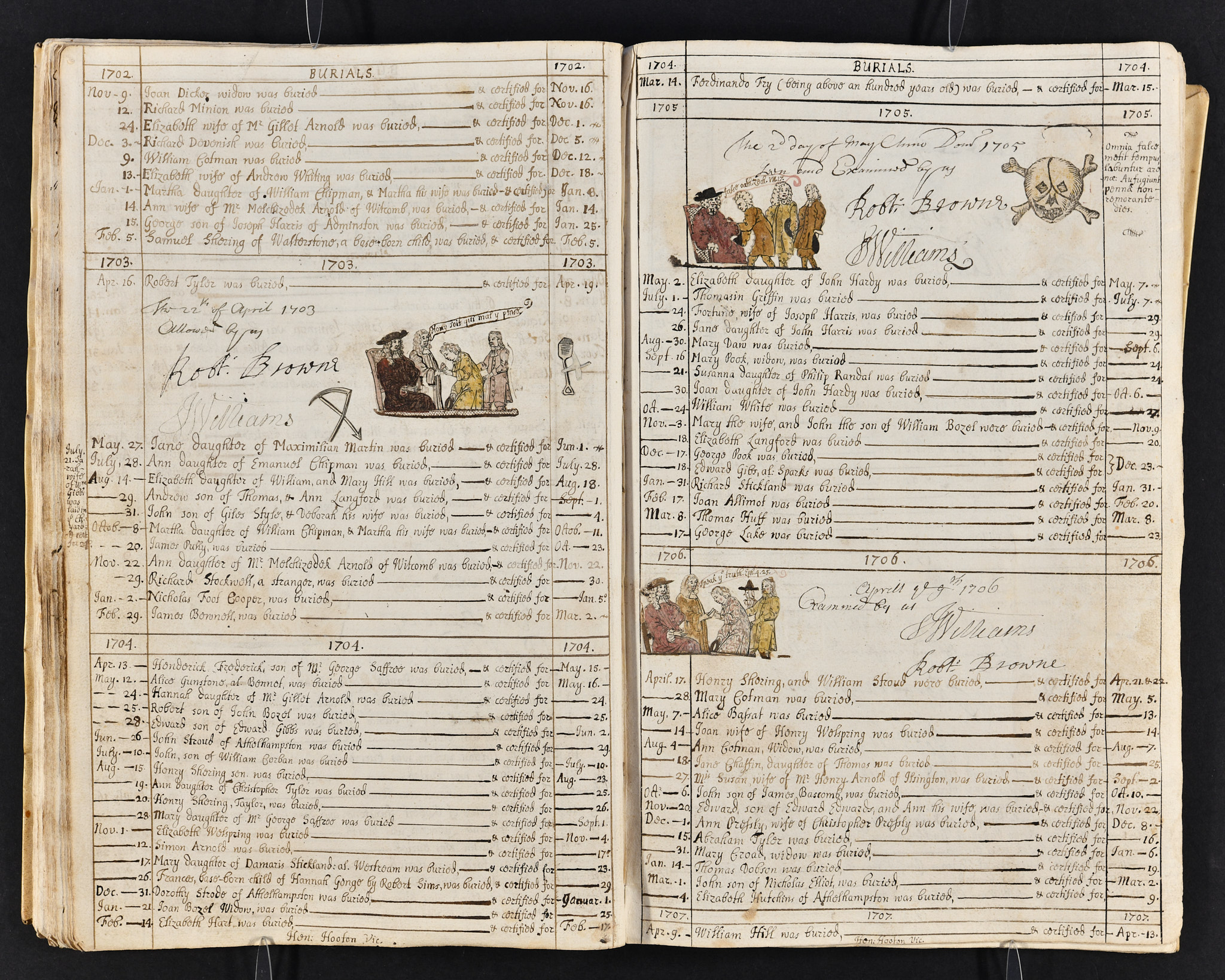
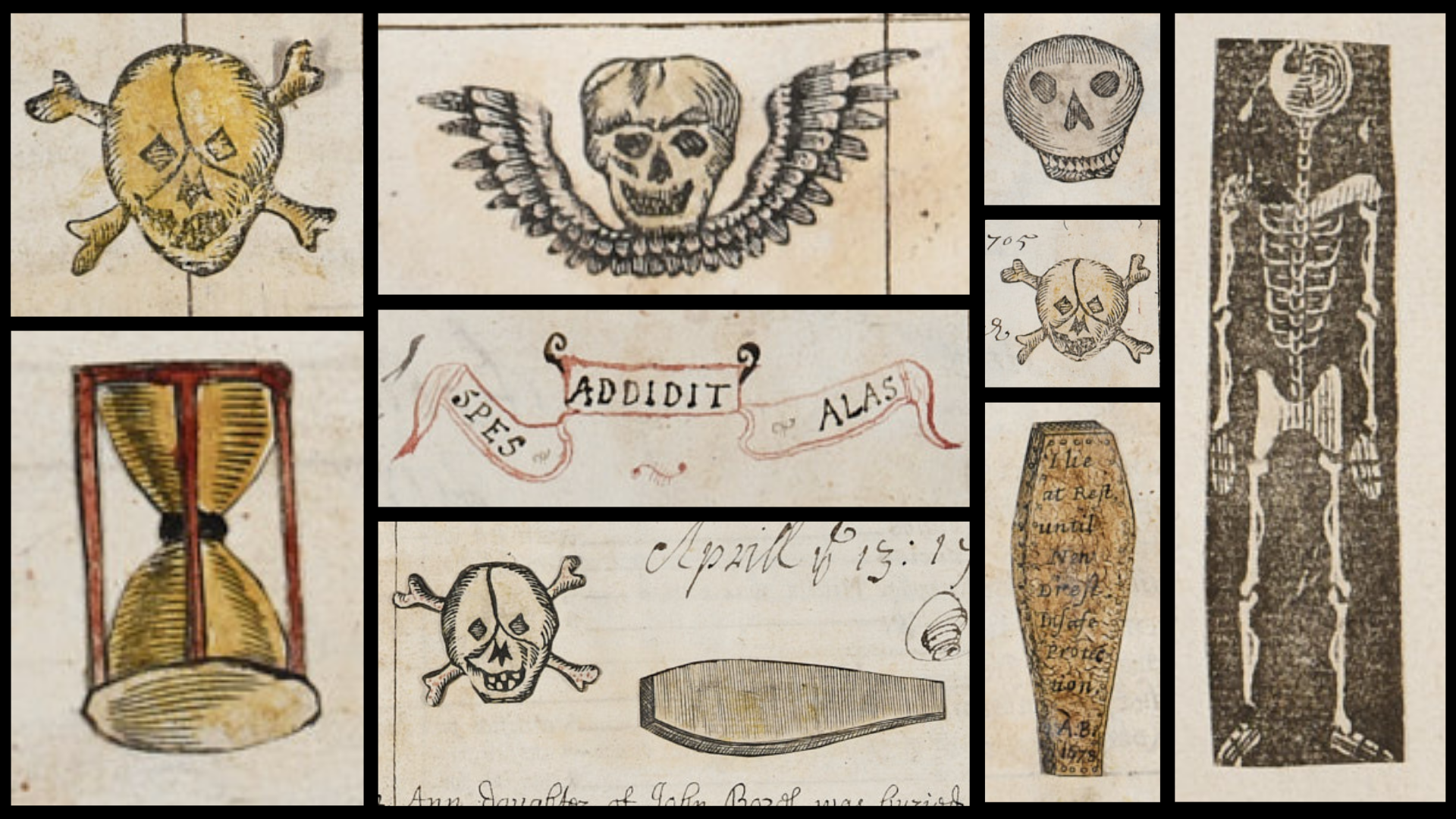
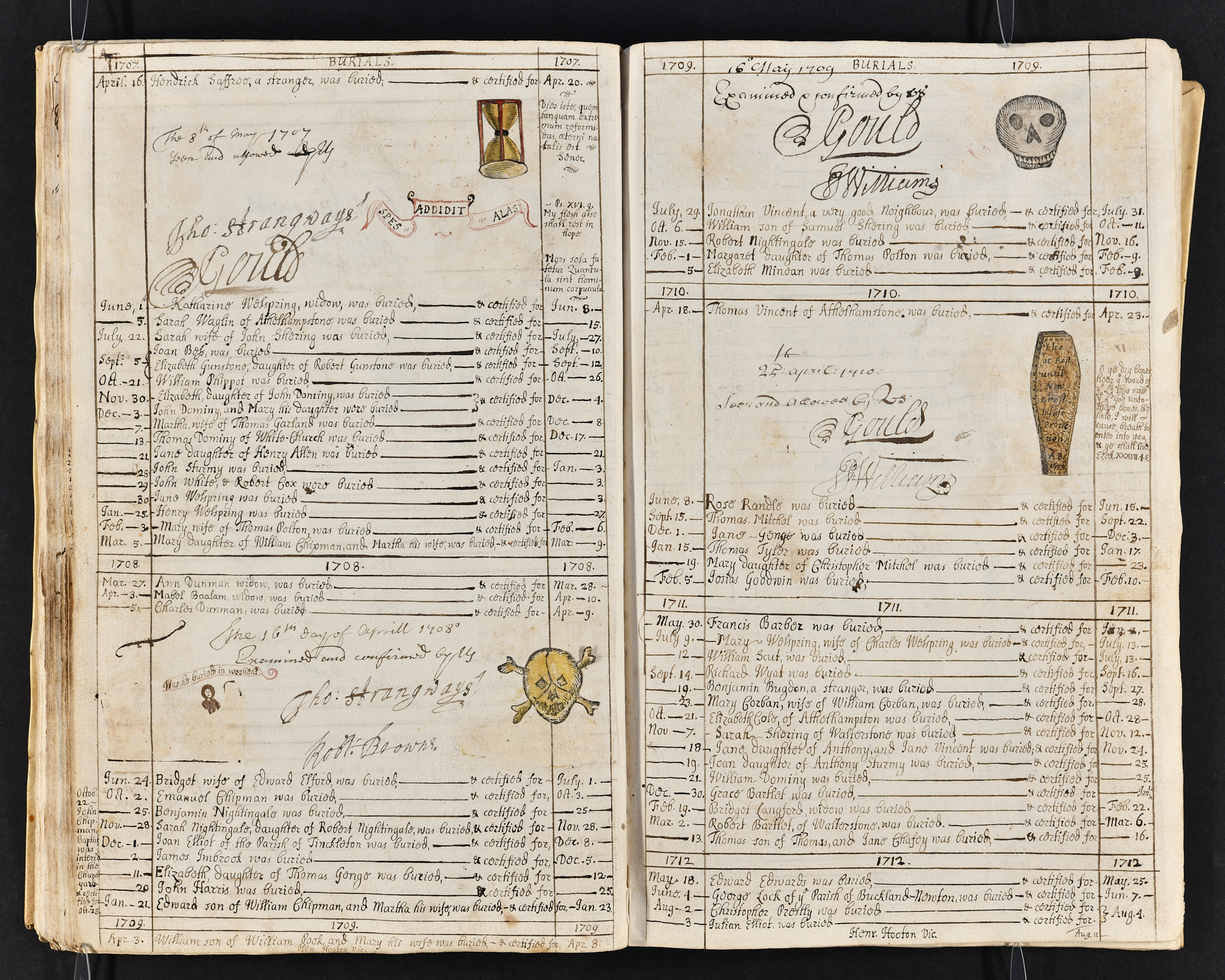
The fantastically morbid doodles in this parish register are in fact small cuttings which have been pasted in and coloured. They seem to be present from 1702 to 1716, though whether they were stuck in at the time or added later is unclear.
Most of the handwritten quotes appear to be from the Bible, such as “You shall not swear by my name falsely, saith ye Lord. Lev.19:12”, however one appears to be the motto of the Order of the Garter: “Honny soit qui mal y pense”, which translates to “shamed be (the person) who thinks evil of it”.
Another quote is particularly intriguing: “Was he buried in woollen?”. The Burying in Woollen Acts was brought in in 1667 and was technically in force until 1814, thought it had generally fallen out of favour by 1770. The act required that all dead had to be buried in pure woollen shrouds, except for plague victims and the destitute.
Donations Needed
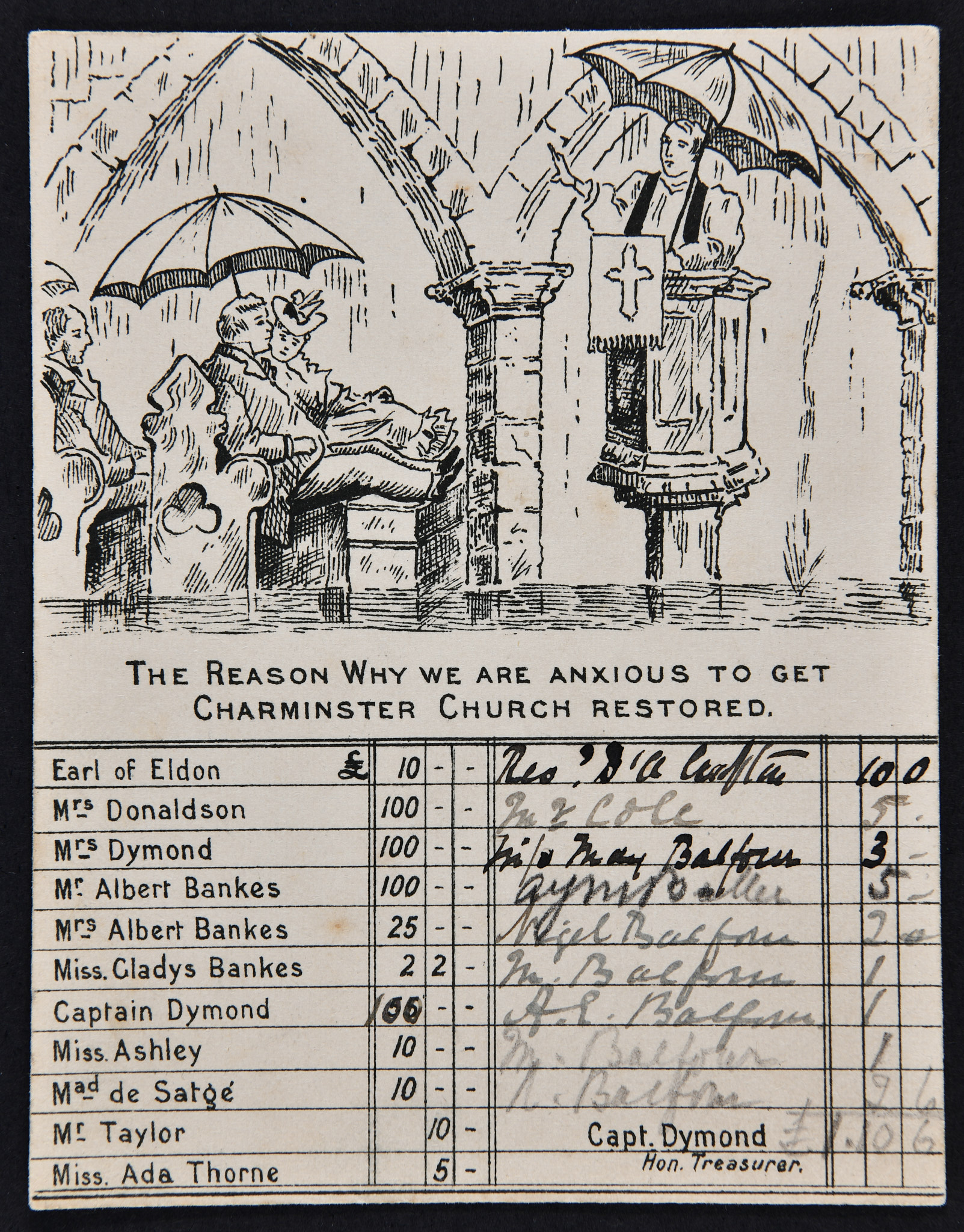
This little card was kept inside an account book for Charminster, 1890-1897. It features a charming sketch of the damp conditions inside St Mary’s Church, and records donations made or promised by members of the congregation to help restore the roof. This campaign was successful, and the roof was repaired in 1895 thanks to support from the community.
Death Identifiers
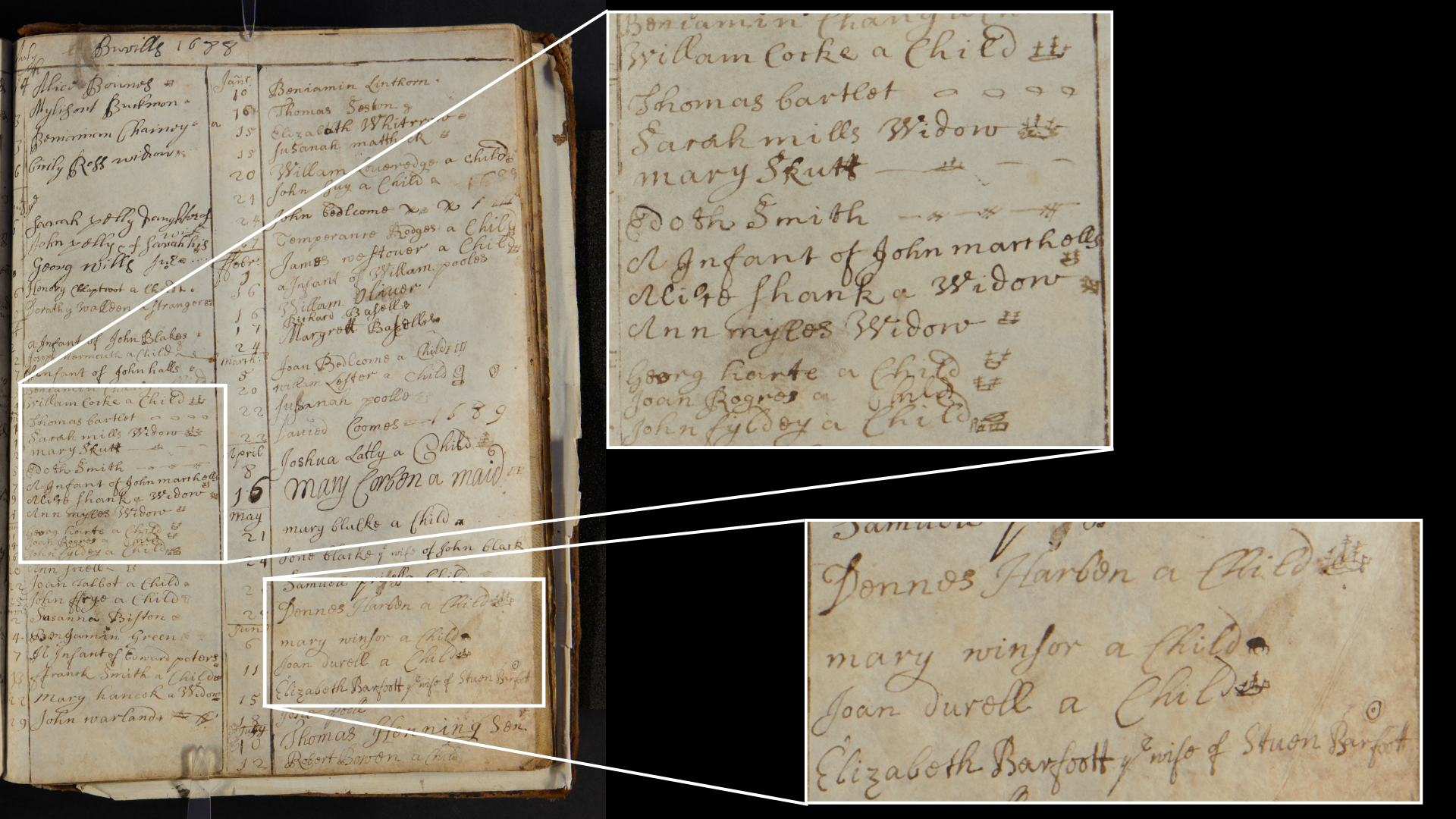
The sketches in this example can be hard to spot, but if you look closely at this burial register from Poole, you might notice tiny ships next to certain names. These symbols seem to identify people who died at sea and were brought into Poole onboard arriving ships. Because they are recorded in this register, we know that they were buried in Poole, regardless of where they were originally from.
Unflattering Caricatures?
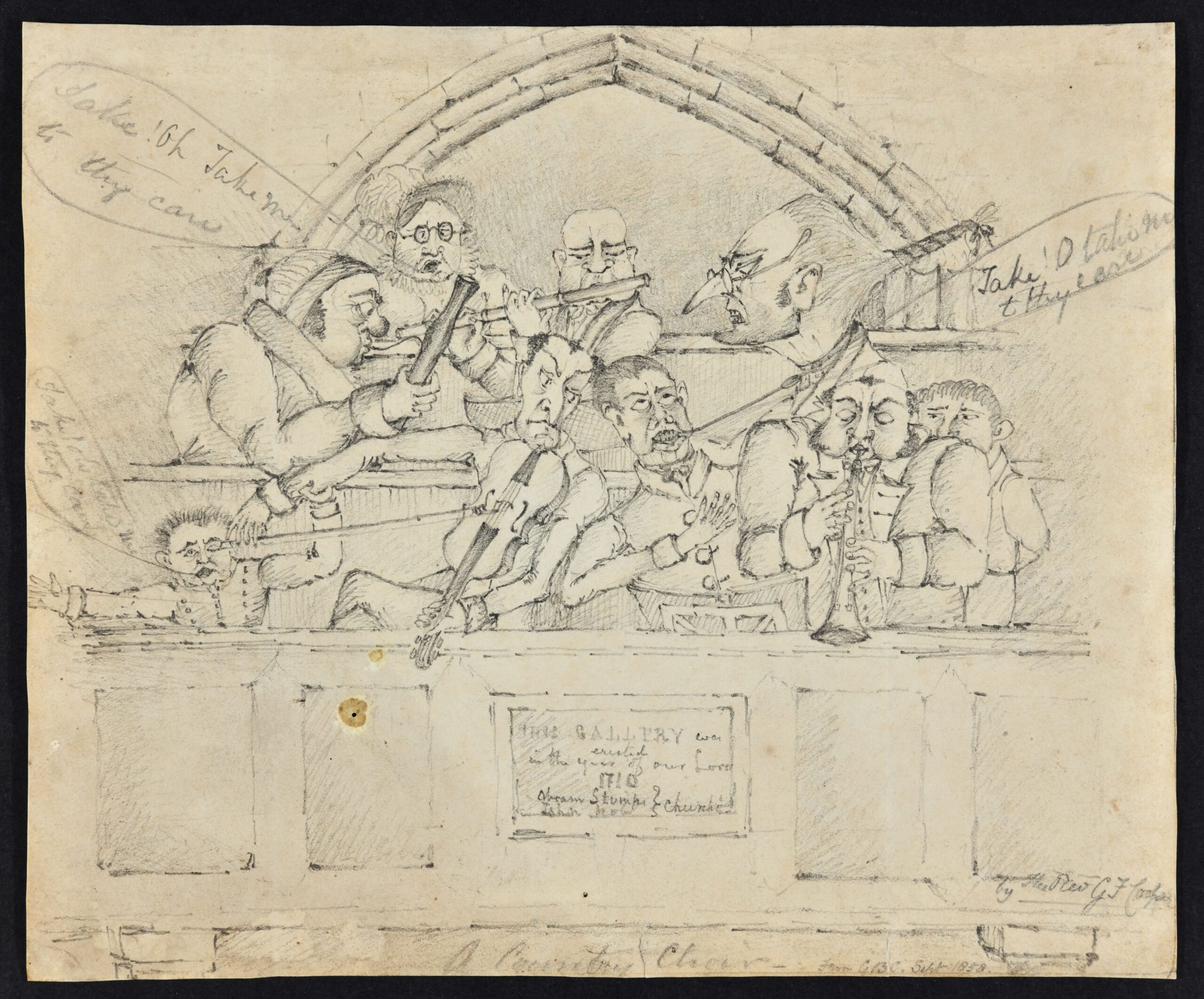
This sketch shows the Yetminster Church Band and Choir as it was in 1842. It was taken from a drawing by the Reverend G Fort Cooper, Curate of Yetminster for little over a decade. The band are performing west gallery music, or Gregorian psalmody, which was developed by rural communities who found congregational singing wasn’t quite hitting the mark anymore. Amateur choirs were established, and often some instruments were included. The tradition faded in the 19th century – changing tastes meant they were less popular, and the galleries they performed in were often removed during church restorations of the time, to be replaced by organs instead.
Travel Inspiration
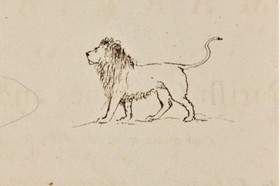
Lions, hippopotamus, and pyramids – oh my! In the rural Dorset village of Pimperne, you wouldn’t expect to find doodles of exotic sights like these, and yet here they are! Perhaps someone in the parish had recently returned from a thrilling African holiday? Or maybe the clerk had just finished an exciting novel on Egyptian adventures!