

Over a couple of weeks in November 2026 we undertook our now annual Collections Fortnight. This is a time we close to the public to work on our collections behind-the-scenes, addressing projects we otherwise would not be able to when we are open. This year was definitely one that was lacking in glamorous activities, but a lot of important work happened in our repositories which will stand us in good stead for the future.
Working in the Repositories: Locating the boxes
It seems simple to say, but knowing where everything is in our 8.5 miles of repository shelving is a key part of the job here at Dorset History Centre. Over the years we have built up a range of lists, some physical, some digital, to guide staff to the correct part of the building to find one of the hundreds of thousands of records we hold. Naturally, over time, things have shifted, some records have altered locations, some collections have been catalogued and are no longer where they once were, and many of the old location lists we may once have used have become outdated.
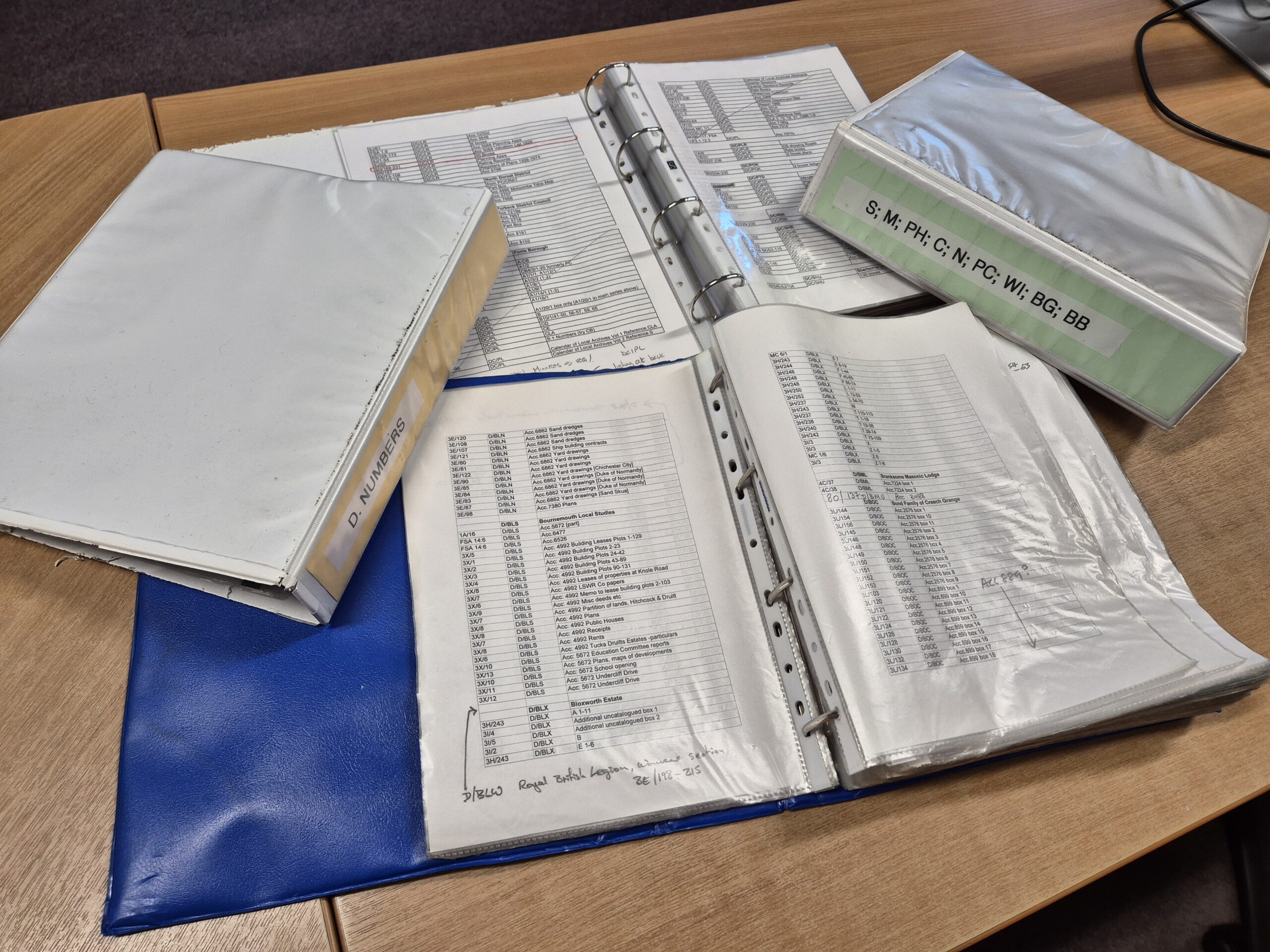
This therefore was the main thrust of work this year – updating locations in our cataloguing system Epexio and standardising things so that staff can more easily find records. Whilst this sounds an easy thing to do, it’s worth reiterating the nature of how things work in our repositories.
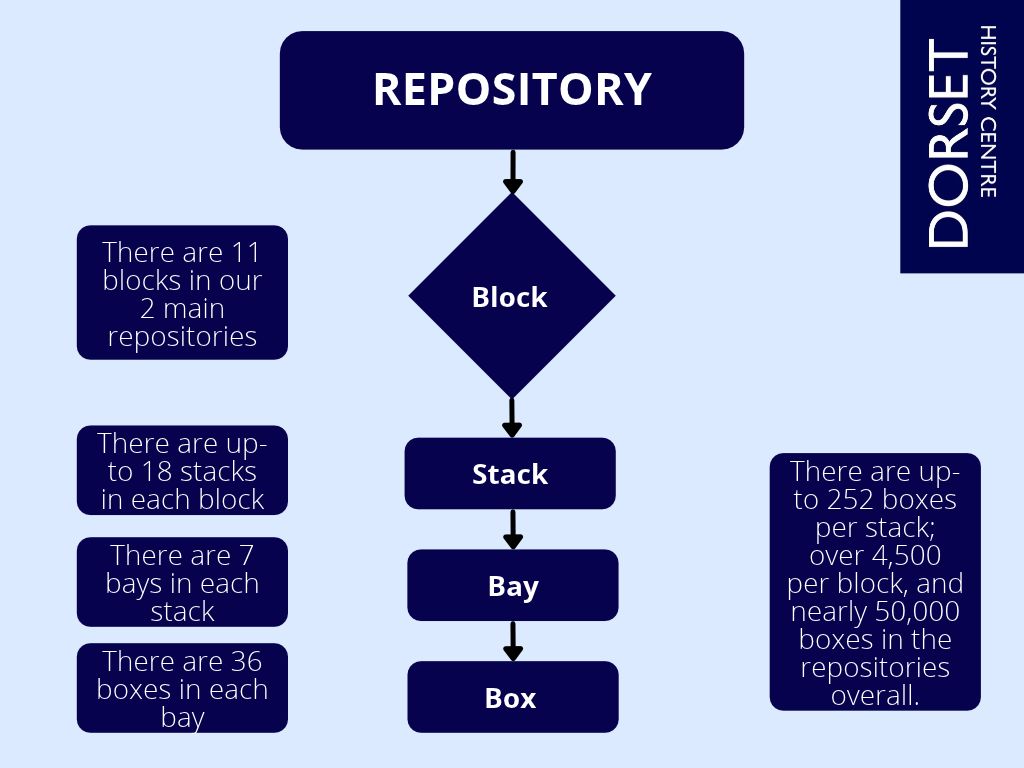
With nearly 50,000 boxes, and almost 450,000 records to check and update locations for, this was clearly going to be a big job!
To begin with, we have to ensure that the boxes are numbered appropriately. Each stack should have boxes 1-252 numbered correctly, something which wasn’t always the case. In some instances we have boxes which are 1.5x larger than a standard box, and in others 2x larger. These clearly affect numbering patterns. Additionally, historically some boxes have been numbered (for example) 10a and 10b, without a box 11 existing. Some boxes simply hadn’t been numbered at all. Other boxes had been numbered, but had been relocated at some point in the past, meaning that the box number didn’t correlate with where it was located. Standardising our approach to these issues, and renumbering boxes was the first part of the problem.
Once this was done we could then move on to updating our catalogue with the correct information. In some cases this was easy – the boxes were clearly labelled with their contents, and location information could therefore be associated with the records. In other cases it was a little more complex – some boxes of uncatalogued material might have lots of locations for example, or there might be one location for 100 uncatalogued boxes. In the main this was the crux of the work we undertook, moving through boxes in teams to record information accurately into our system and to update our knowledge of locations of records. It wasn’t glamourous, but it was important work.
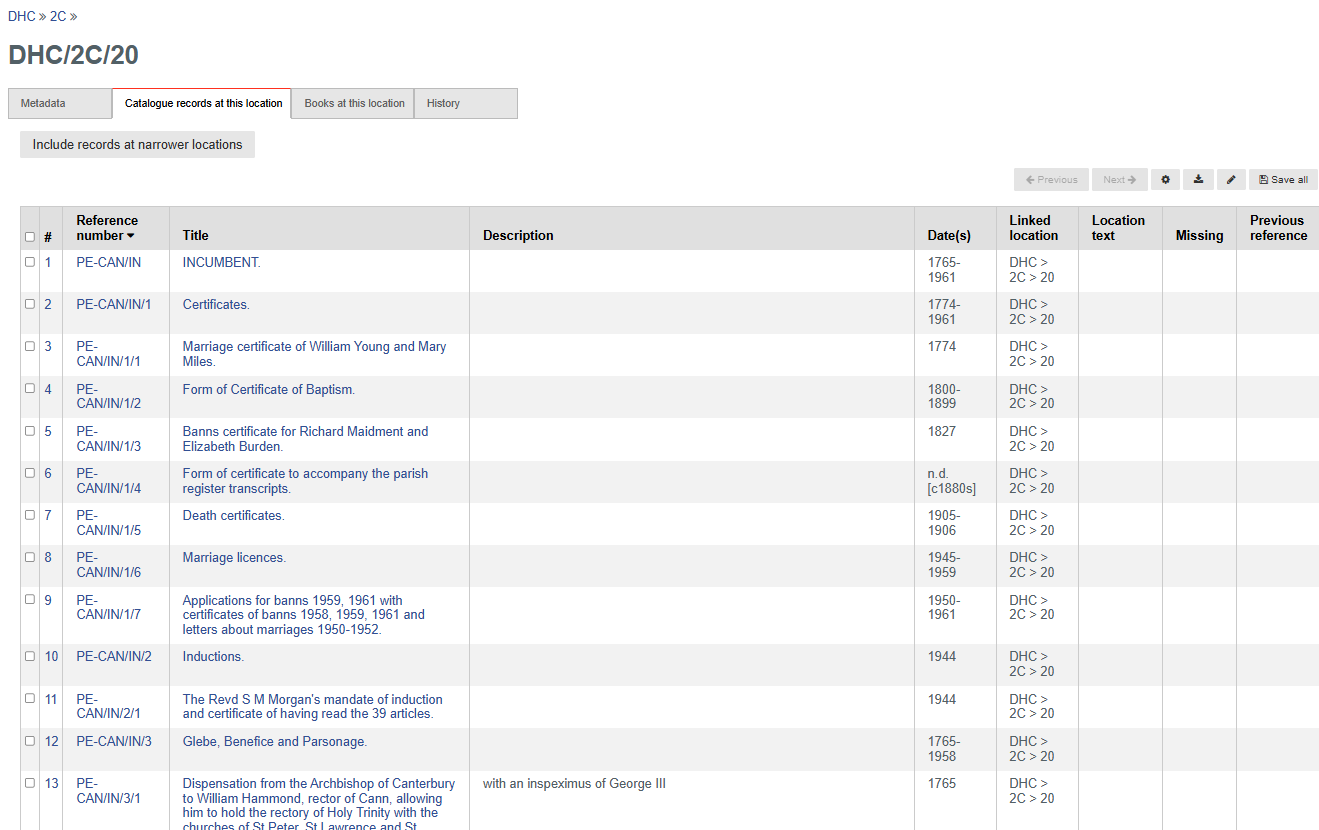
Of course, the question of ‘why’ is a relevant one, for which there are two main answers. The first is that the outcome would save staff time having to consult one or more historic lists which may or may not have been accurate in the first place. The second is to facilitate further long-term developments. We are hopeful that in time we can use Epexio to take public bookings, produce production slips and streamline our working patterns. However this legwork needs to be undertaken first before this can be a reality. The work we’ve done during this closure period helps move us closer to where we want to be in terms of how customers can order records to view in our searchroom.
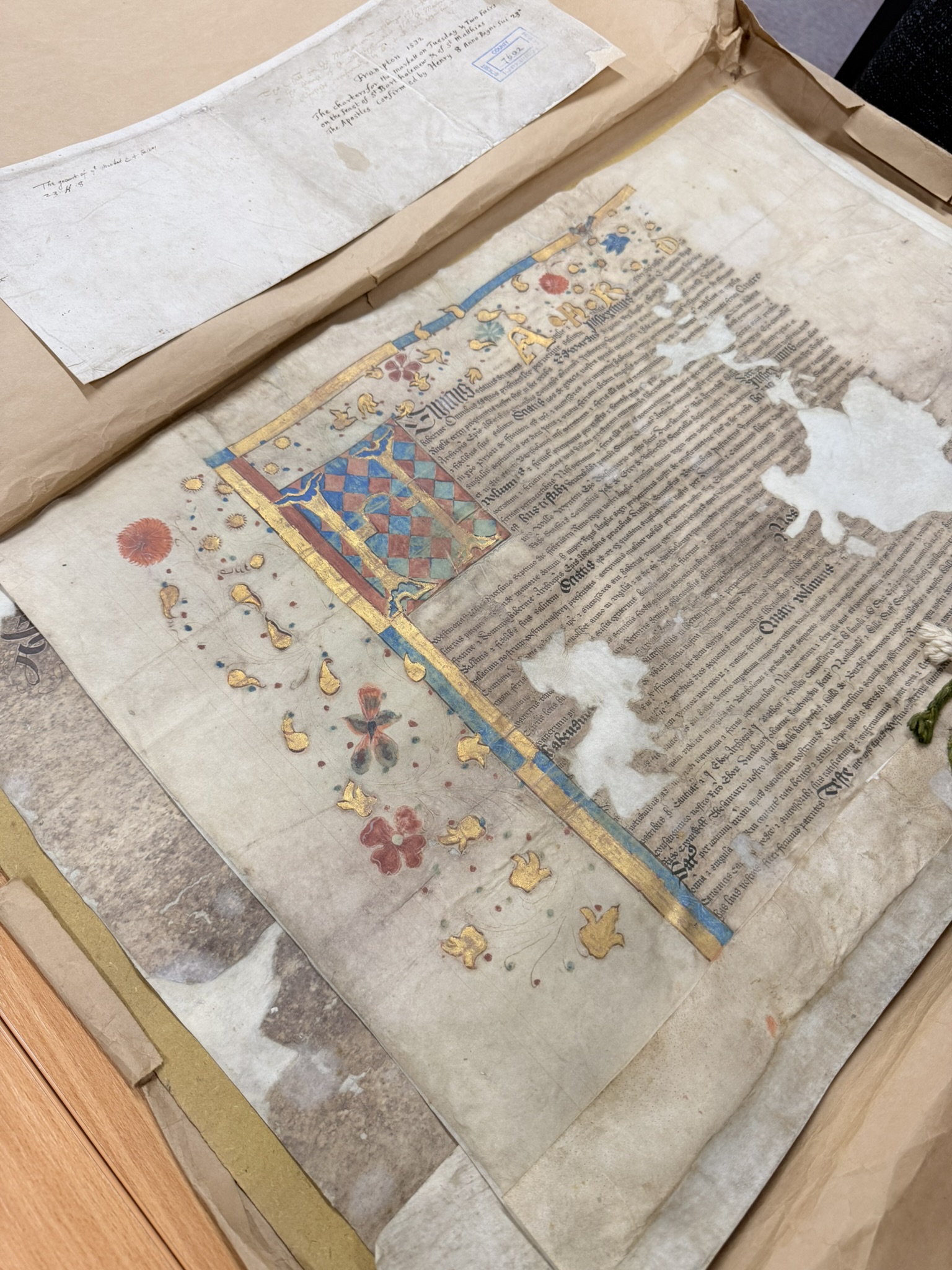
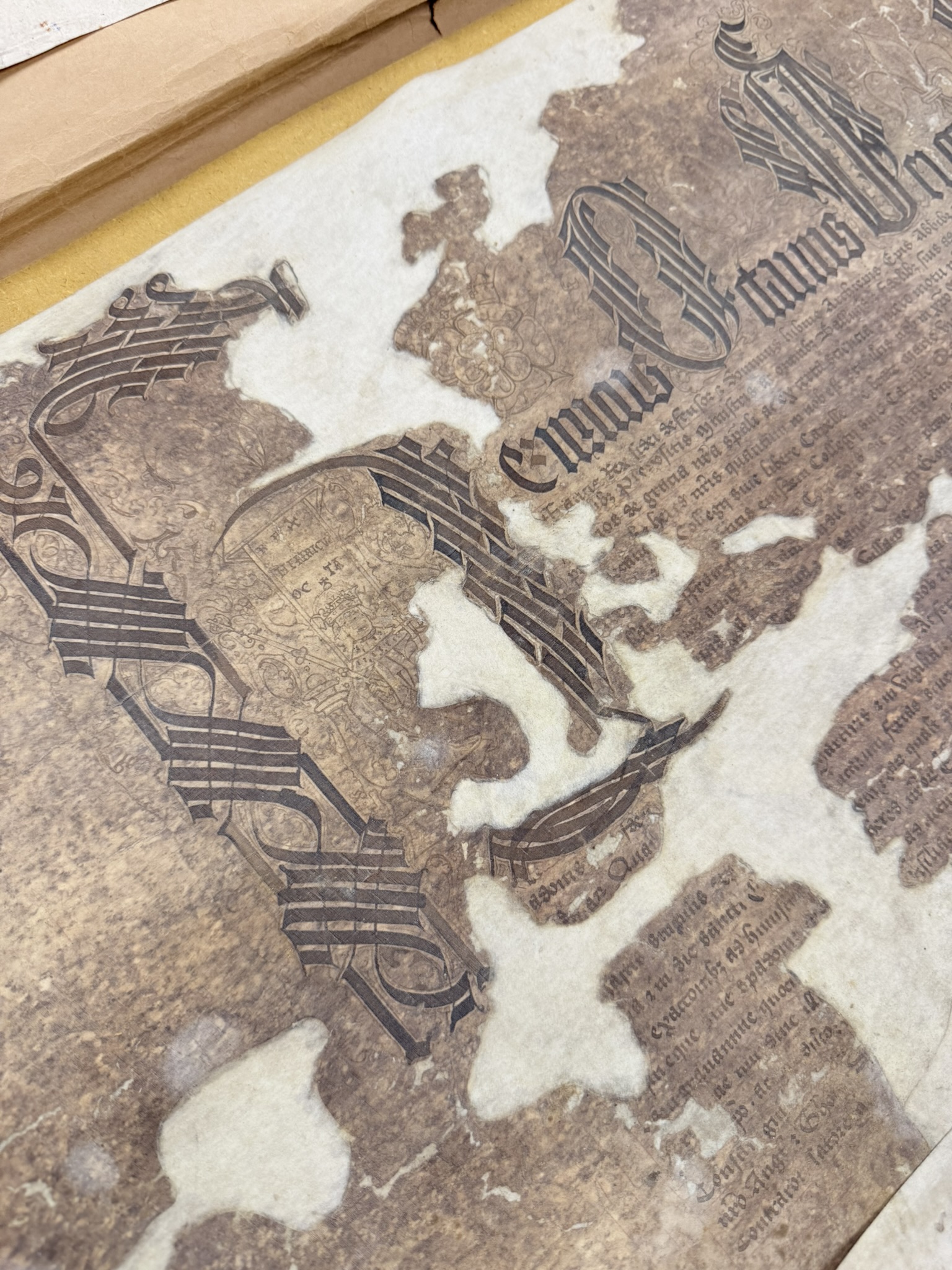
Through the course of this work, we did identify some interesting records, including these documents from the D-KAT collection (Kitson and Trotman of Beaminster, Solicitors) with some wonderful illuminated letters. These records have been previously conserved, but with clearly large parts missing!
Did you do anything else?
Yes!
Whilst the main thrust of what we did was tied into the location work, two of the team continued working on the audit of our film and sound archive, checking boxes for missing records and relocating things where appropriate.
We also worked on clearing something of our backlog of new accessions. In the past 12 months we have taken in over 170 accessions of material. Whilst we can process some of that quite quickly, we typically have a large backlog of accessions which need to be processed, sorted, added into the database, and repackaged accordingly.
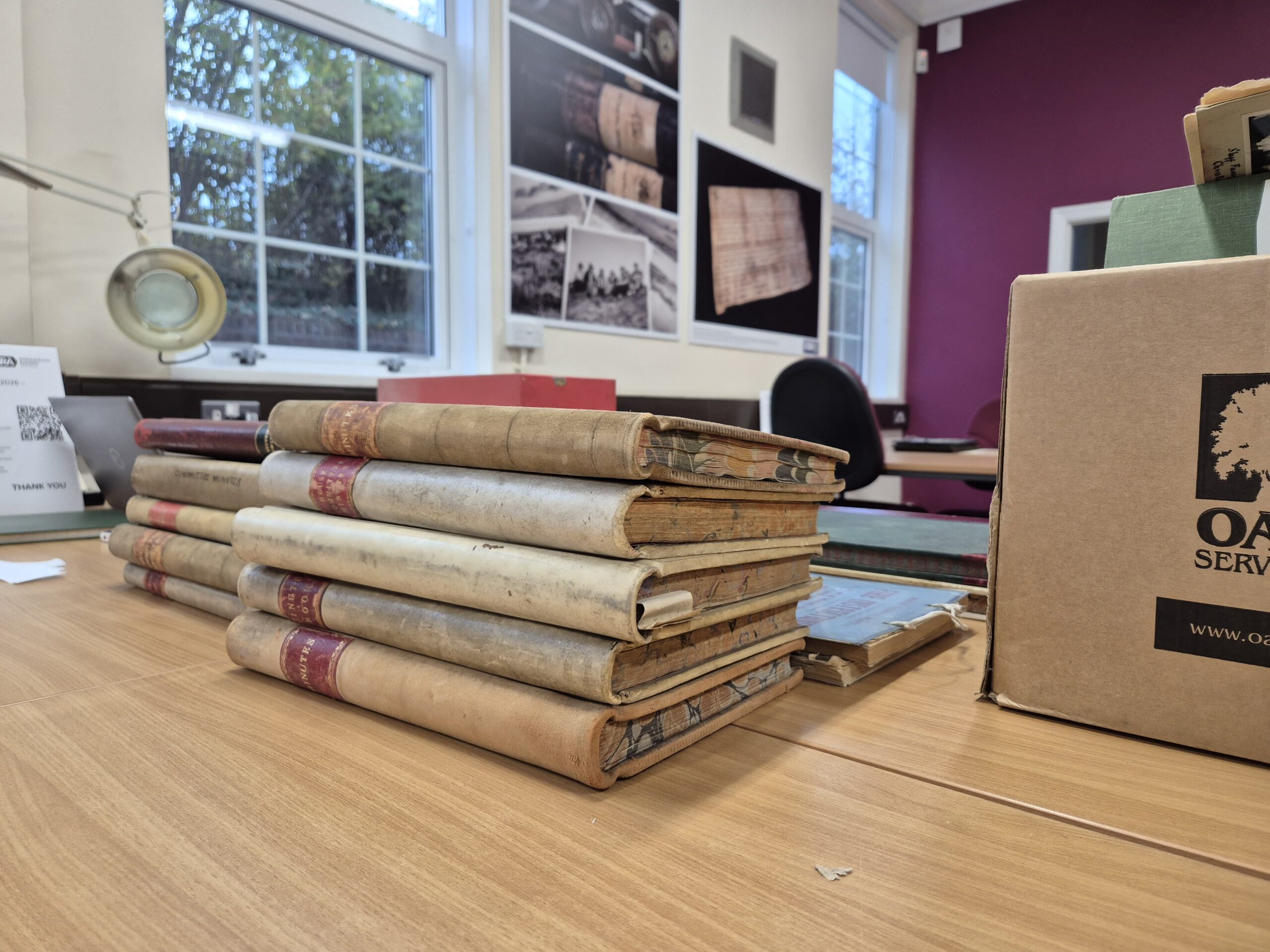
This can be a slow process however, depending on the nature of the accession in question. As we have done in previous years, you can find a list of the accessions that were worked on at the end of this blog.
During this process we came across a good example of what to not do with records! We found a sample of documents which had been firmly encased in warped plastic which had been stapled together:
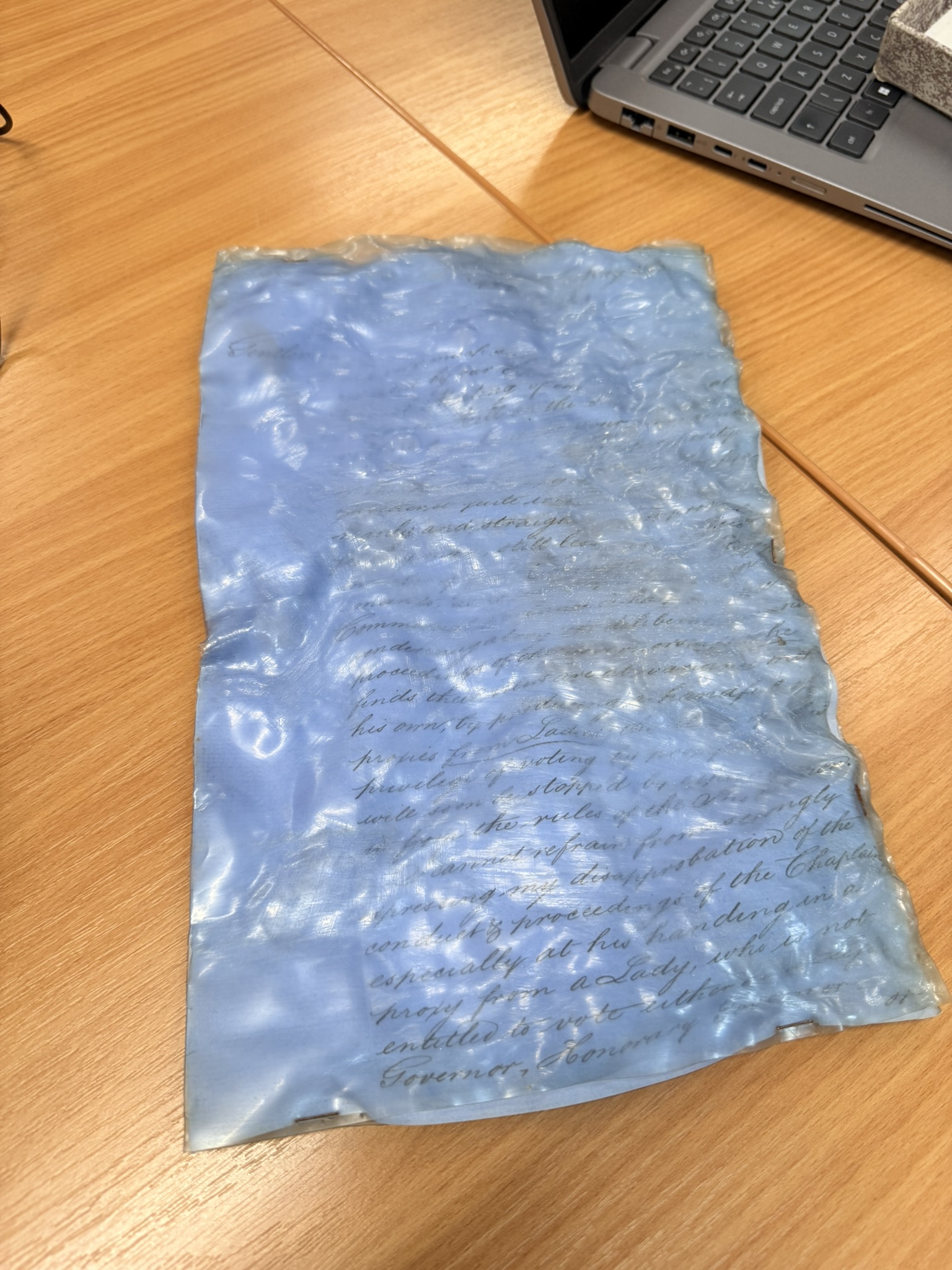
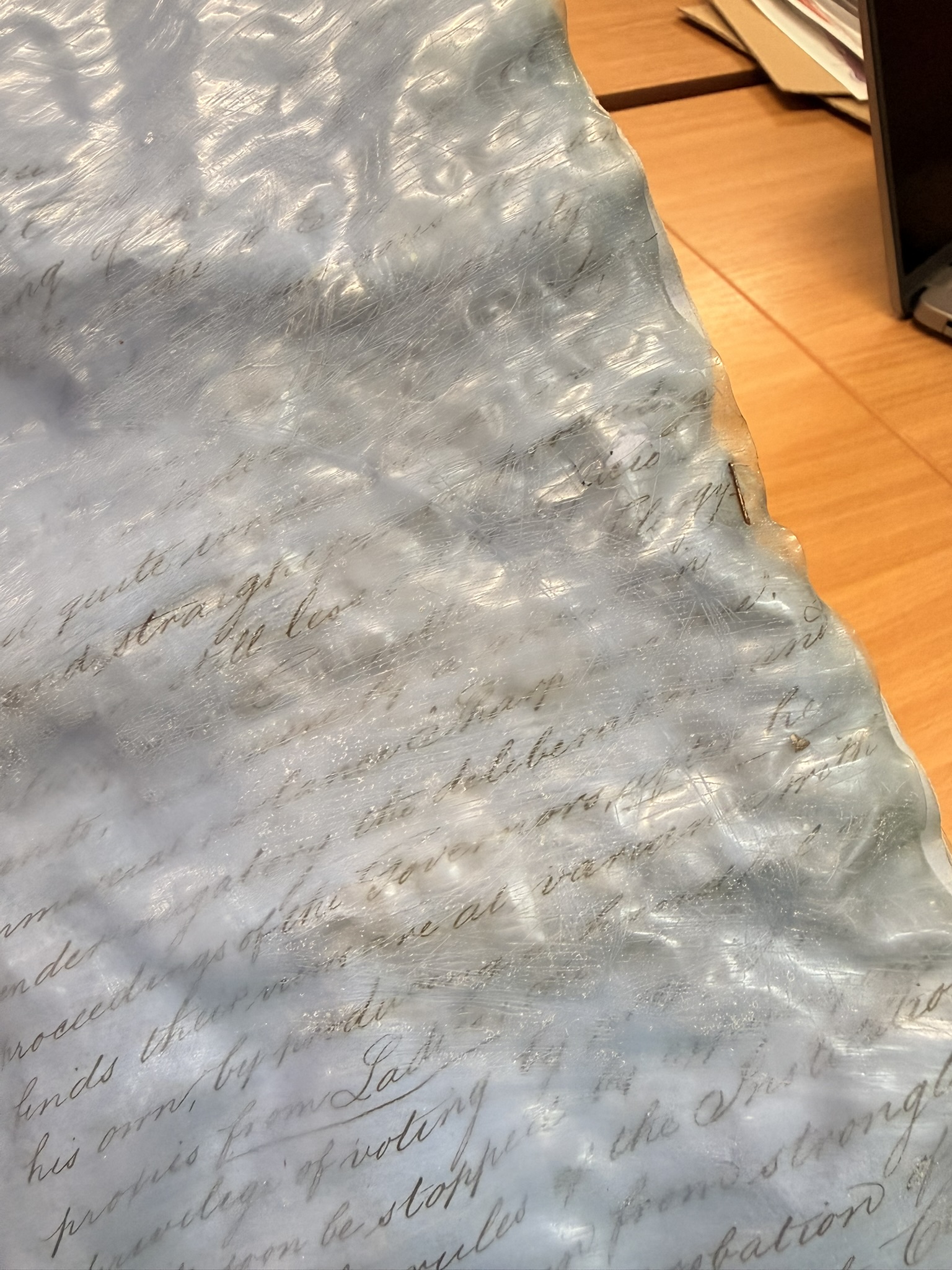
We don’t know why these records were encased in such a way, but this is quite high on the “please do not do this to original records” list! Plastics will damage and destroy original paper and inks, whilst staples (and indeed many metallic fastenings) typically rust over time and further damage records.
—
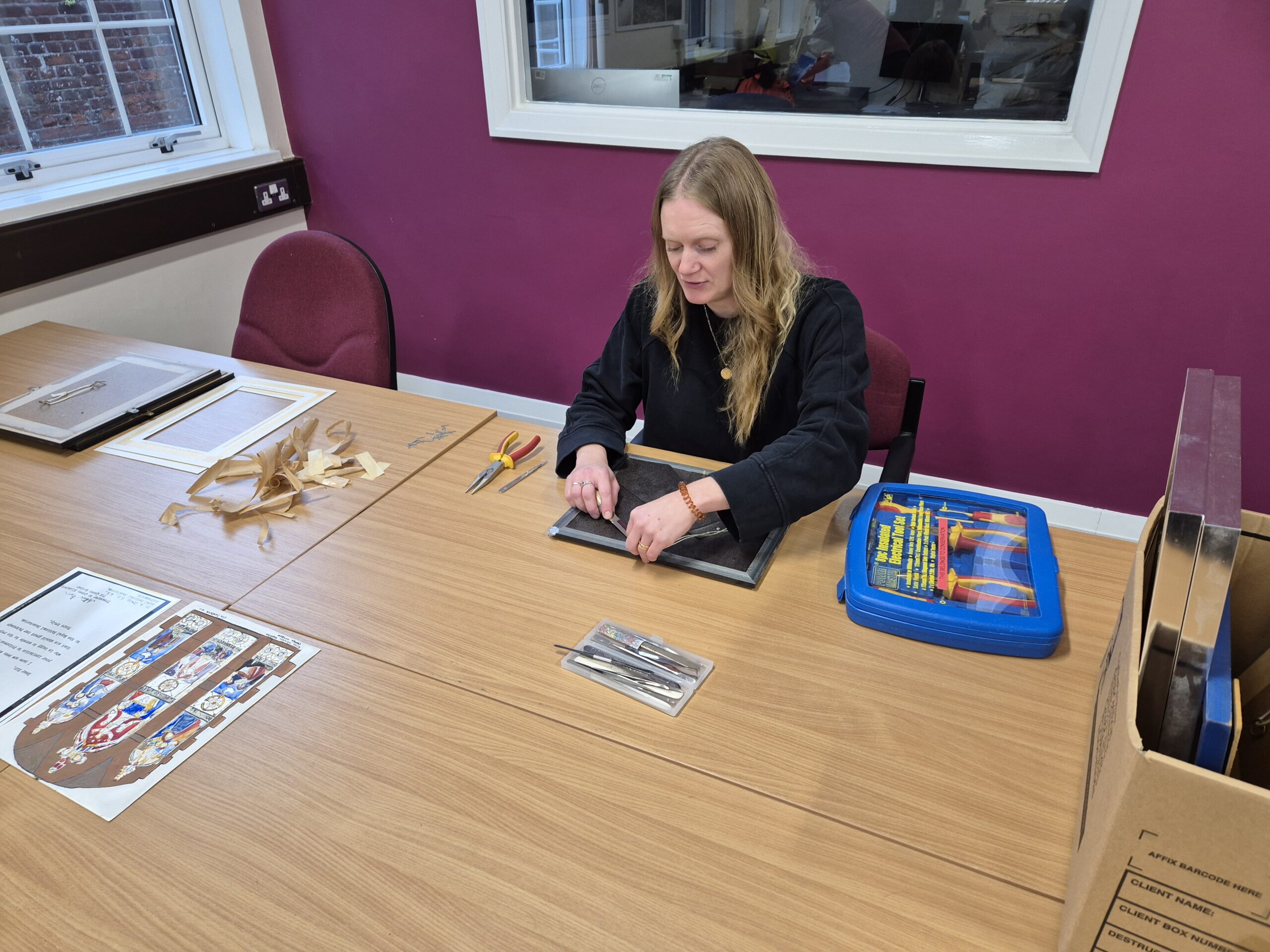
Our Conservator took some time during the fortnight to de-frame a collection of records which had recently come into us. Picture frames are not suitable for storing in our repositories (the metalwork can be rusty, and the frame will create an artificial environment which can trap pests or mould), and we therefore de-frame records which have come into us in this fashion, taking care to not damage those records in the process. Depending on the original framing process, this can be slow and tricky work.
—
We also spent some of the time rationalising and sorting out some of our local journals and magazines in our library.
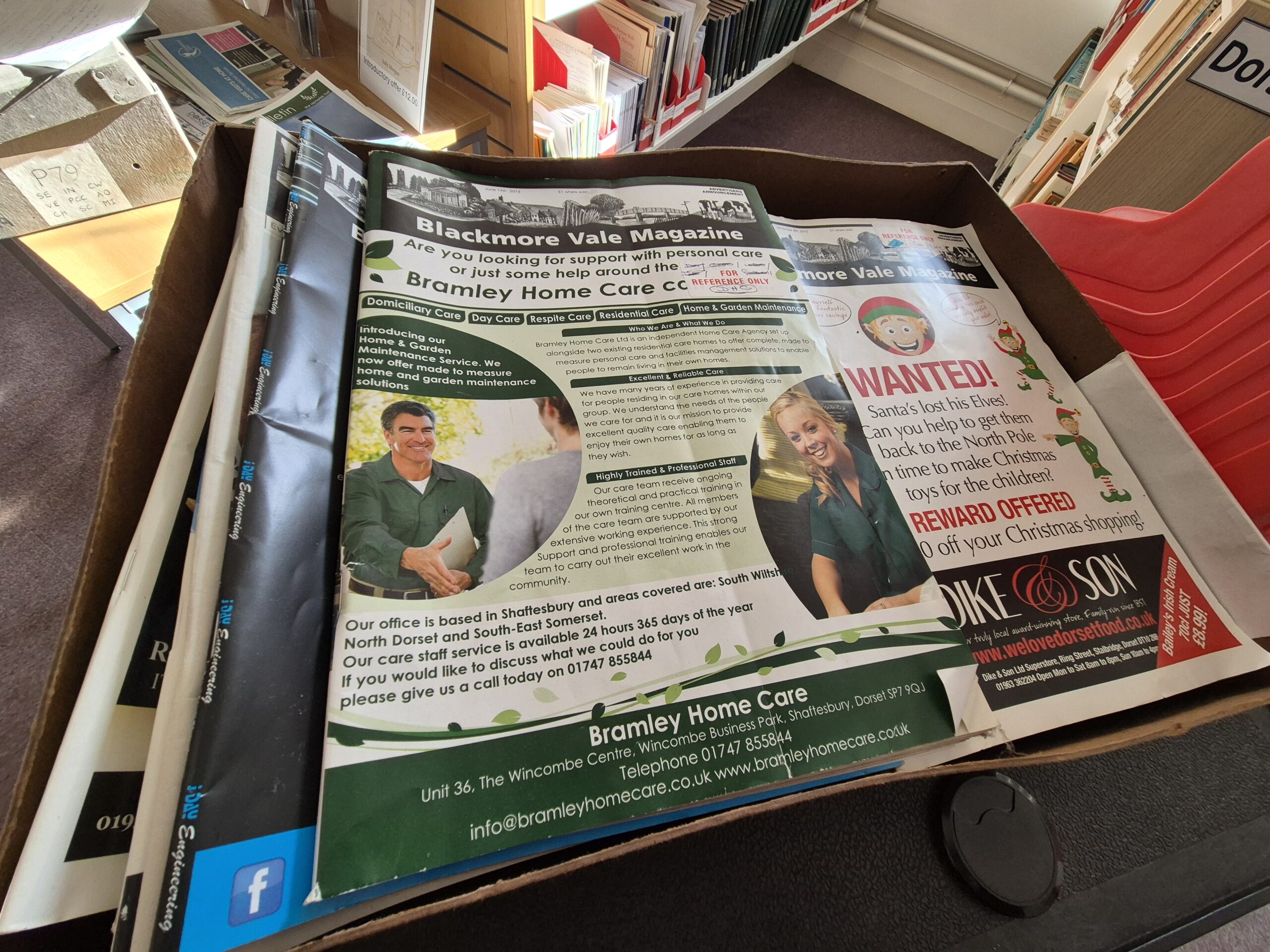
It is our hope to make these journals and local magazines more visible on our online catalogue in due course, but before we could do that we needed to rationalise and improve things on the shelves in our local studies library. There are now alphabetically arranged into sections covering specifically Dorset, the South-West more broadly, and journals for different literary societies and organisations relating to local Dorset authors. Our next step is to move the lists we have onto our catalogue – something which will happen in due course.
In the meantime, all the local magazines and journals we hold are available to be viewed in our library – why not pop in and have a browse?
—
Of course, work on our Past Lives, Future Proofed project continued through the course of the fortnight, with various things happening, including welcoming new volunteers to DHC to help sort and list the Quarter Sessions records, as we mentioned in our recent project update blog.
So what were the outcomes?
In a purely quantitative sense, we were able to update the locations of over 56,000 records during the two weeks. This was a good start to this locations project and we are pleased with the work we did.
We were also able to sort 28 accessions during the fortnight too, with a full listing of these appearing at the end of this blog.
As ever, there is a long-way to go to with all of the jobs mentioned in this blog, and we will continue to chip-away at things over the coming months!
—
New Accessions
| Accession number | Reference number | Title | Date(s) |
| 8722b | D-2170 | Dorset Ramblers | 2013-2018 |
| 12530 | PC-CRE | Cranborne and Edmondsham Parish Council | 1896-2025 |
| 12563 | D-3565 | Mabelulu Book | 1895-1912 |
| 12576 | NG-HH/BH[S] | Bournemouth Chest Hospital | 1862-1964 |
| 12601a | PC-PUD | Puddletown Area Parish Council | 1995-2005 |
| 12601b | PC-ARN | Arne Parish Council | 2016-2020 |
| 12601c | PC-SSN | Sydling St Nicholas Parish Council | 2008-2025 |
| 12601d | PC-DEW | Dewlish Parish Council | 2016-2025 |
| 12601e | PC-CHE | Cheselbourne Parish Council | 2021-2025 |
| 12601f | PC-BER | Bere Regis Parish Council | 1935-2020 |
| 12601g | PC-LWN | Bere Regis Parish Council | 2016-2017 |
| 12614 | Brownsea Island archive collection | 1927 – late 20th century | |
| 12617 | D-GIM | Gillingham Local History Society | 2026 |
| 12618 | D-HYS | Thomas Hardy Society | 2026 |
| 12619 | D-CCD | Dorset Community Action Newsletters | 2026 |
| 12620 | D-644 | Volunteer Centre Dorset Newsletters | 2024-2026 |
| 12621 | D-2683 | Cranborne Chase National Landscape | 2026 |
| 12622 | D-DPC | Postcards of East Dorset Election Petition outside Shire Hall | c. 1910 |
| 12623 | D-BMH | Bournemouth Free Church Maternity and Training Home | 1905-1969 |
| 12625 | D-3558 | Thomas Powell photographs | 1880s-1920s |
| 12626 | D-DPA; D-530 | Dorset County Library Photo and Illustration Collection | early 20th century |
| 12627 | D-1476 | Dorset Air Photography by the German Luftwaffe | 1940-1943 |
| 12629 | D-WRS | Councillor E.L. Hedges, Mayor of Dorchester, Special Recording | 1952 |
| 12630 | D-DMA; DSA; D-DPA | LPs and Vinyl records of Dorset music | 1970s |
| 12631 | D-3559 | Mathew Family of Thorncombe | 1890-1920 |
| 12632 | D-DPA | Sherborne v St Ivel, Yeovil cricket | 1 Aug 1935 |
| 12633 | D-3560 | Hazelbury Bryan Deed | 24 Mar 1728 |
| 12634 | D-3566 | Account book of Dr. Clifton | 1838-1850 |