

Back in April we shared an overview of the Wessex Water project, led by our archivist Emma Blowers with support from Collections Assistant Chris Scriven. This time, we’re taking you deeper into the conservation side of the project and catching up with our Conservator as she begins treating some of the most fragile items in the collection.
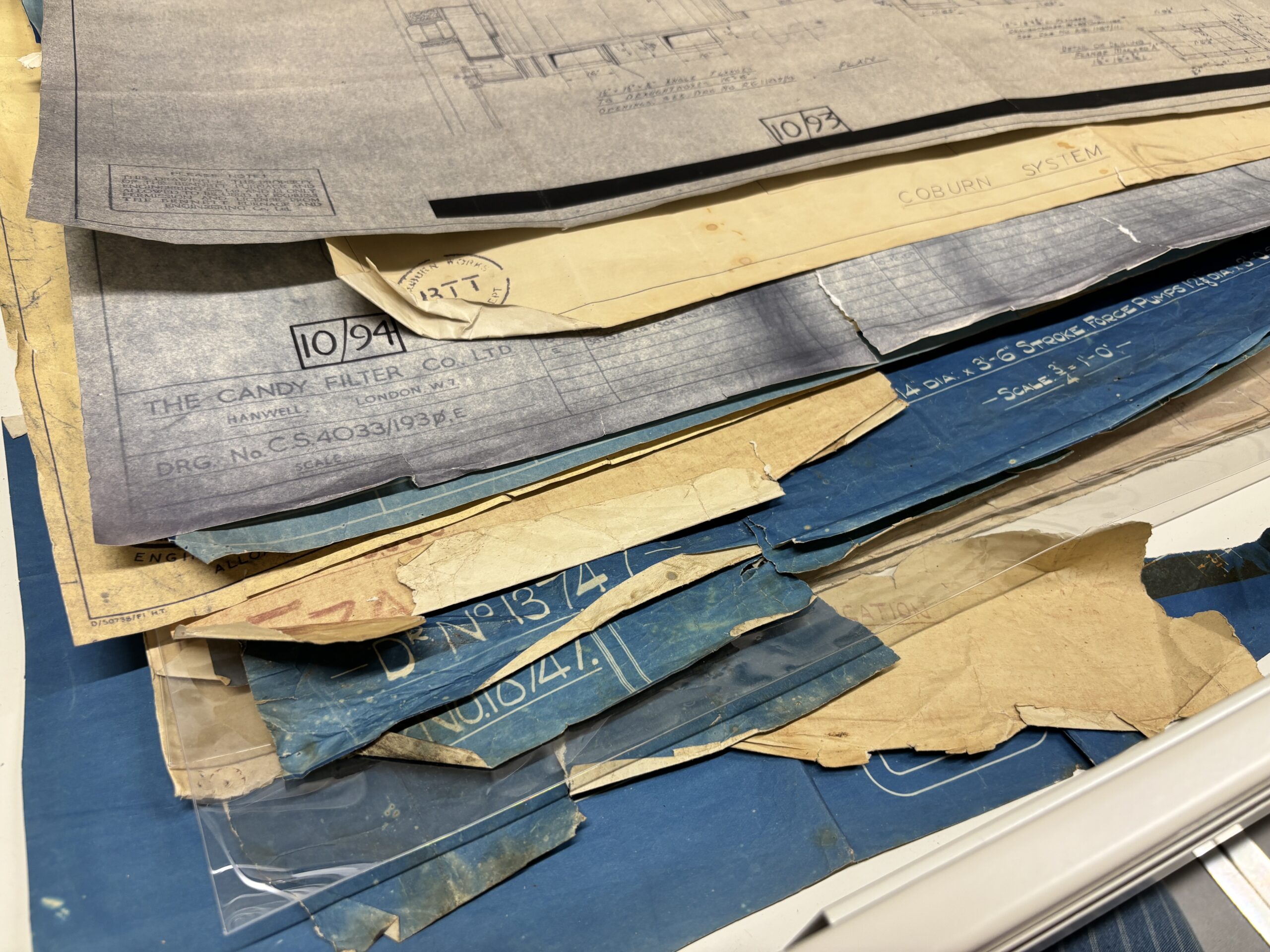
Setting Priorities: What Gets Treated and Why
Only a small portion of the project’s budget is dedicated to conservation, which means every treatment decision must be carefully considered. To make the biggest impact treatment priorities are based on two key factors:
- Item importance — its historical or research value
- Fragility & treatment time — how fragile an item is and how many hours or days the work will require
Some items are extremely fragile, but if they would take a very long time to repair, we must weigh whether those resources could instead make many other items accessible. In a project of this scale, which includes14 drawers full of maps and plans, all in varying states of deterioration, our focus has to be on the bigger picture.
That’s why minimal, stabilising treatments are the priority: work that allows items to be safely handled without attempting extensive conservation.
Making Fragile Items Accessible
Many of the maps and plans have tears caused by years of handling. These tears will only worsen if the items continue to be used in their current condition. While repairing each tear is possible, it isn’t always the most efficient option.
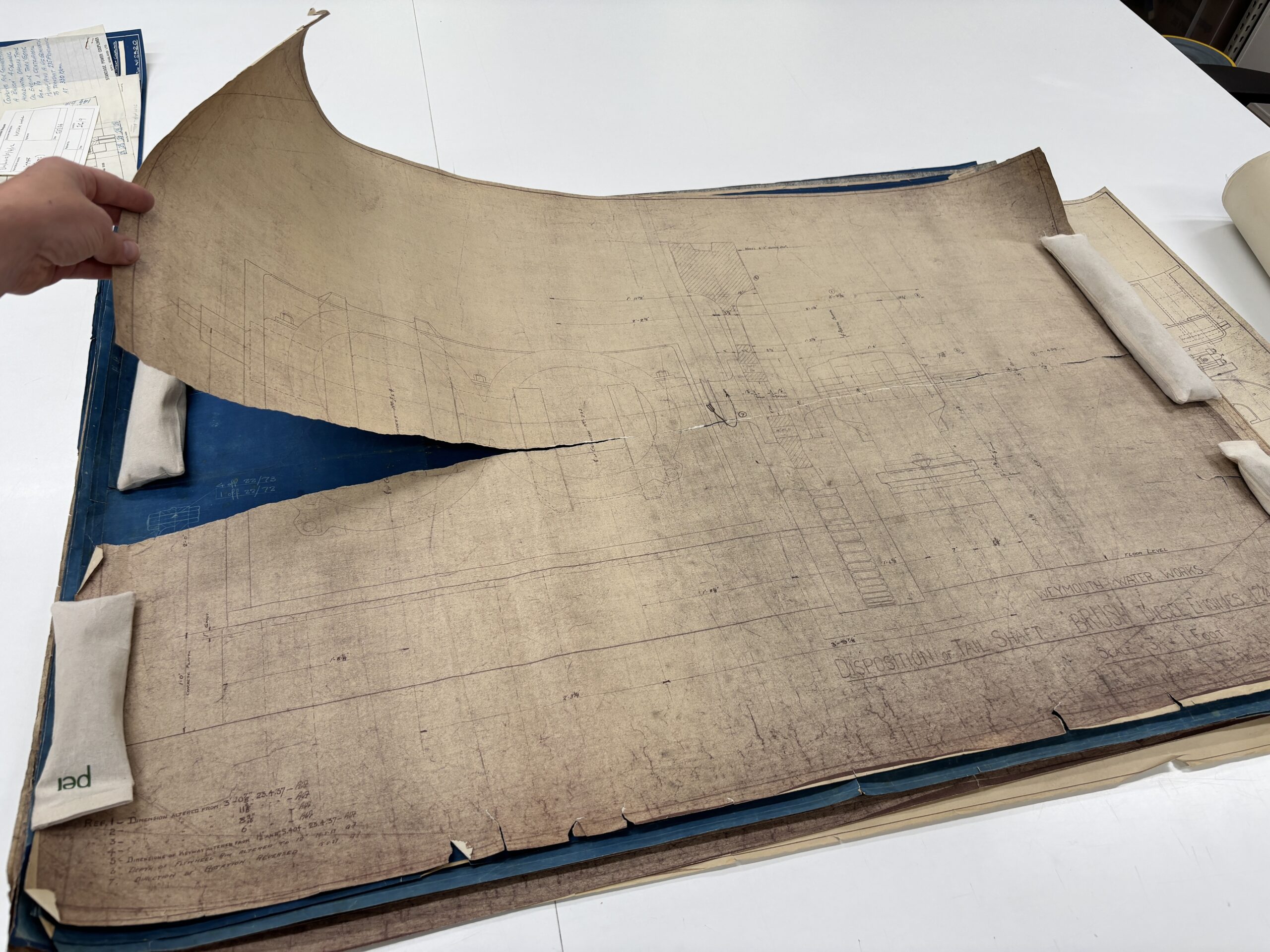
One practical solution is to place damaged items in clear polyester sleeves. This allows researchers to handle and view them safely, even when the paper itself remains fragile. It’s a quicker alternative to full repair but still requires careful thought about sustainability of materials and long‑term preservation.
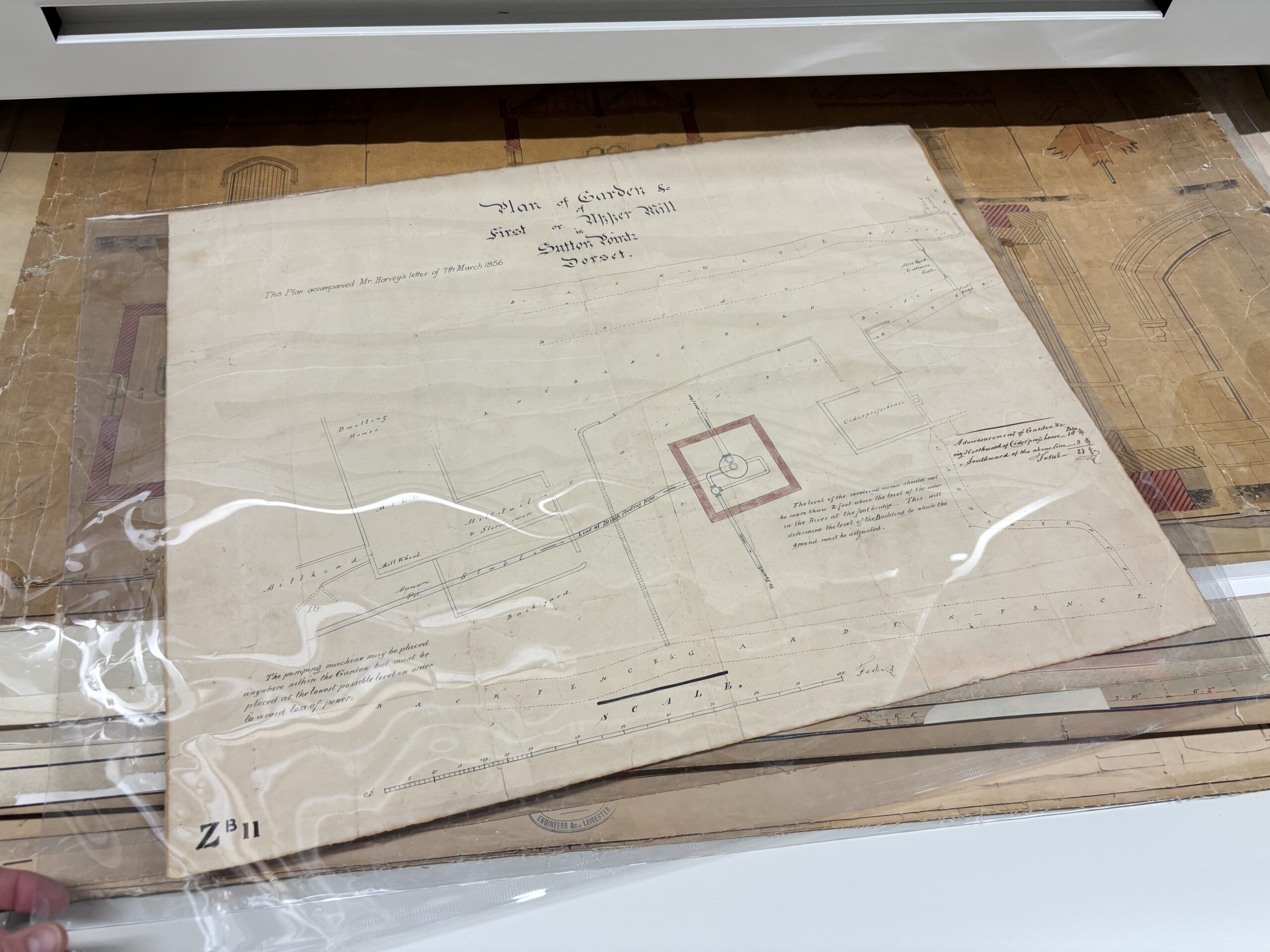
Treatment testing
Treatment has been completed on ten plans so far, giving us a much better sense of the time and care each item will require. It’s difficult to give accurate estimates as no two plans are the same, each have their individual characteristics, different materials, and different kinds of damage. Even so, these early tests offer valuable insight into the scale of the work ahead.
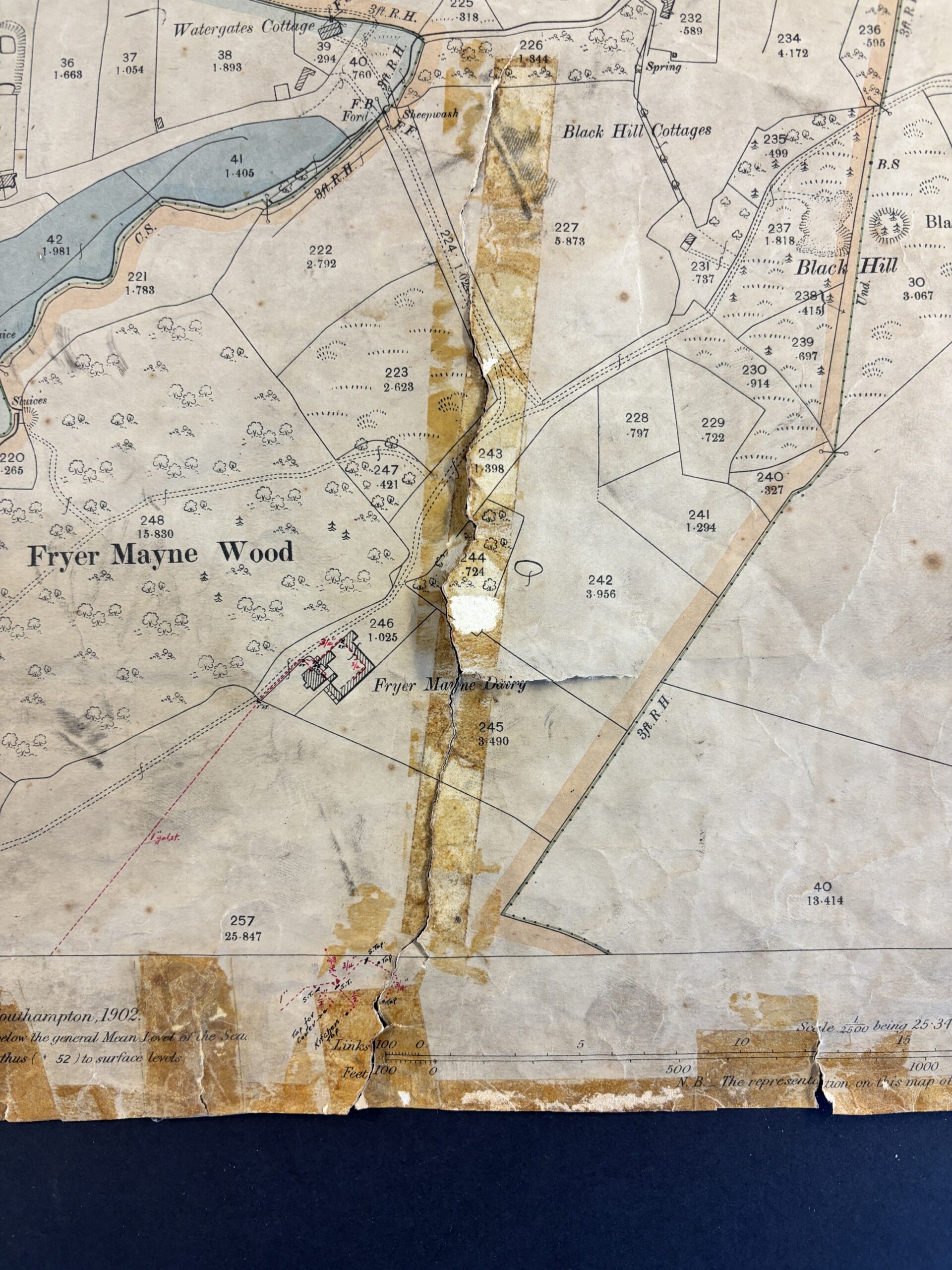
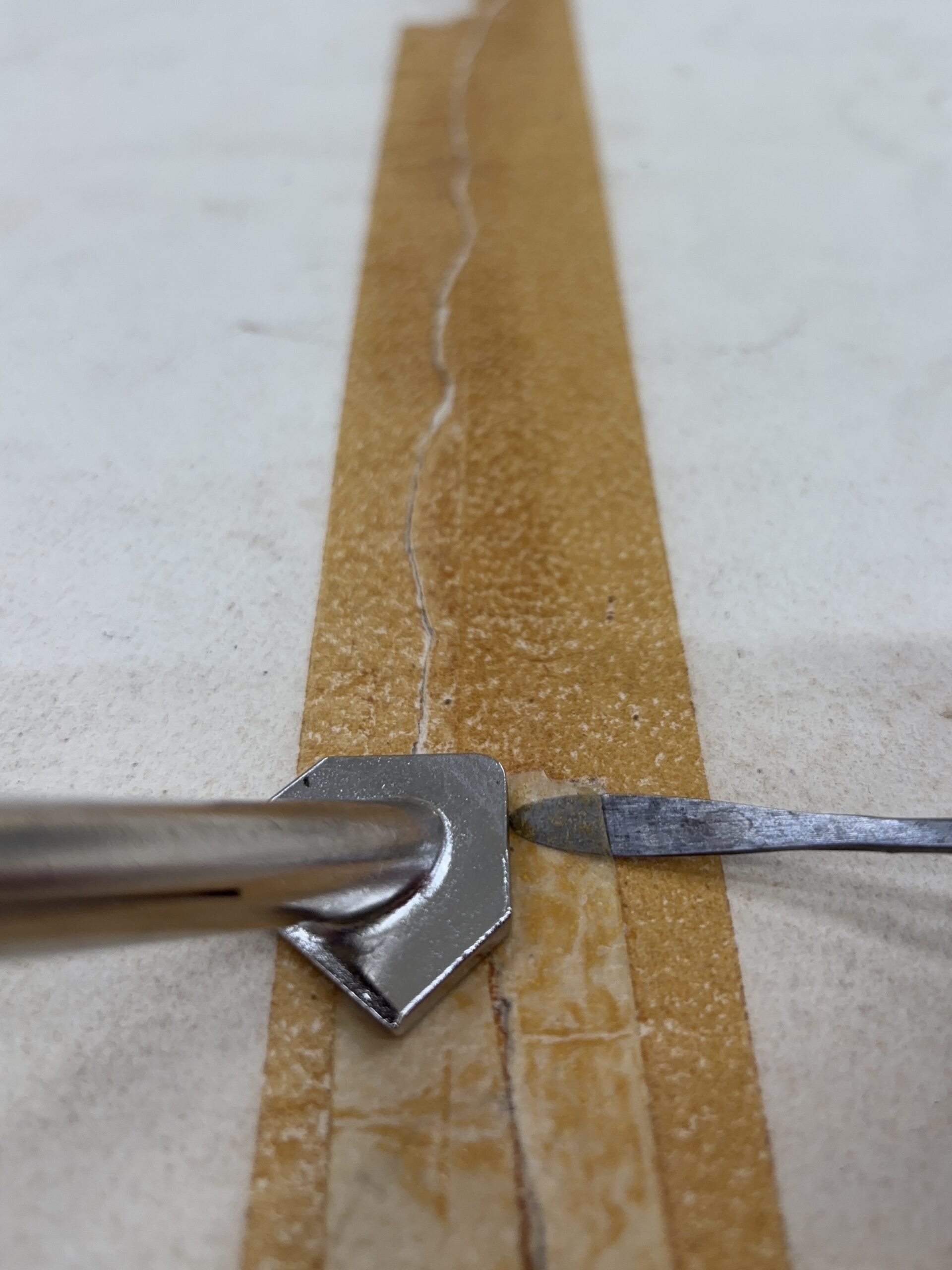
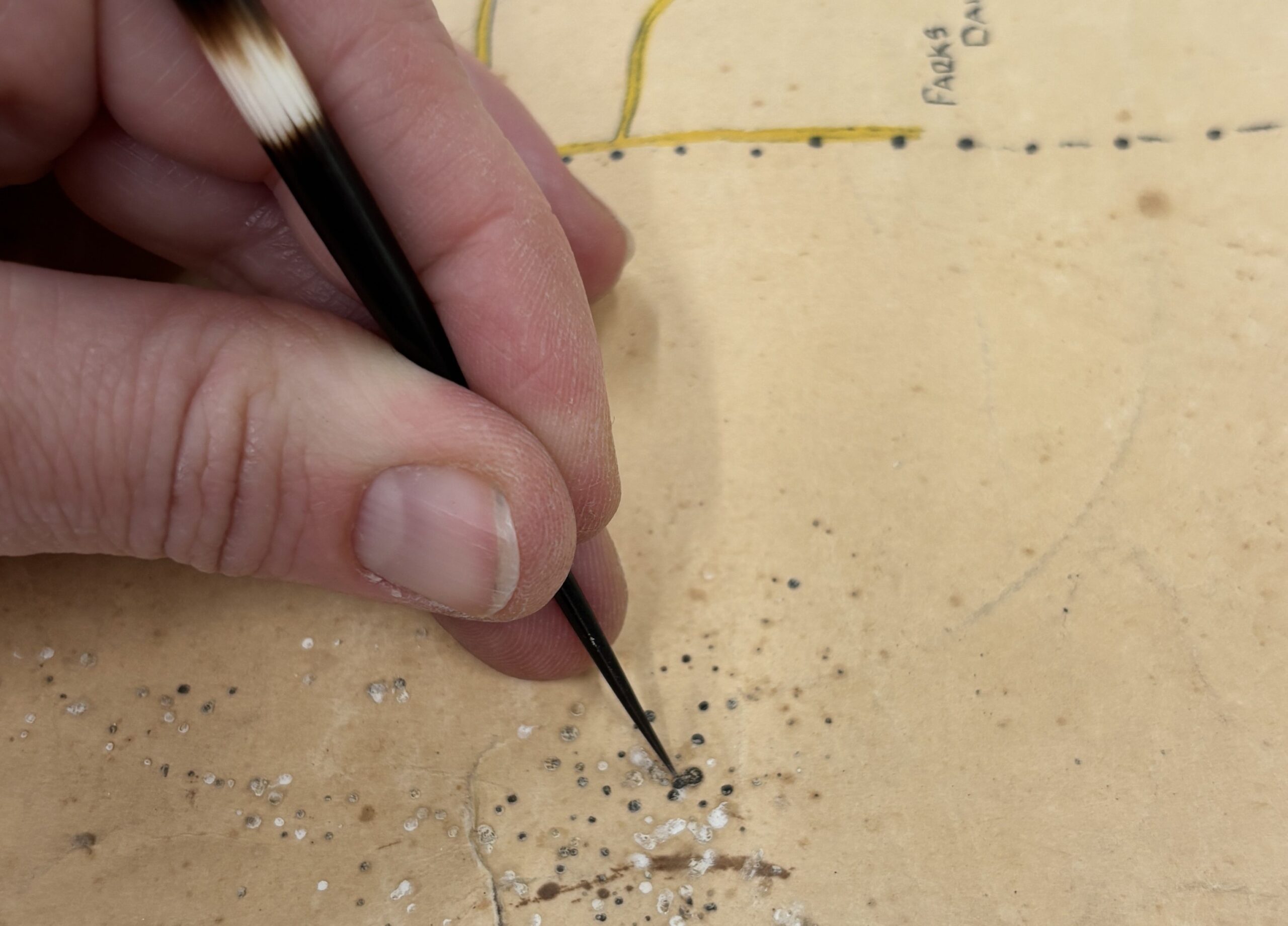
So far, treatments have included flattening tightly rolled plans, removing insect droppings (with the help of one of the more unusual tools in a conservator’s kit: a porcupine quill), repairing tears, and infilling missing areas. Many plans also show evidence of past repairs using self‑adhesive tape, a material that discolours, stains, and continues to degrade over time. Removing this tape and replacing it with stable, conservation‑grade materials is always the best option, but it can be time-consuming work. As the project progresses, prioritising treatments will be key.
Balancing Care, Time, and Access
Conservation is always a balance: the needs of the collection, the time available, and the responsibility to make as much material accessible as possible. By combining light‑touch treatments with protective housing, we are ensuring that hundreds of maps and plans can be safely used, rather than just a handful.