

Earlier this year we welcomed a student, Kayleigh, as a supported volunteer for a week. During that time she learned more about what we do, and spent some of her time researching Reverend Thomas Rackett…
—
Reverend Thomas Rackett was the vicar of Spetisbury, who lived from 1756 – 1840. A tiny document in our collection tells us that he was in theatre royal Drury Lane on the 13th of March 1769 to see a tragedy called Zenobia. This little document, D-RAC/H/139D, is a theatre ticket.
Why is this important?
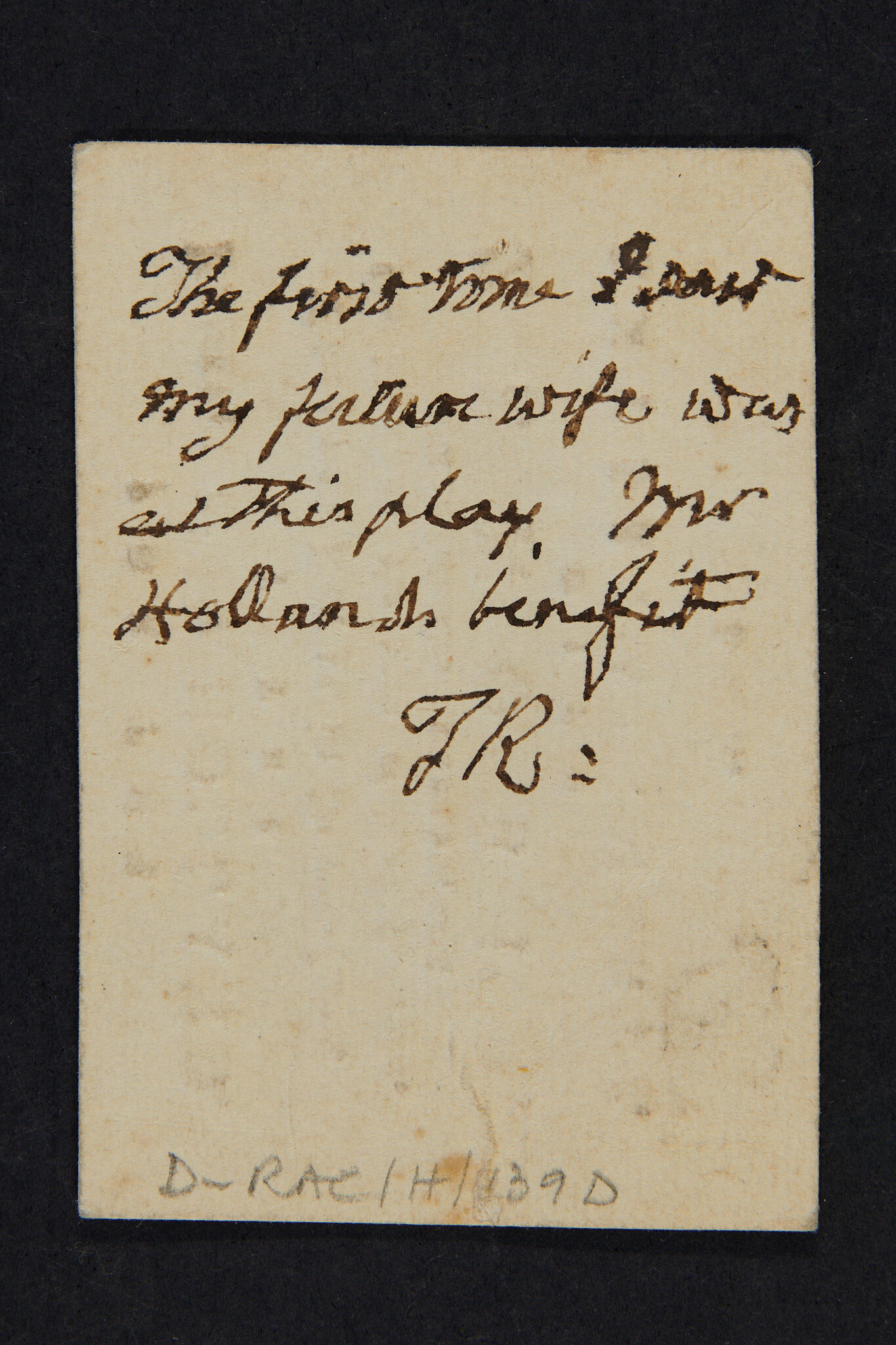
Well, on the back of this ticket is written
“the first time I saw my future wife was at this play”.
The handwriting looks like that of an old man, indicating the Mr Rackett kept this theatre ticket for his whole life.
Thomas Rackett married his wife, Dorothy Tattersall on the 31st of July 1781 in Saint Paul’s Church Covent Garden.
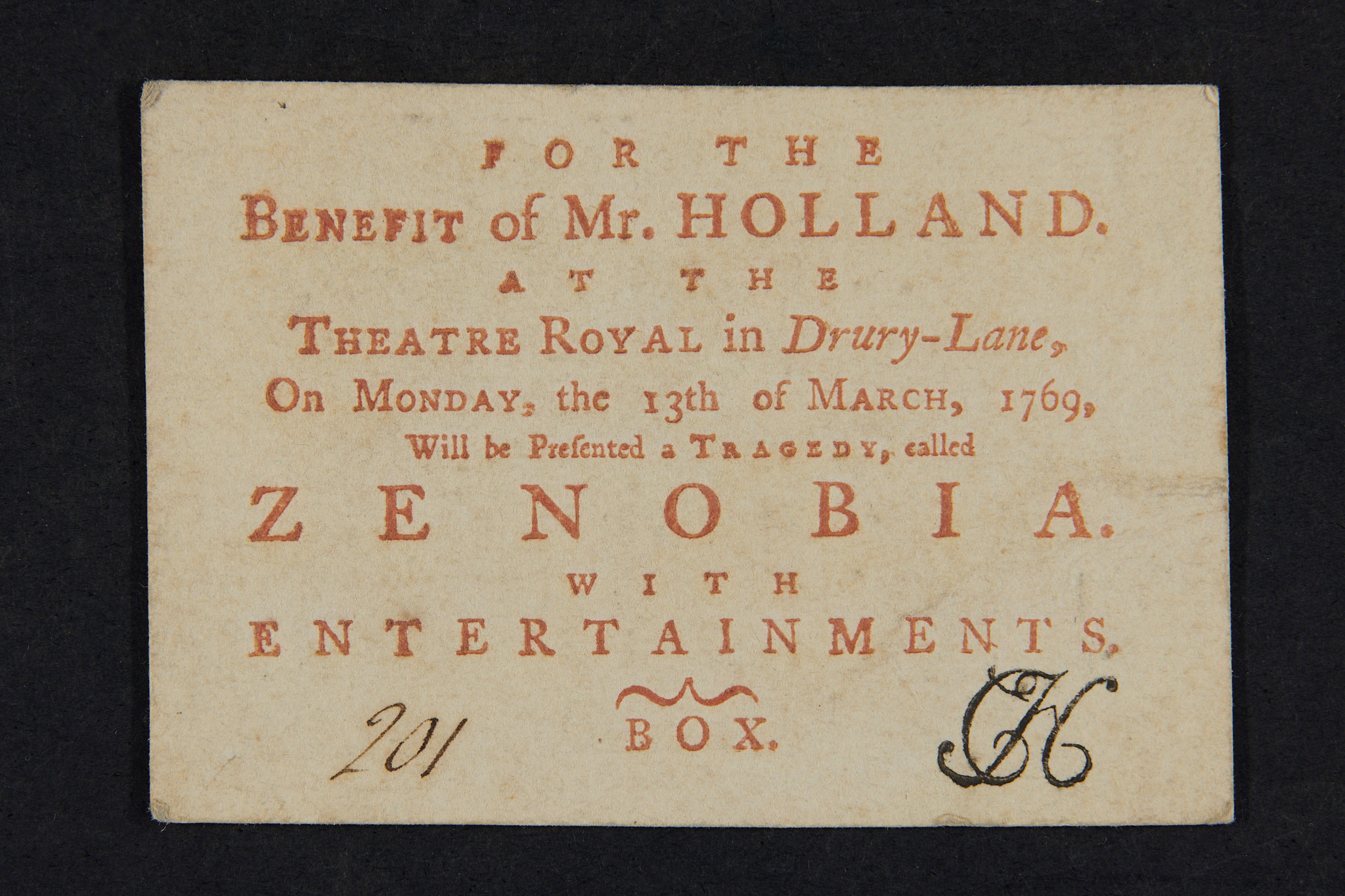
The play, Zenobia was a 1768 tragedy by the Irish writer Arthur Murphy based on the life of Zenobia, ruler of the Palmyrene Empire in Syria, and her defiance of the Roman Empire. This play was put on “for the benefit of Charles Holland”.
You might be thinking, “What on earth does that mean?” Benefit plays were plays put on to fund specific individuals, a common way of paying actors back then. Mr Holland had 15 of them, and Zenobia was his last, before he died of “violent smallpox” later that year, at just 36 years old.
We then wanted to find out more about the Rackett family. We found out that Dorothy and Thomas had three children, though only their daughter Dorothea made it to adulthood, living to an impressive age of 91. It seems Dorothea inherited her parents’ love of theatre – we found a notebook of hers from 1801 (D-RAC/K/157B) – when she was 14 – where she appears to have written her own play. The play was titled “The Contrivance” or “The Duenna Deceived” – apparently people used to give plays two titles for some reason.
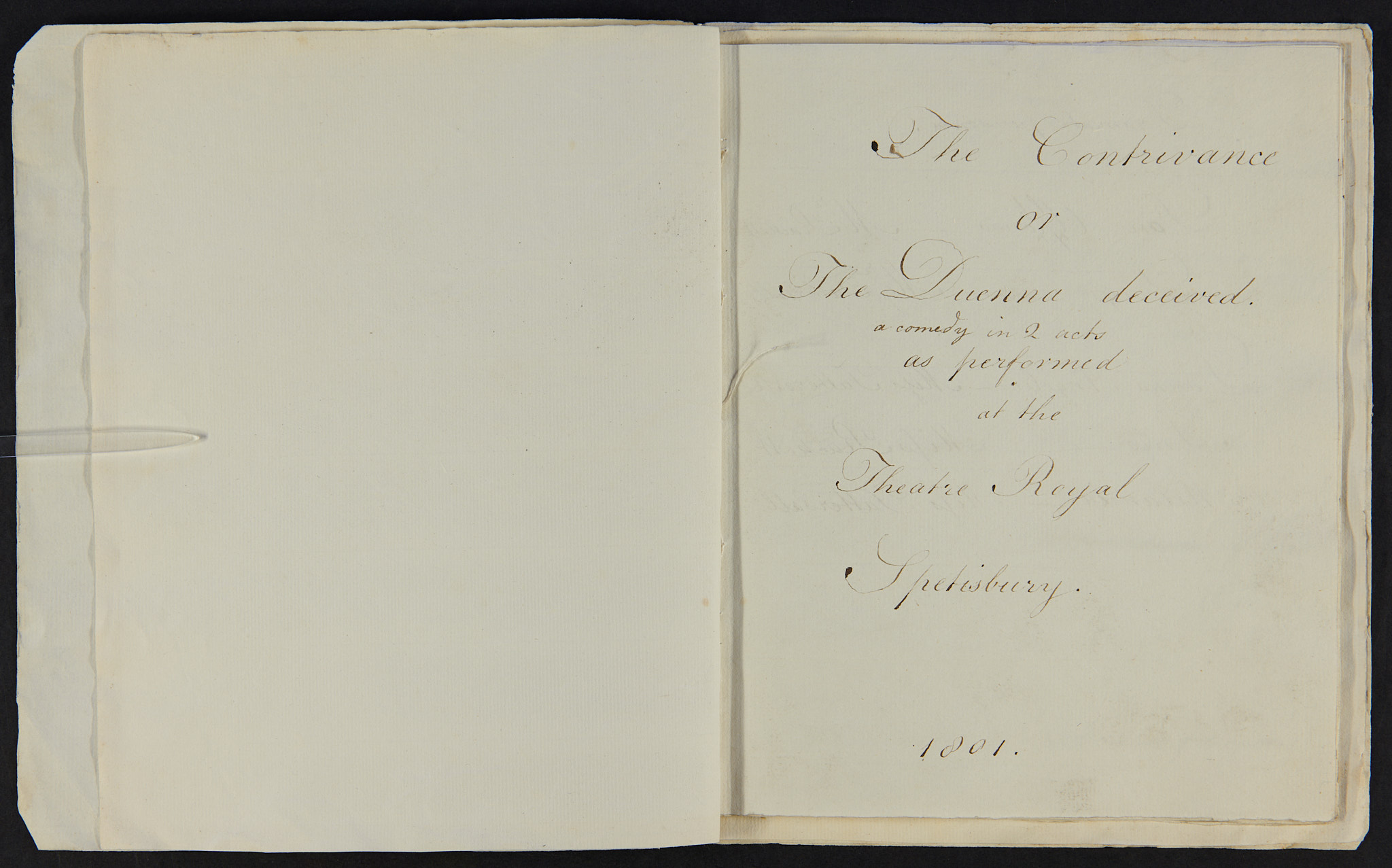
It was performed by her and her family at the “Theatre Royal Spetisbury”, a real theatre that definitely exists (to clarify, do not go looking for the Theatre Royal Spetisbury, it does not exist. It was probably Dorothea’s joke name for the room in the rectory where they performed).
The play seems to be about a maid named Inis trying to free her mistress Angelina, who was locked in a tower by Melancia her Duenna (an older woman acting as a strict chaperone to a younger woman) due to her disapproval of Angelina’s relationship with Don Alphonso. Inis tricks Melancia by convincing her that the West Tower is haunted.
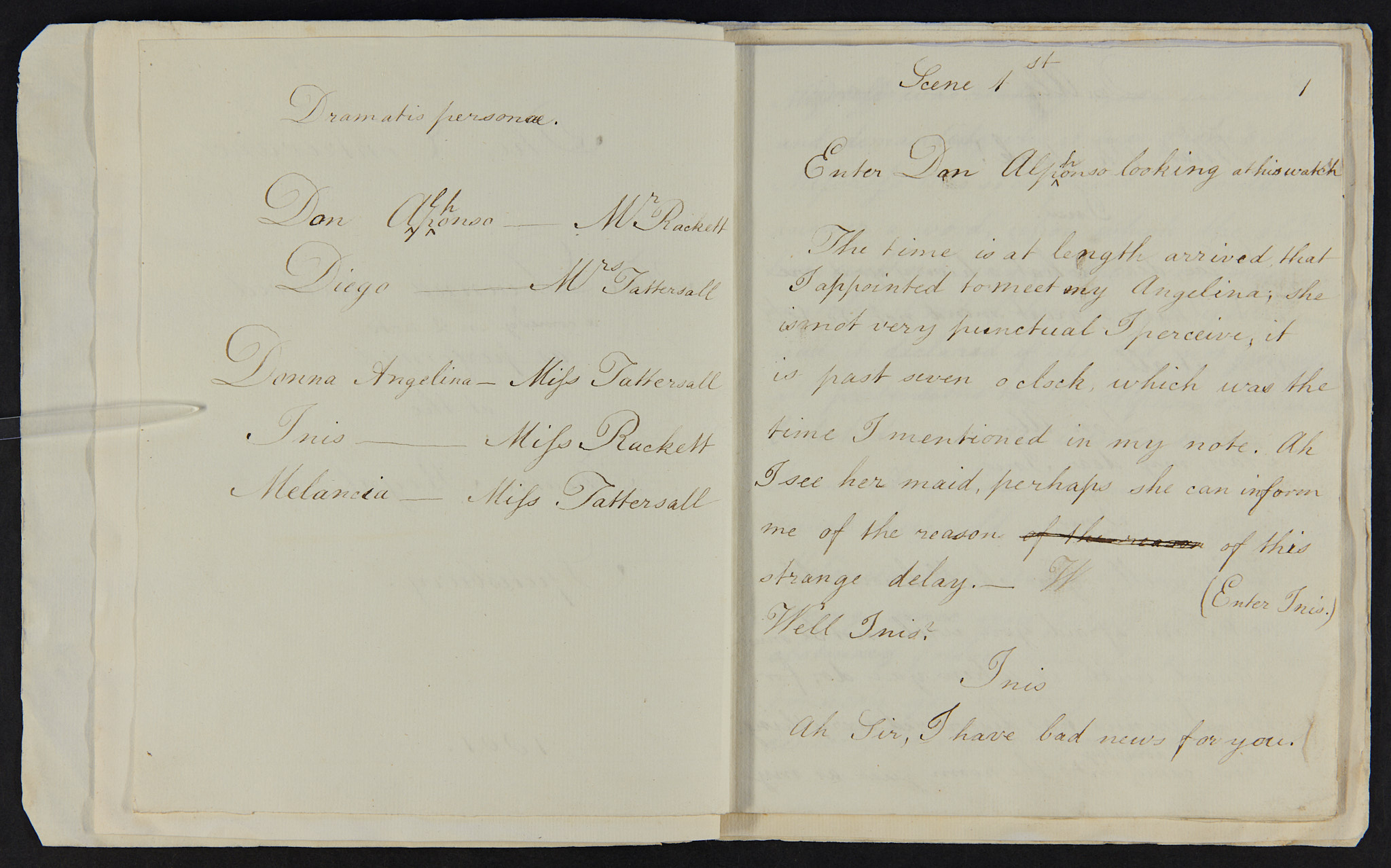
I was looking to see if Dorothea did write the play herself, or if it was a transcript of a play she saw. It appears that she did write this play, however I did find out about an 18th century opera called “The Duenna”, which seems to have a similar element of deception and hijinks. I was wondering if perhaps Dorothea saw this play was inspired by it when writing her own. After looking in her diary (D-RAC/H/140D), it appears that she did, in fact, see “The Duenna” – a month after performing her own play. This could just be an odd coincidence, or perhaps she was excited by the idea or was speculating about what might happen in the play.
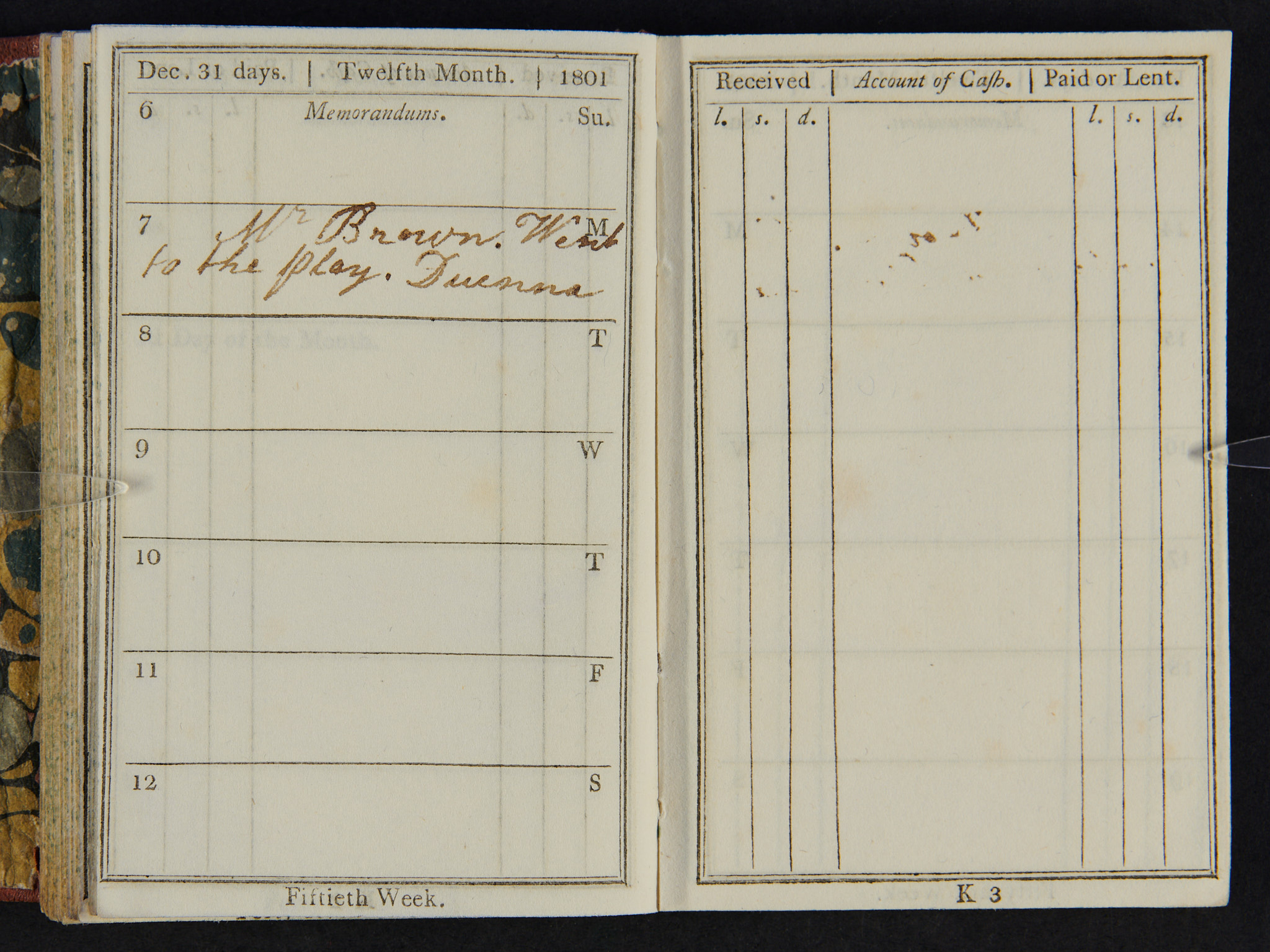
That is, of course, not the only thing Dorothea did in her entire life, considering she lived to 91 years. She married Samuel Solly at St Paul, Covent Garden on the 31st of January 1821 at age 34, and had a daughter in 1827 called Frances Thomasine Longford Rackett (who later married a man with a really long surname, making her name even longer) and was buried in Poole in 1878.
I have really enjoyed learning about the Rackett family. If you would like to find out more about them you would be welcome to come in and view the documents in the D-RAC collection or read “A History of The Reverend Thomas Rackett, 1756-1840, Rector of Spetisbury, Dorset” by Fredaa D Neale, which we hold in our reference library. Alternatively, if you would like to read more about this family in the comfort of your own home, we sell copies of “The Thomas Rackett Papers. 18th-19th Century”, which is published by the Dorset Records Society and contains transcriptions of much of the correspondence from D-RAC, including letters from Thomas and Dorothea.
—
This is a guest blog written for Dorset History Centre by work experience student Kayleigh.
This is a really interesting story, I love that Rev Rackett kept the ticket as a memory of meeting his wife. There’s a connection between the Rackett/Solly family and the archaeologist Mary Anning – she asks about “dear little Miss Solly” in a letter in 1840, which I think is Frances Thomasine Solly! The letter is at DHC, reference D1-NS/1.