

The information in this blog was recently presented as a free talk at Dorset History Centre as part of From the Stacks, our free lunchtime talks programme. These occur monthly and let staff showcase one or two interesting documents from our collections. If you are in Dorchester on the last Wednesday of the month, why not pop by at 12.30pm to find out what we’re talking about this month!
In the first of a two-part blog series, we wanted to introduce you to these fabulous notebooks (D-2834), and tell you a little more of the family who were involved in their creation…
—
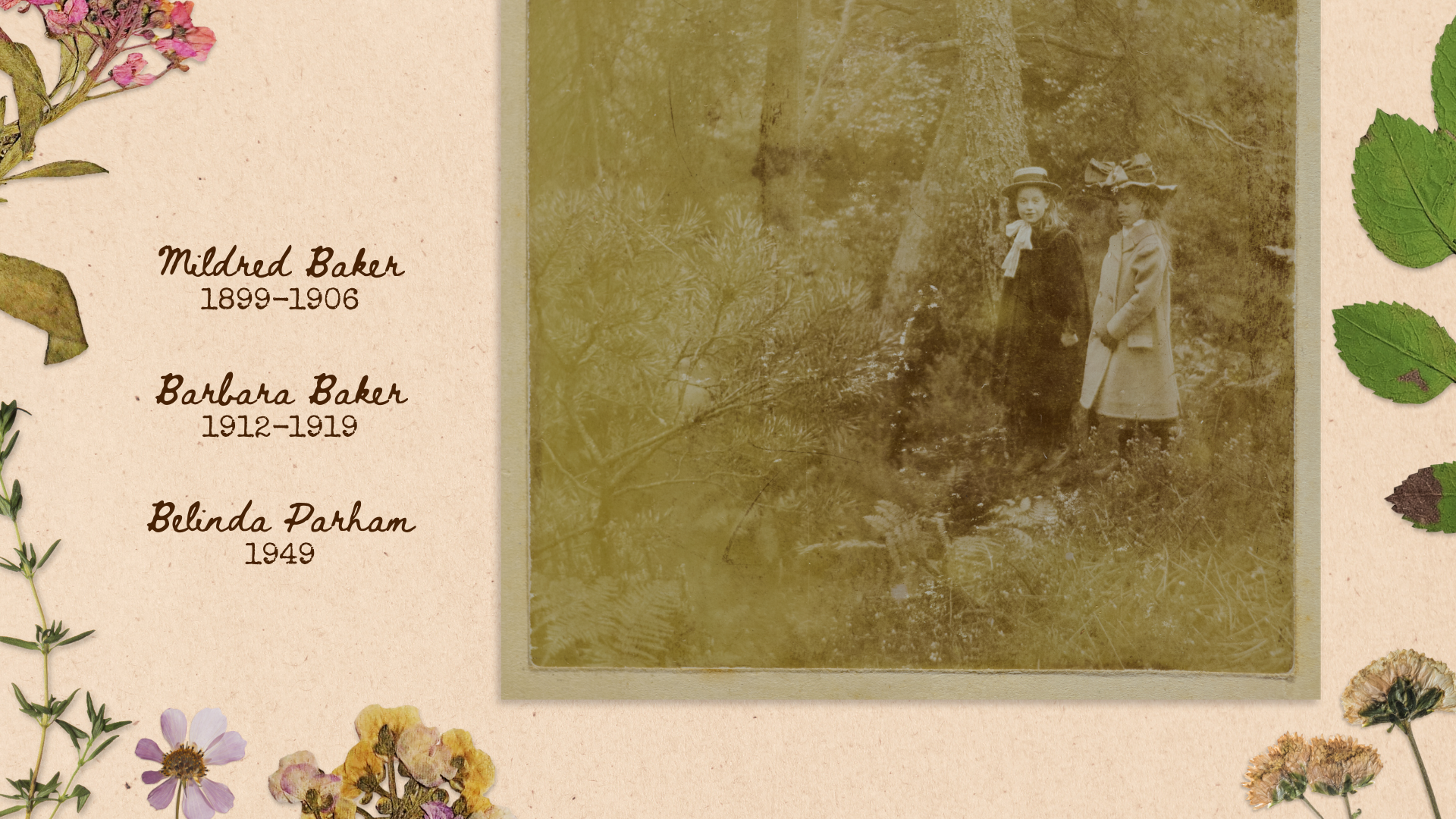
These nature notebooks were listed on eBay, and thanks to Dorset Archives Trust and their Emergency Purchase Fund, we were able to acquire the collection and make it available to the public. The collection contains three notebooks, a portrait photograph, and a number of letters. The notebooks contain botanical cuttings and notes made by three young girls: Mildred Baker; Barbara Baker; and Belinda Parham. They are stunning and capture a keen interest in the botany of Dorset in the early 20th century.
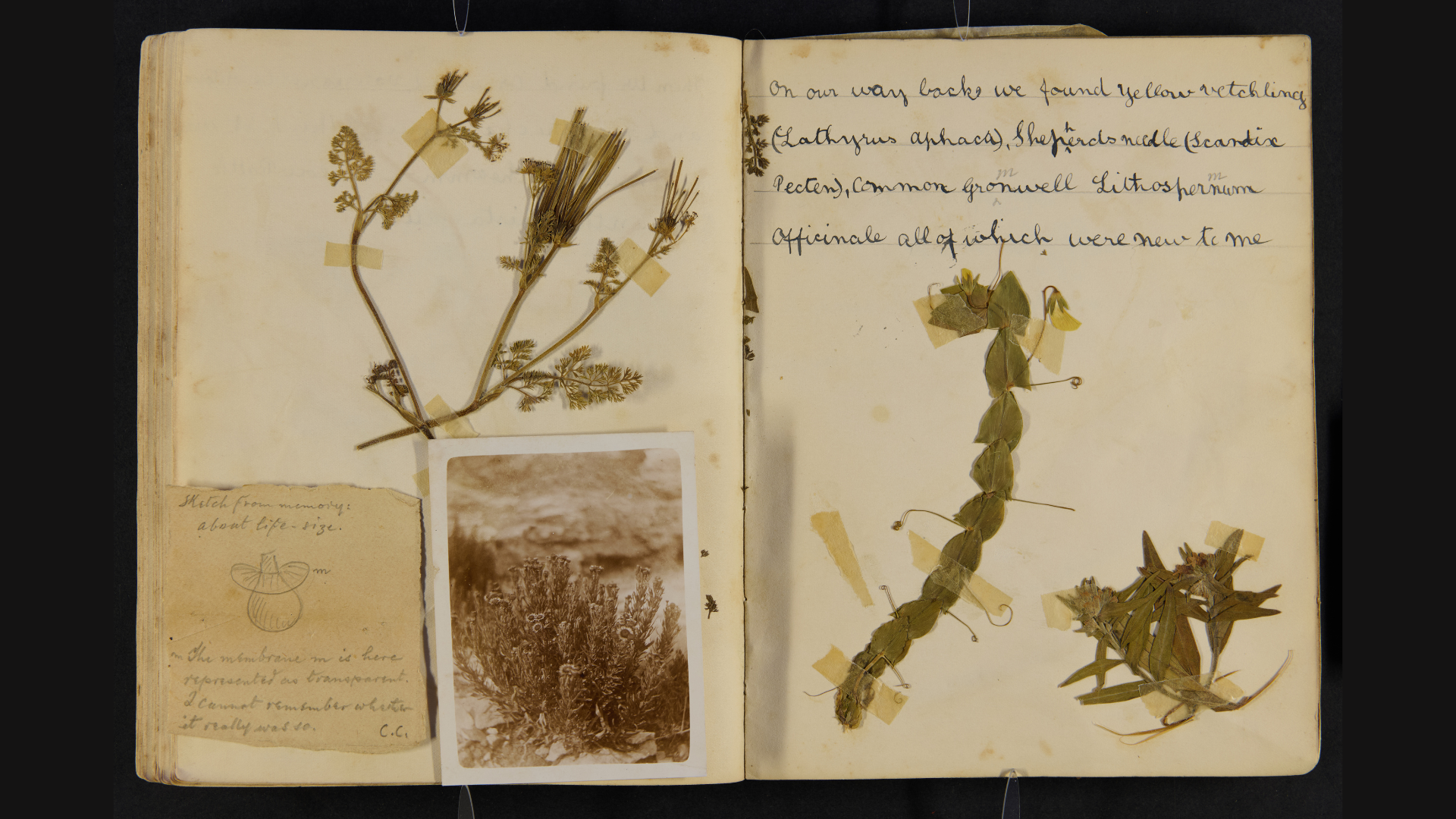
Some pages are covered in cuttings, while others focus on one plant. There are pasted-in photographs and watercolour illustrations throughout the notebooks. These were a way of recording plants they observed but did not take cuttings of.
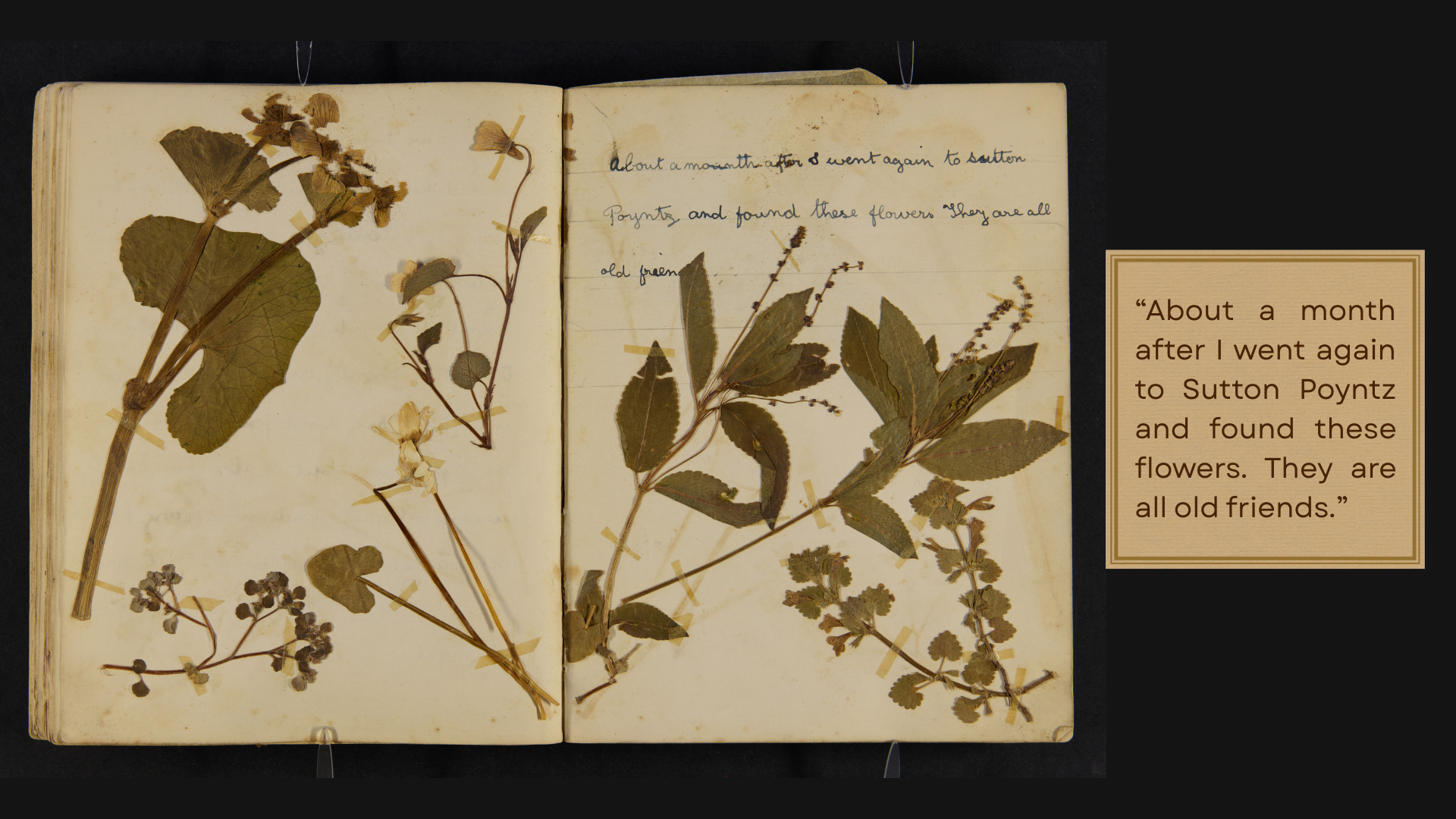
The authors were clearly very knowledgeable about the plants they included, as the Latin name and notes about the plant are often included with the cutting. Little comments show that “this is the first I’ve seen” or “I’ve never found it here before”, although sometimes the flowers they find are old friends, like here:
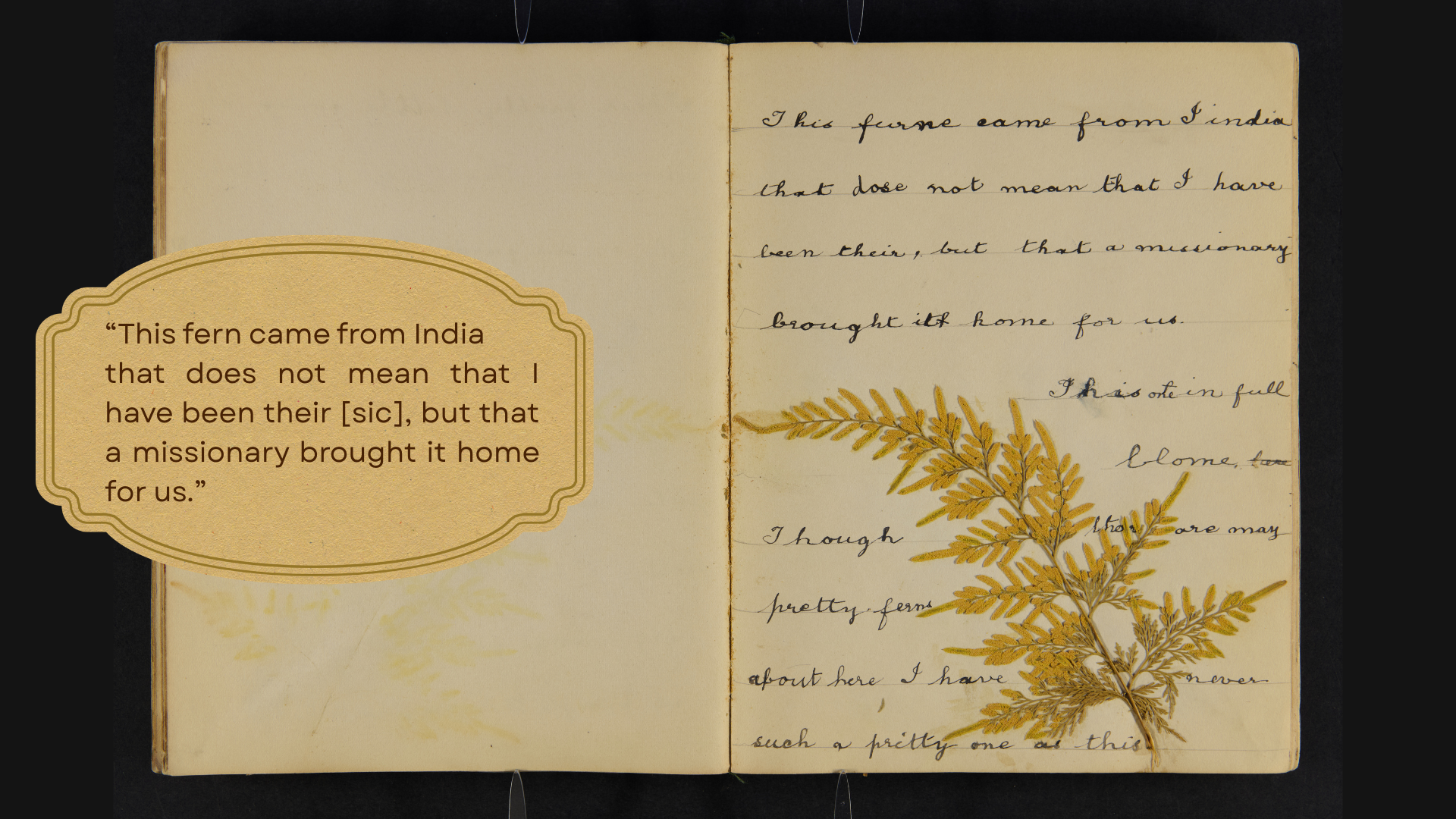
Not all the specimens were collected by the authors; this page includes a fern that was brought from India by a missionary. Barbara writes that
“though there are many pretty ferns about [Witchampton], I have never [seen] such a pretty one as this”.
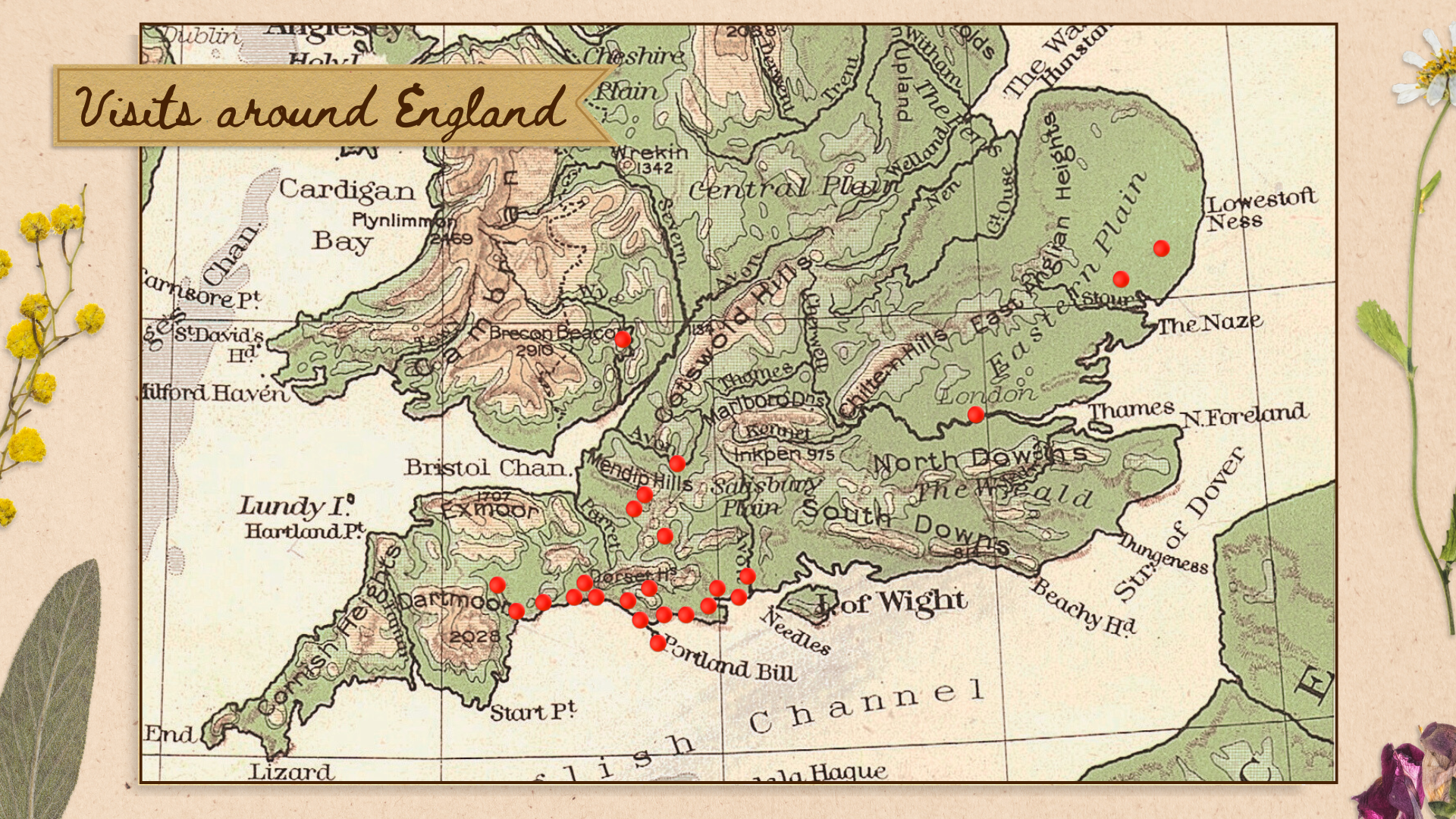
The notebooks mention lots of places across the UK, mostly in Dorset and a few trips to Suffolk. There are a couple of walking and cycling holidays recorded, where they travelled from Wareham down to Weymouth, or from Seatown back to Bridport.
Who were the Bakers?
Using census records and parish registers, we can pull together a family tree for the Baker family:
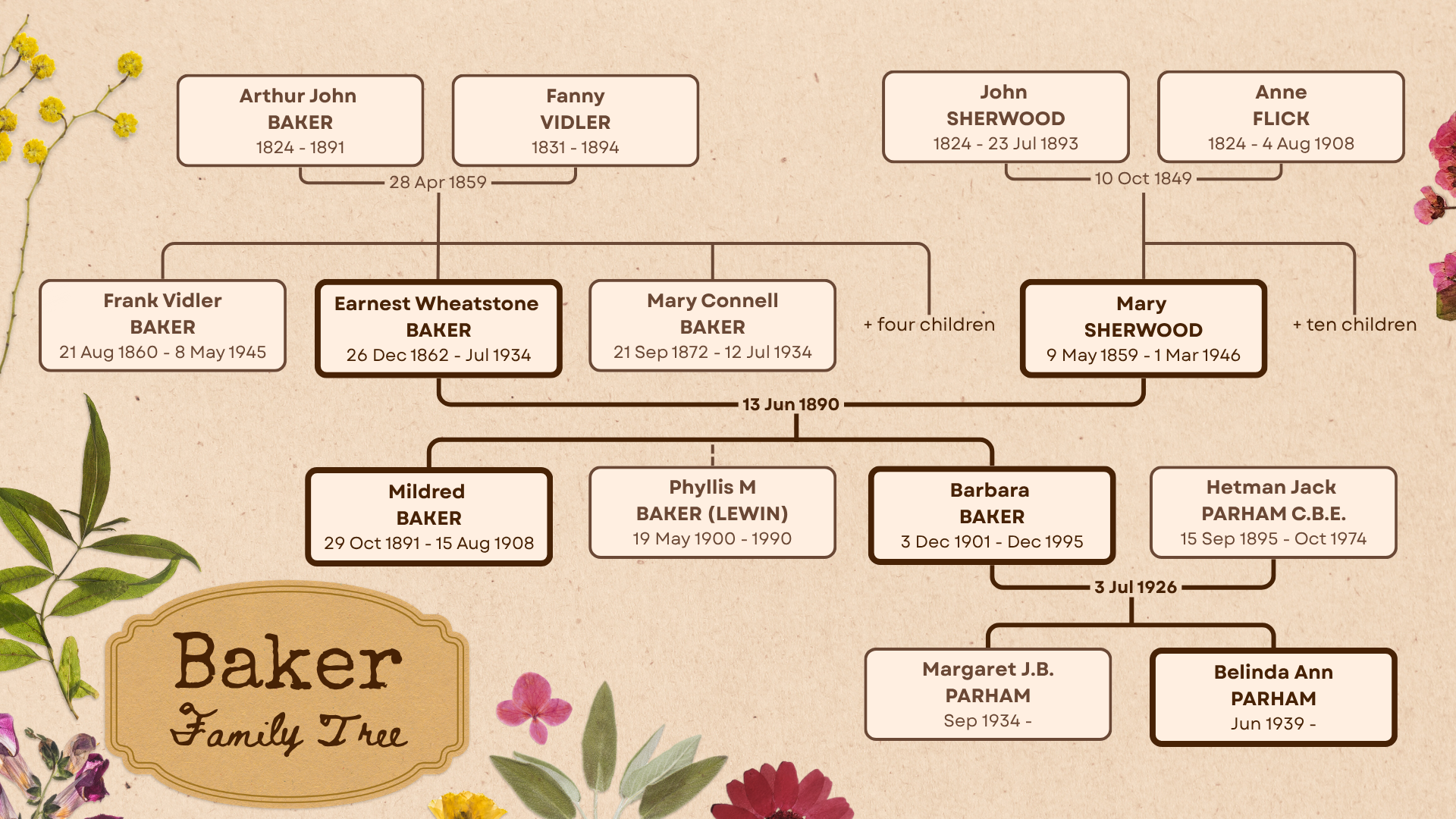
We can see that two of the notebook authors, Mildred and Barbara, are sisters. We can learn more about their parents by looking at resources available on Ancestry.
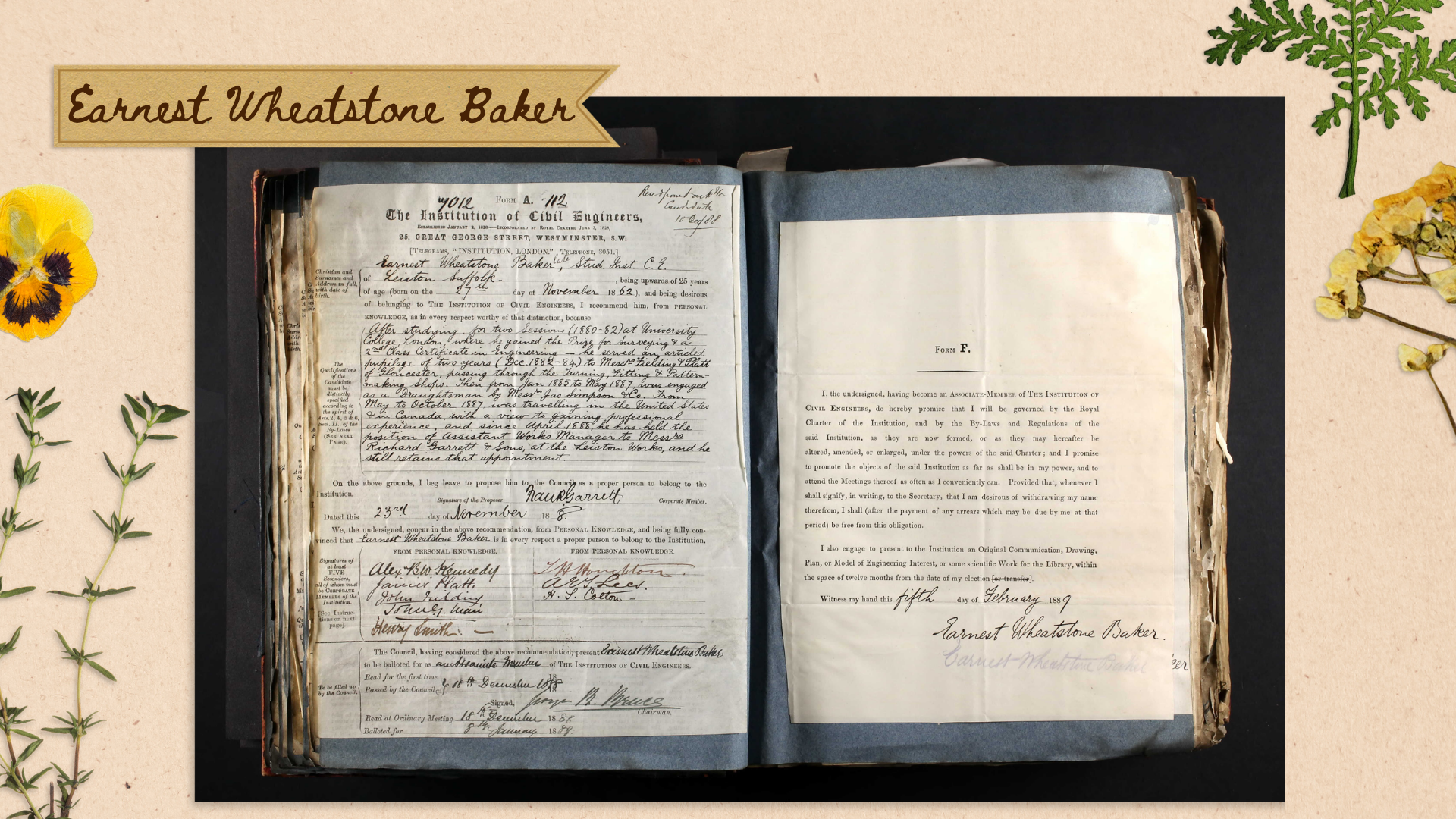
Their father, Ernest Wheatstone Baker, was born in 1862 in Paddington, the son of an architect. He lived in Gravesend with his six siblings and qualified as a civil engineer – this is his certification with the Institution of Civil Engineers.
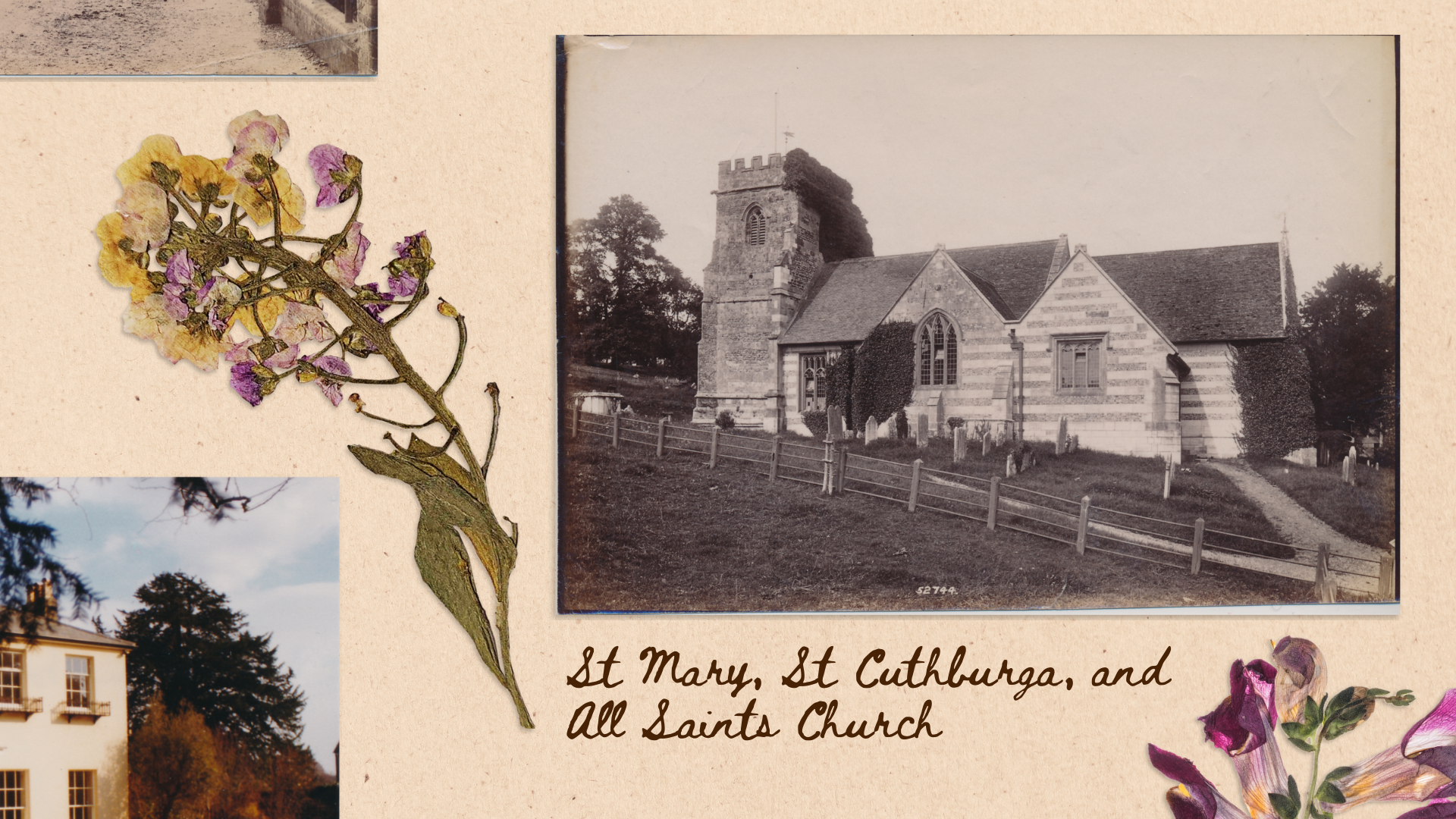
After qualifying, he had a change of heart and re-trained as a clergyman – perhaps influenced by his older brother Frank, who was a curate at Christ Church in Dartford and later rector of St Peters in Holborn. Ernest became vicar of Witchampton in the early 1900s and stayed in this role until his death in 1934.
The girl’s mother, Mary Sherwood, was born in 1859 in Snape, Suffolk. Her father was a well-regarded farmer and Mary lived in Saxmundham with her ten siblings. She married Earnest in 1890, and it was shared in the local paper with this lovely article in the local newspaper.
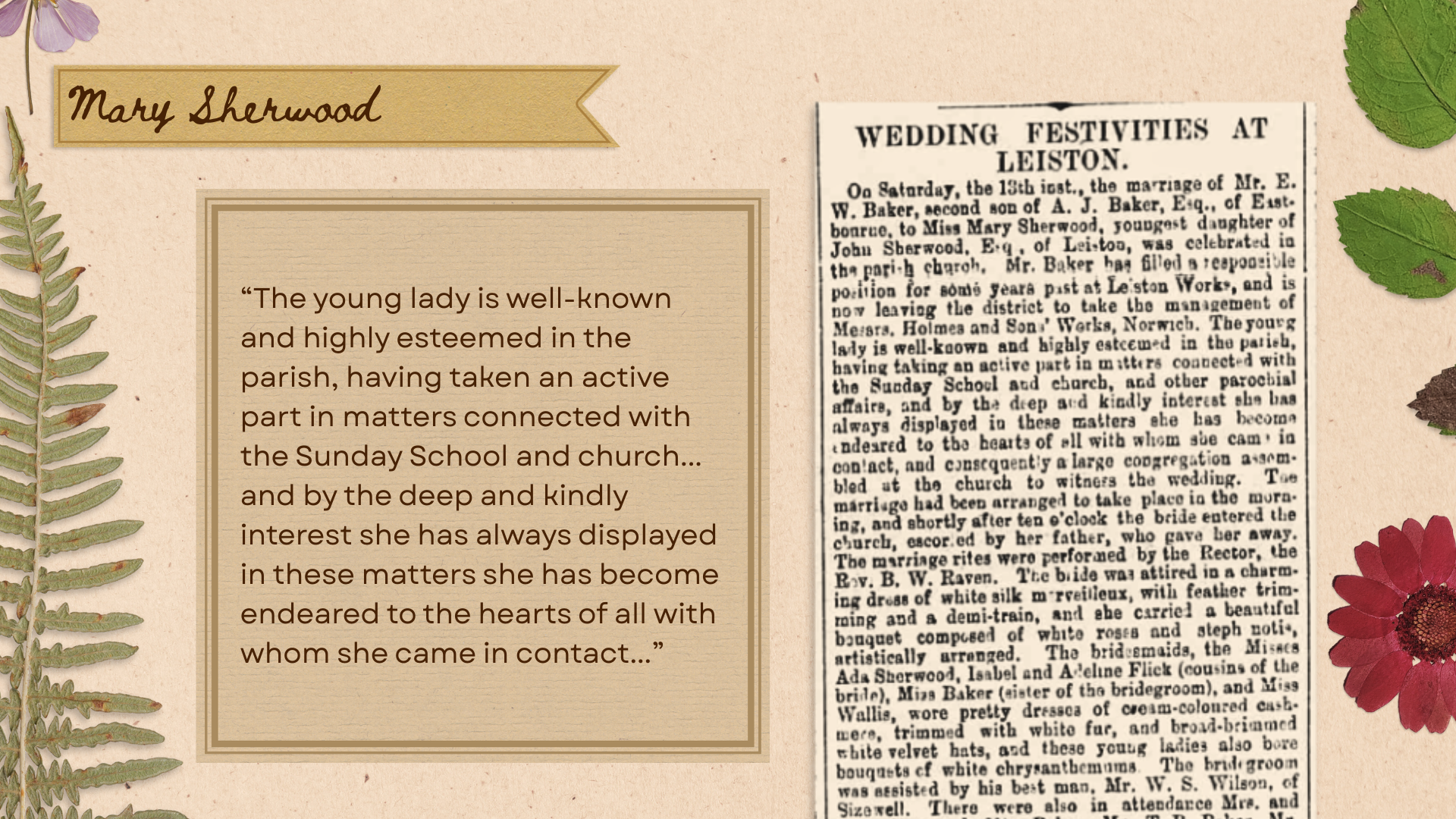
Mary must have had a keen interest in botany which she encouraged in her daughters – the notebooks make regular references to her throughout, showing how she passed her passion on.
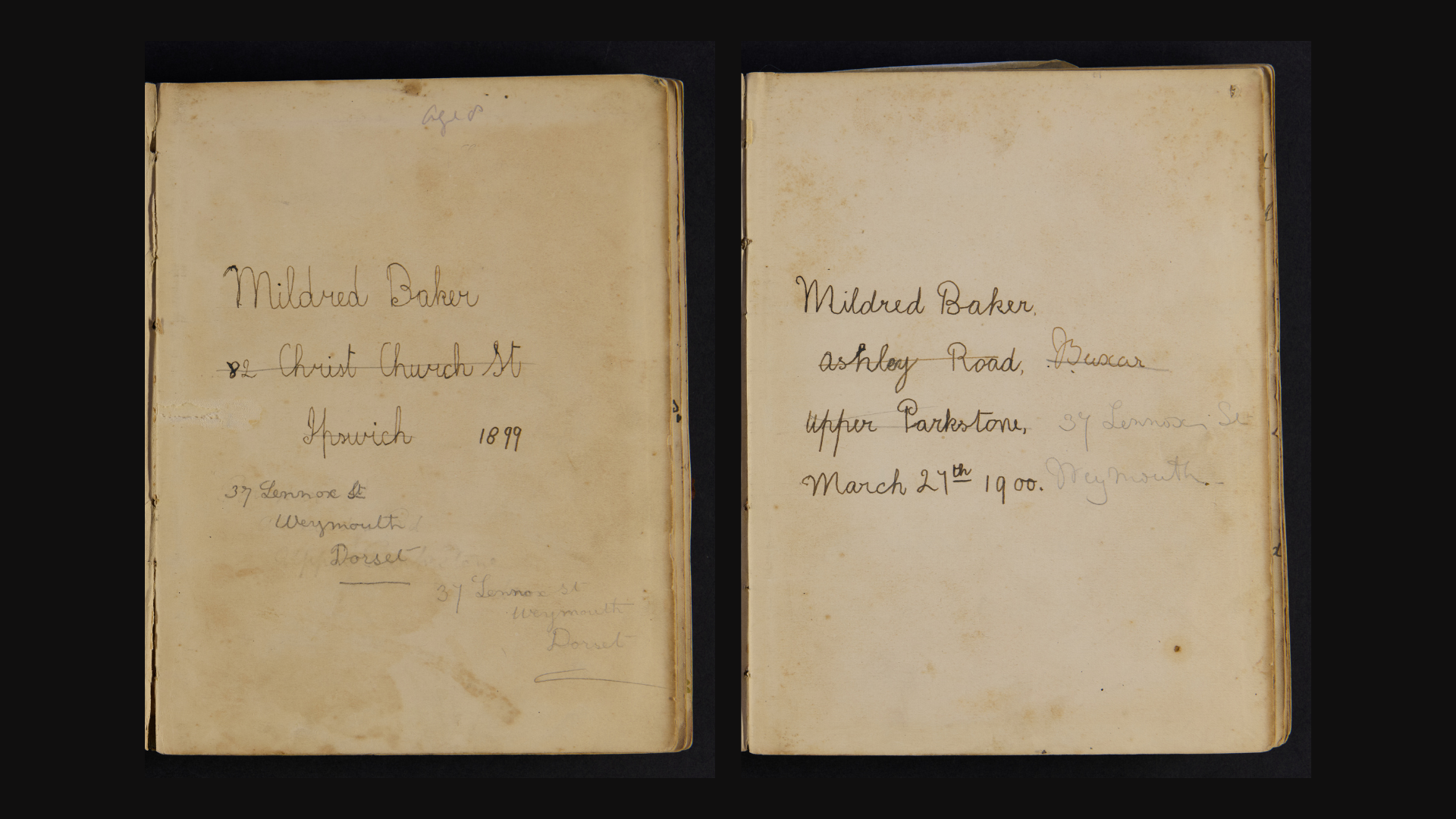
Mary and Ernest welcomed their first daughter Mildred in December 1892. They were living in Norwich at the time, and the addresses at the start of the notebooks show us that the family lived in Ipswich, Poole, Weymouth, and Witchampton.
We can find them in a house called Buxar on Ashley Road, Poole, in the 1901 census. The interesting house name comes from the birthplace of Ernest’s father, who was born in Buxar, India.
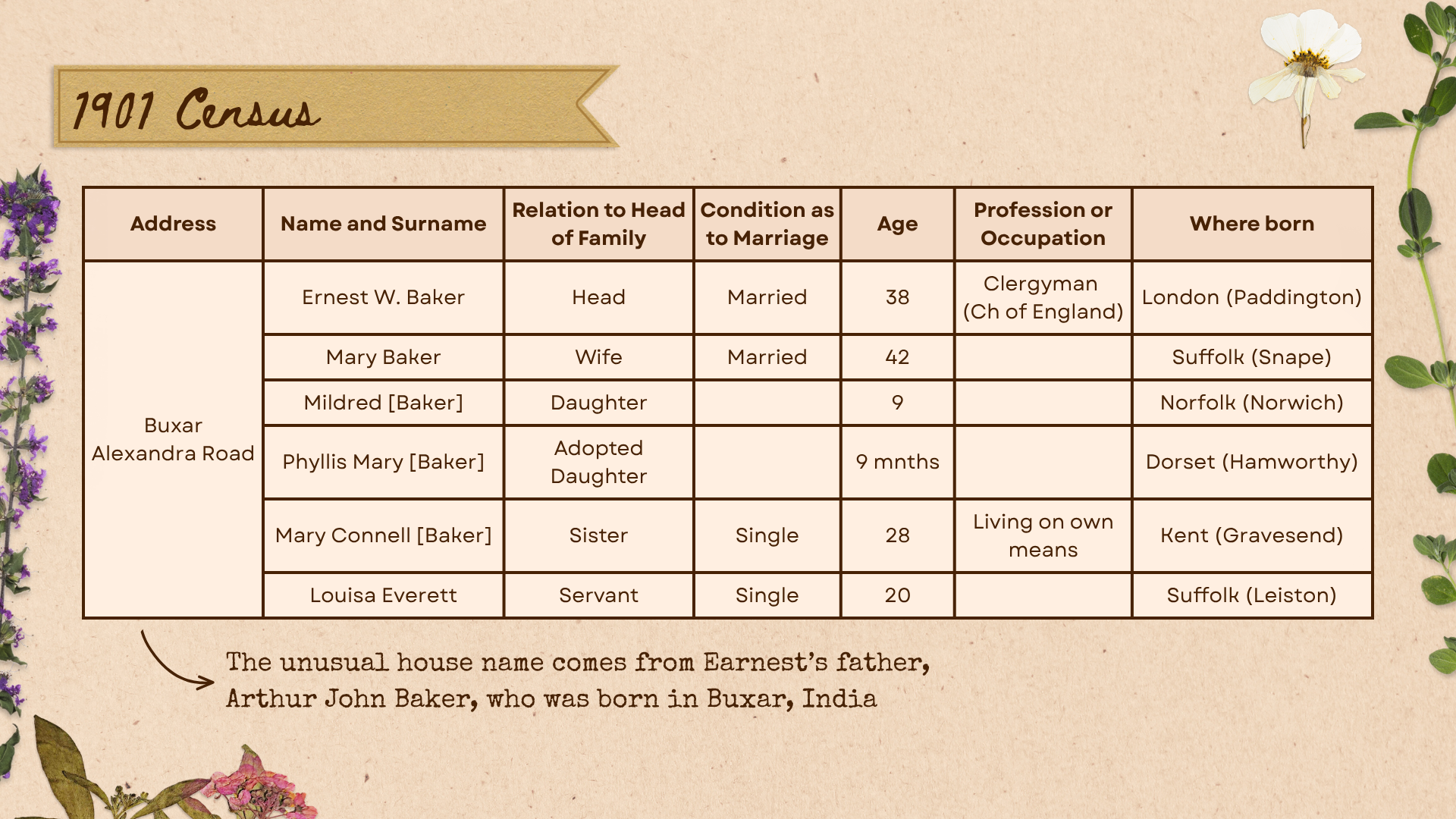
Ernest’s sister Mary Connell lived with the family, and you might also spot that Mildred had an adopted sister, Phyllis, who is only nine months old. Phyllis’ parentage is a mystery, and it sent the author on a wild goose chase which is still yet to be solved! If any readers have more information, do leave a comment below.
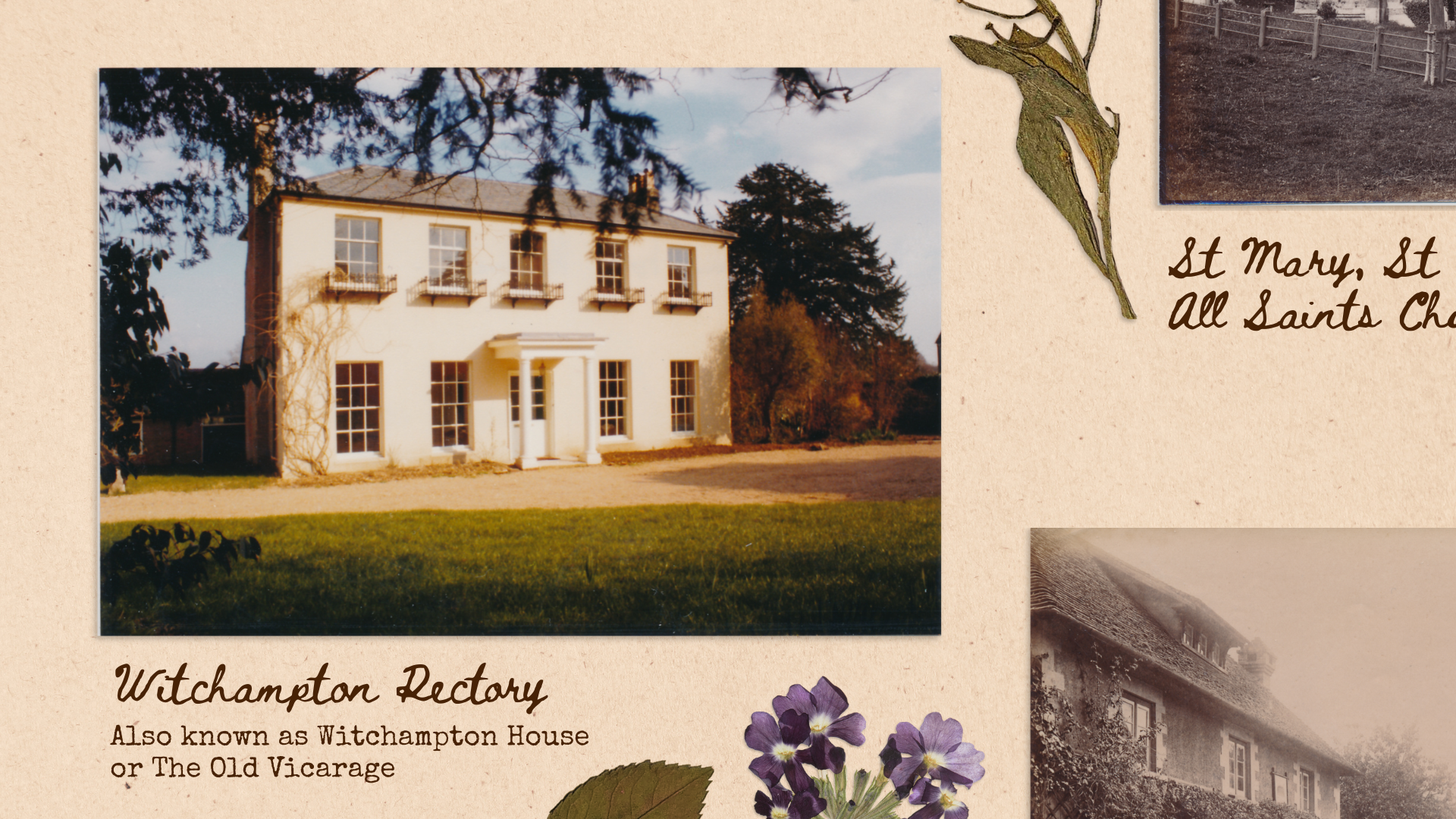
It is likely that Mary was pregnant at the time this census was taken, and their second daughter Barbara was born shortly after. We can also find the family on the 1911 census, at this time living in Witchampton Rectory. This is where the Bakers stayed until the 1930s, including Mary Connell Baker, who lived with her brother until their deaths in the same month, July 1934.
—
At this point we will leave the story for now. Join us on Friday 3 July 2026 for part 2 where we will take a look at the lives of the children, the tragedy of the family, and their interest in recording nature in these wonderful books…
—
We love to encourage access to original records at Dorset History Centre, but we have had to make the difficult decision to close these documents – unfortunately, the cuttings have become brittle with age, making the books difficult to handle. However, that doesn’t mean they’re off limits! We have fully digitised the three volumes, and you are welcome to visit our searchroom and view the digital surrogates. We are hoping to make them available to view online at some point in the future!
If you have any questions, do get in touch on archives@dorsetcouncil.gov.uk for more information.