

Last year we published a blog about two large photo albums that we digitised that were made by Crispin Redshaw, who was engineer and station manager for the Dorchester Beam Radio Station. See our previous blog here: World Radio Day: Photographing Dorchester’s Radio Past – Dorset History Centre blog
Today we are revisiting these albums with a focus on his photography skills. The albums are now kindly being donated to our collections and we felt it appropriate to highlight further some of their content.
As previously mentioned, Crispin Redshaw was a skilled and prolific photographer. We wonder how he had time for so many experiments whilst juggling a full-time job and enjoying family life – which he clearly did.
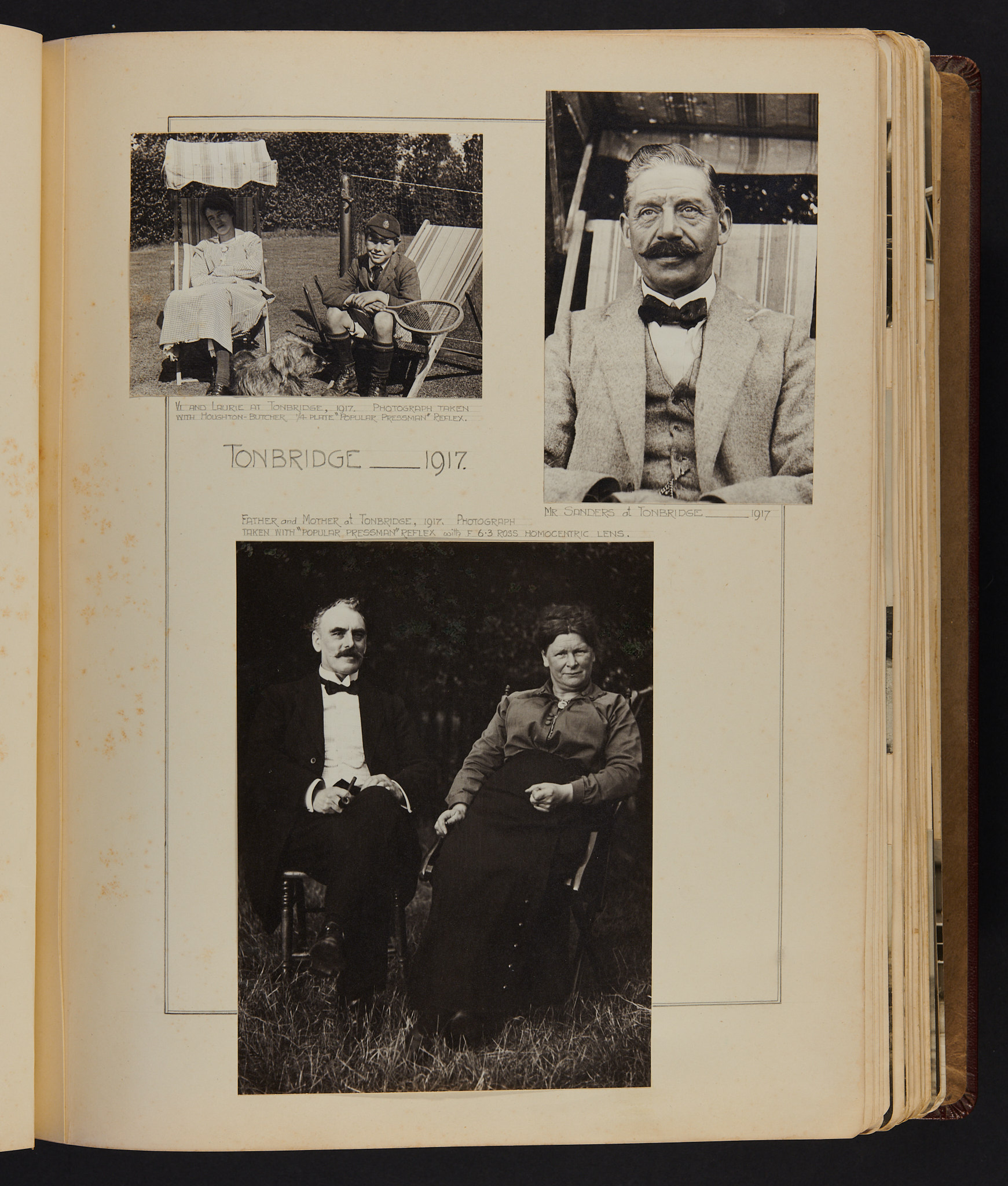
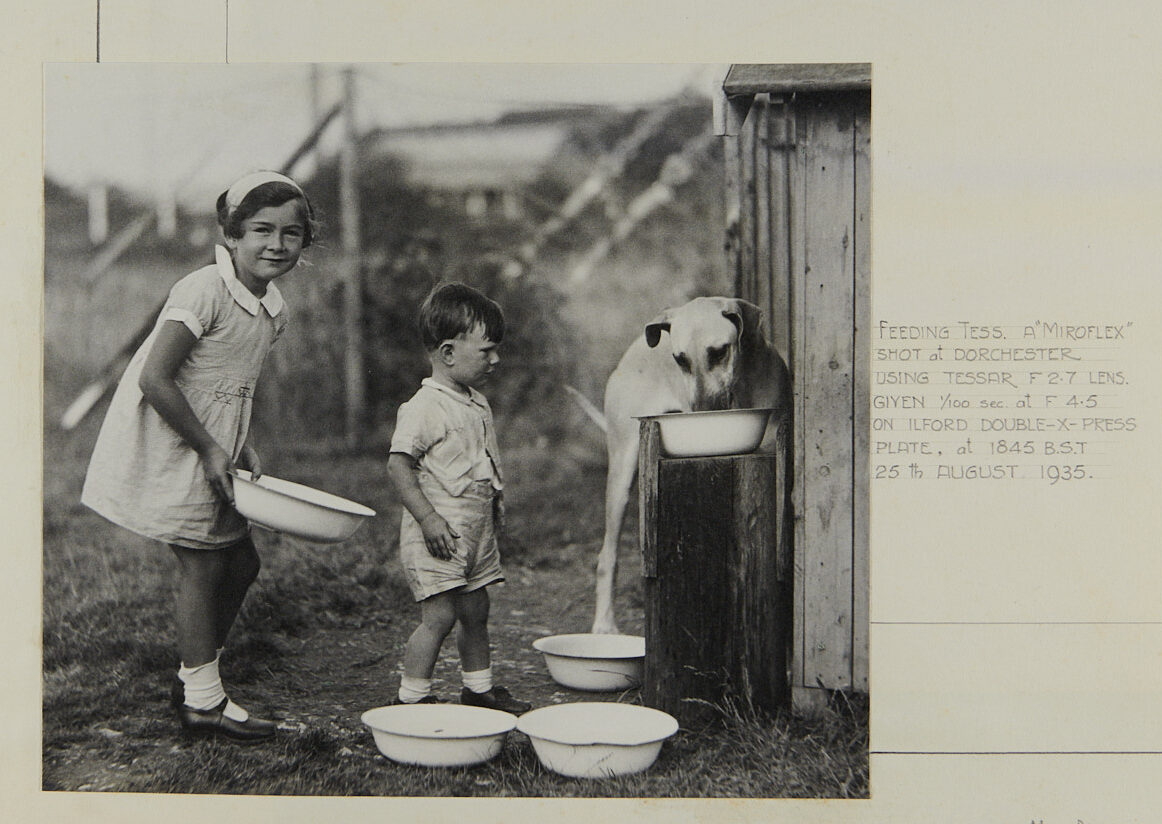
The albums document a life well lived, through both work, and play, comprising of photographs of the radio station, portraits of family, friends and colleagues, holidays and day excursions, and day to day life within Dorset. Crispin Redshaw captured some wonderful moments that give us an insight into life during and between the wars.
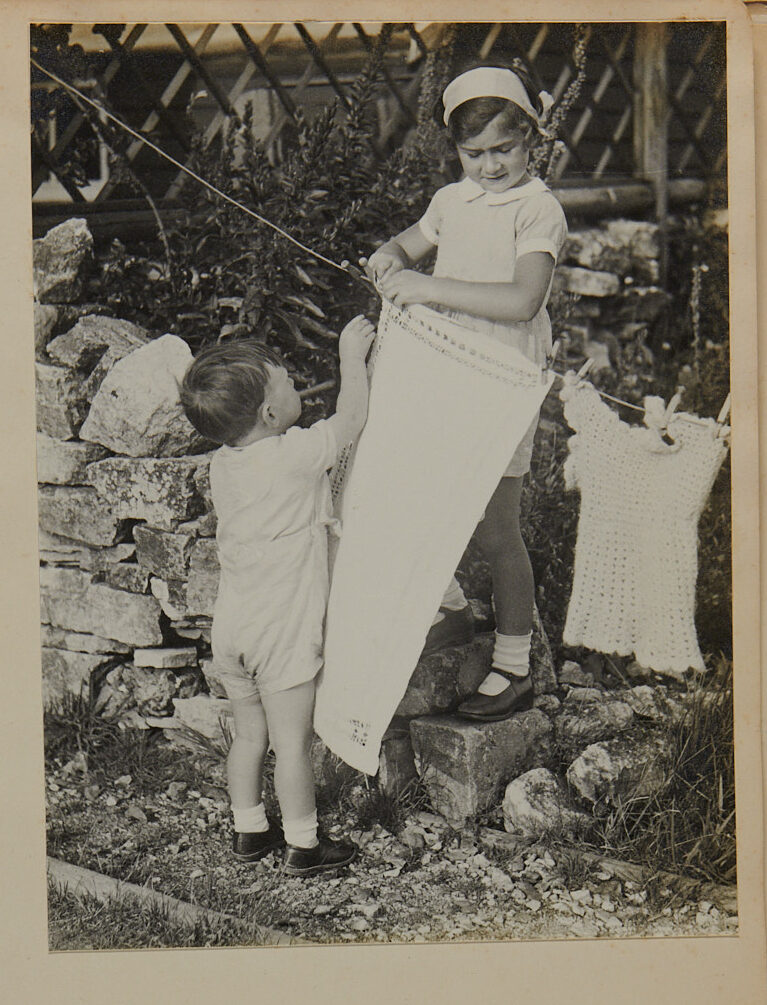
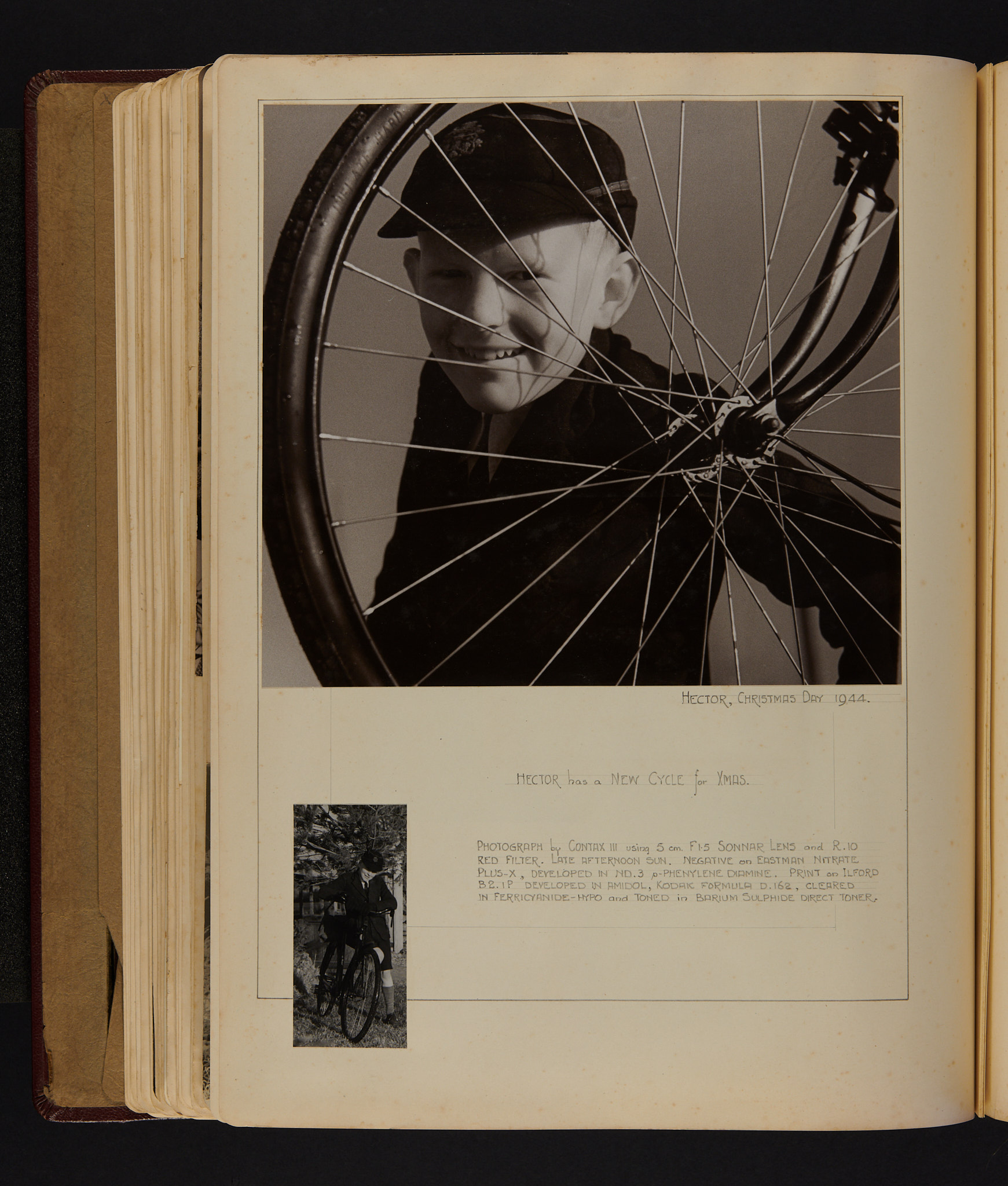
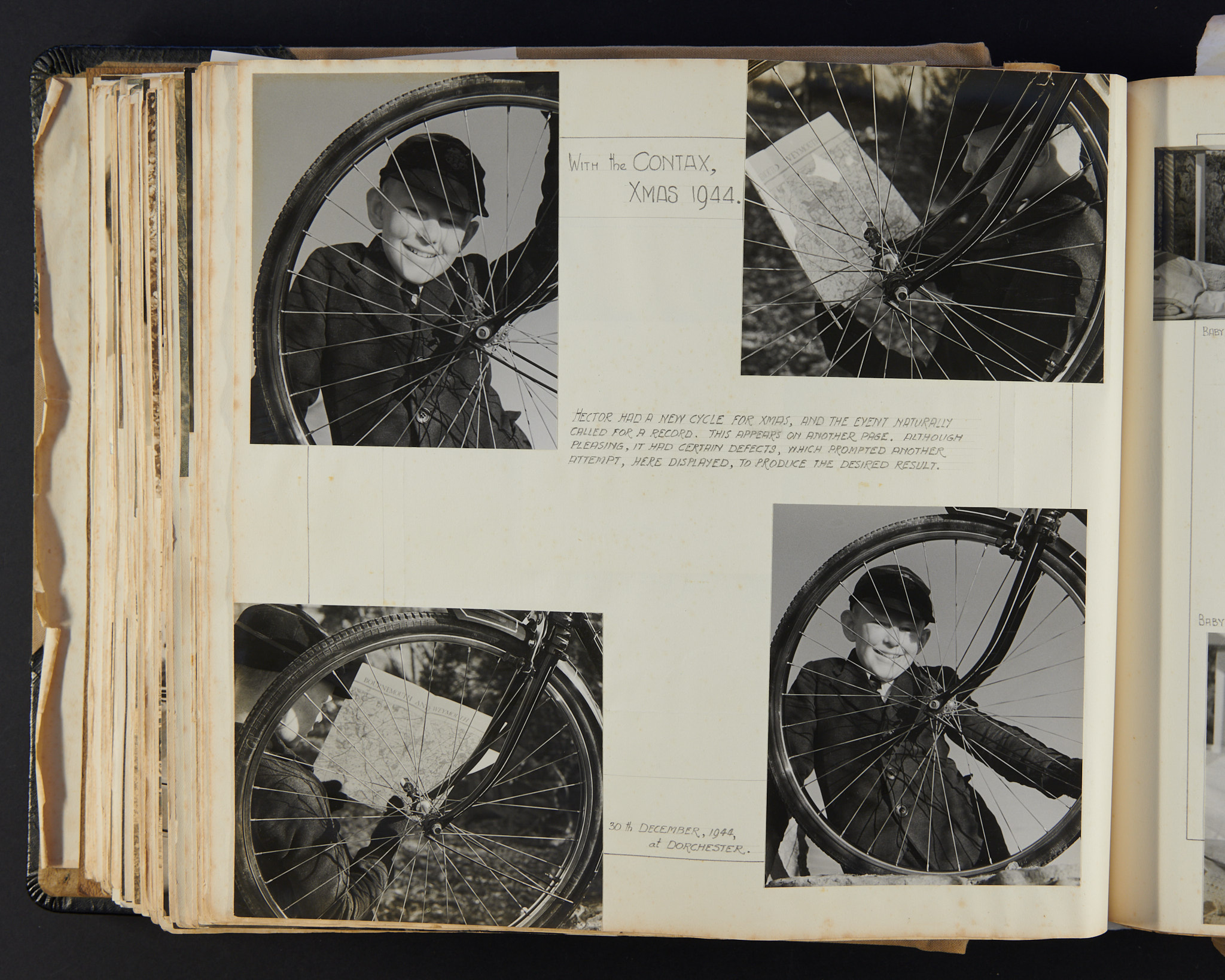
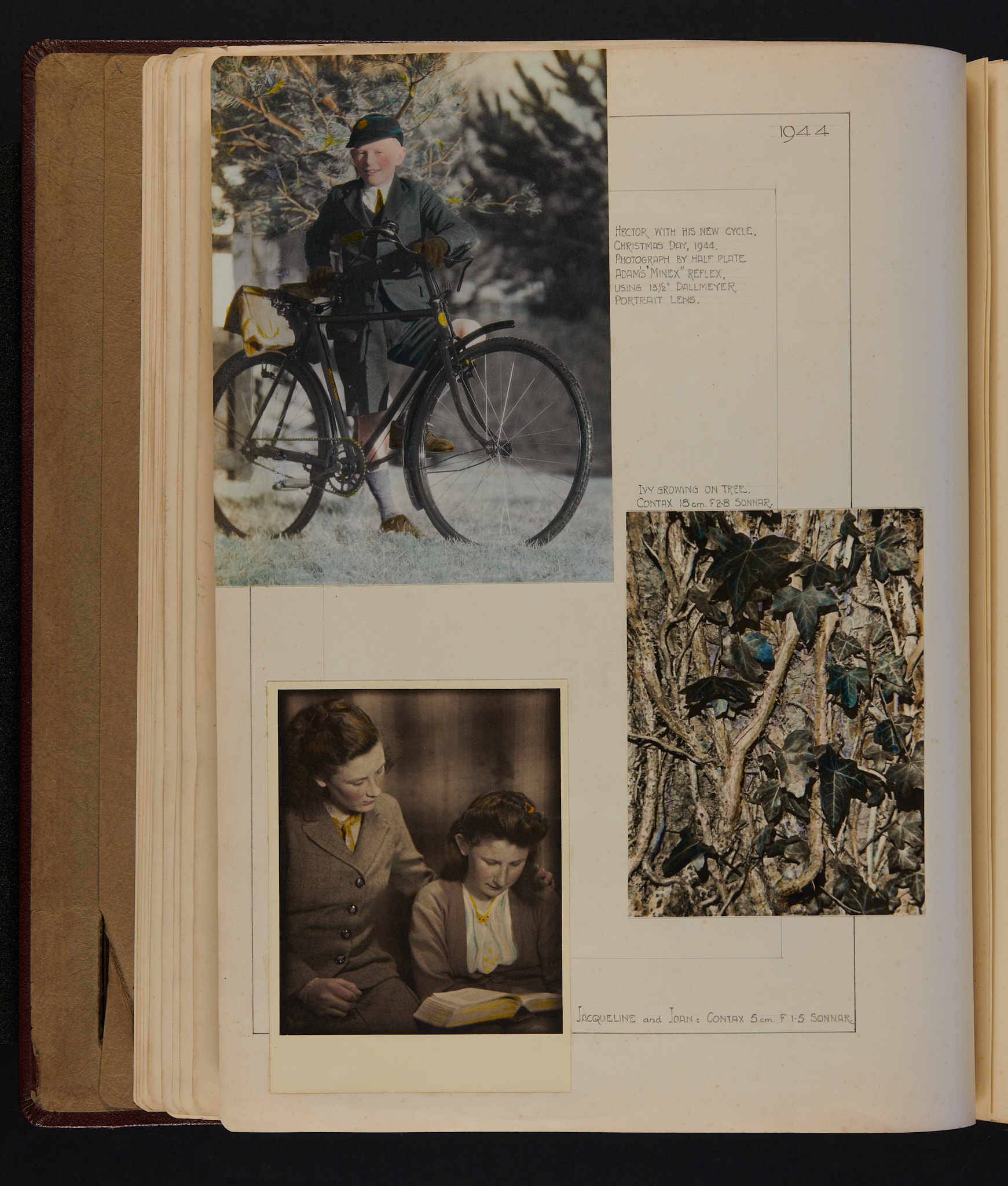
This portrait of this little boy’s happiness at his new Christmas present, creatively composed through the spokes of the bike wheel, is joyful!
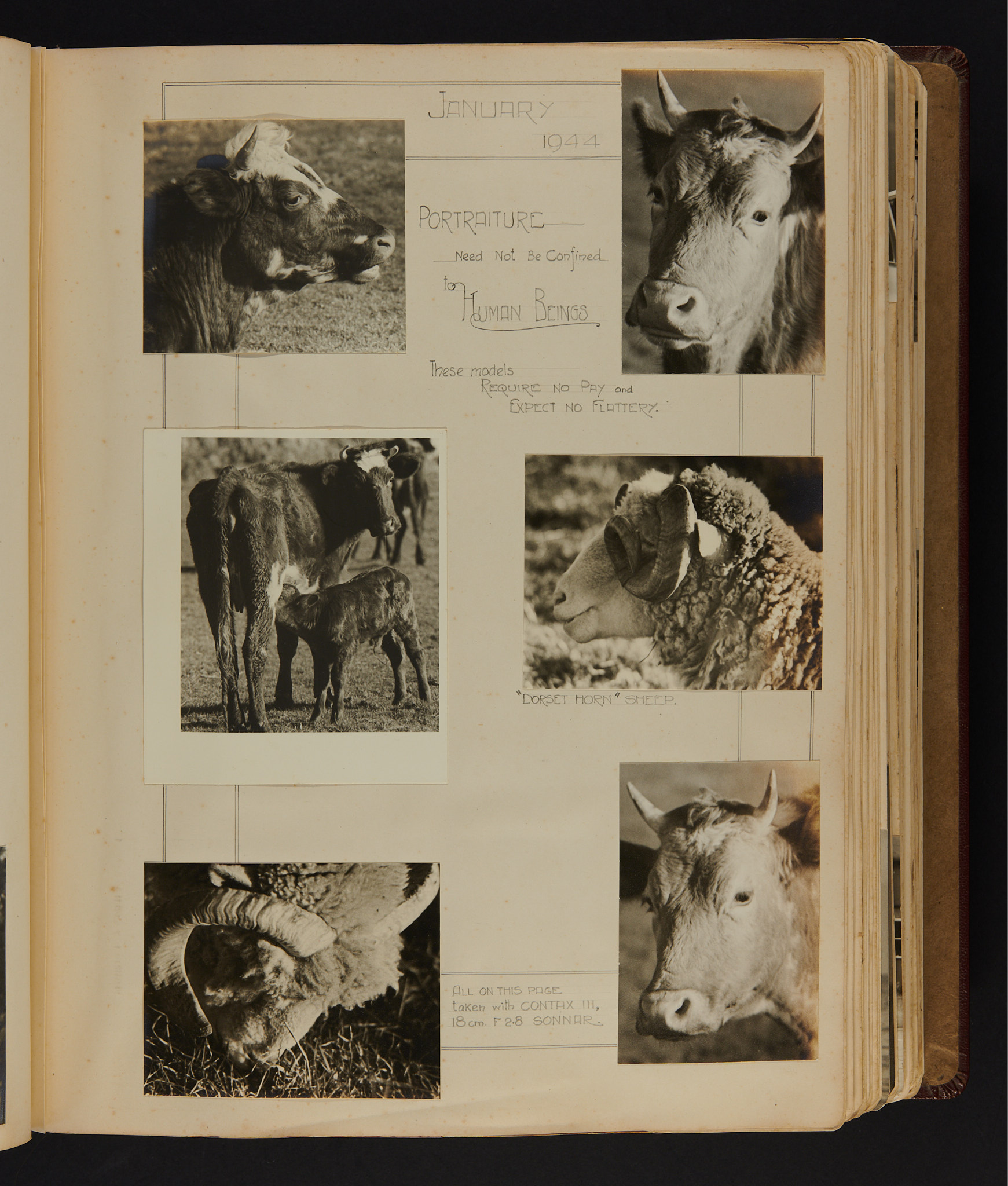
We love these portraits of cows and sheep and the caption – “These models require no pay and expect no flattery”! The perfect models!
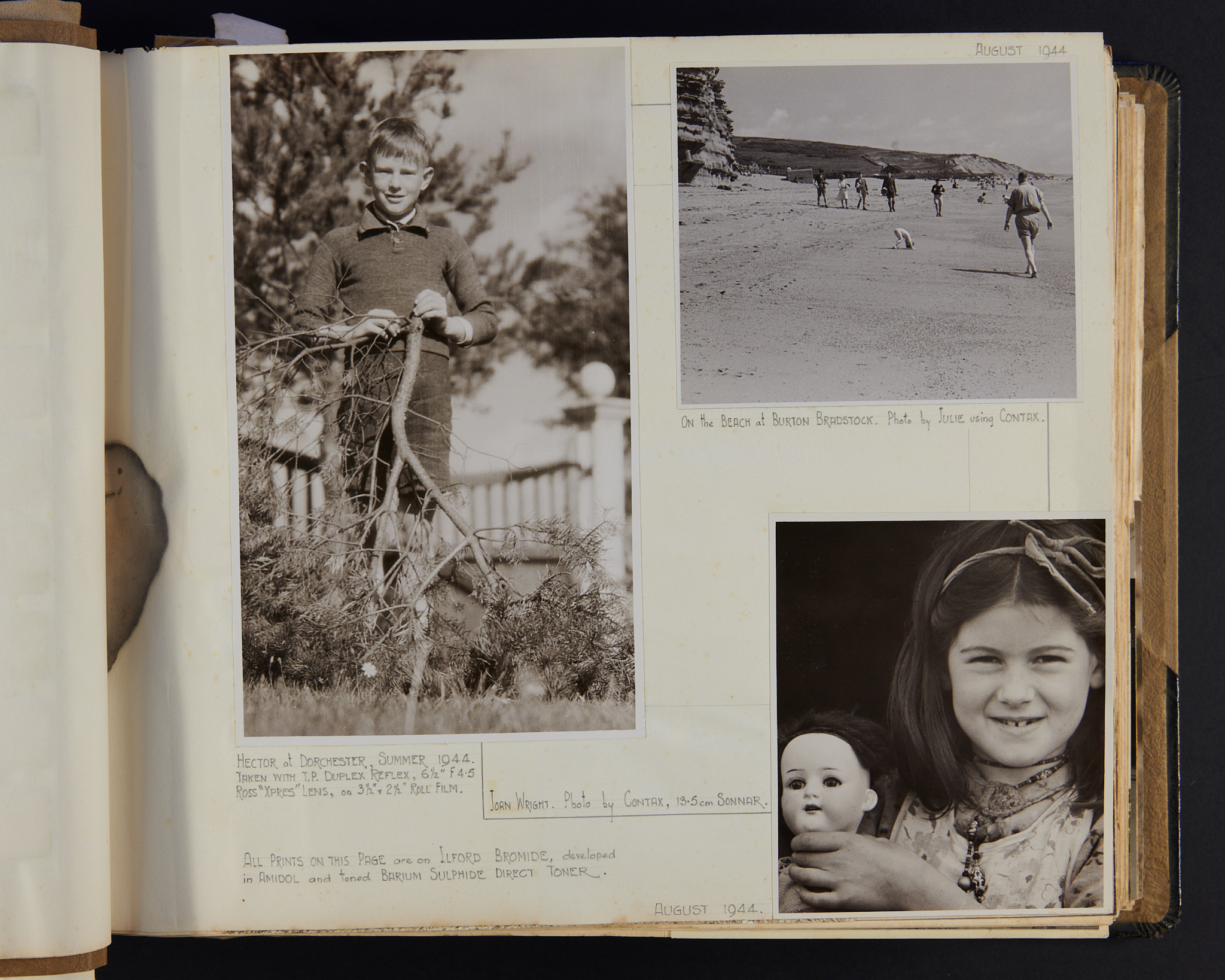
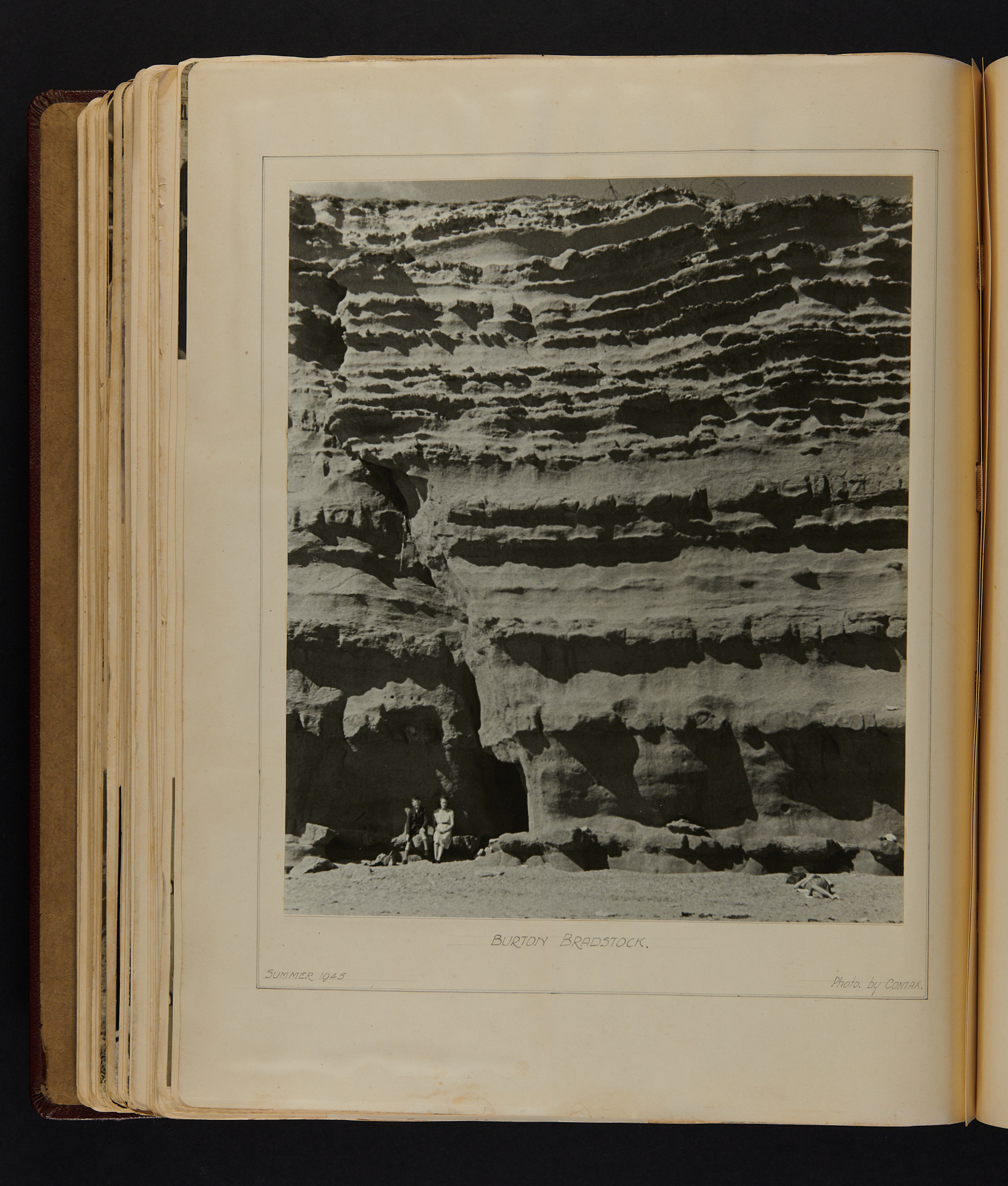
We also love this photograph of people at the beach in Burton Bradstock.
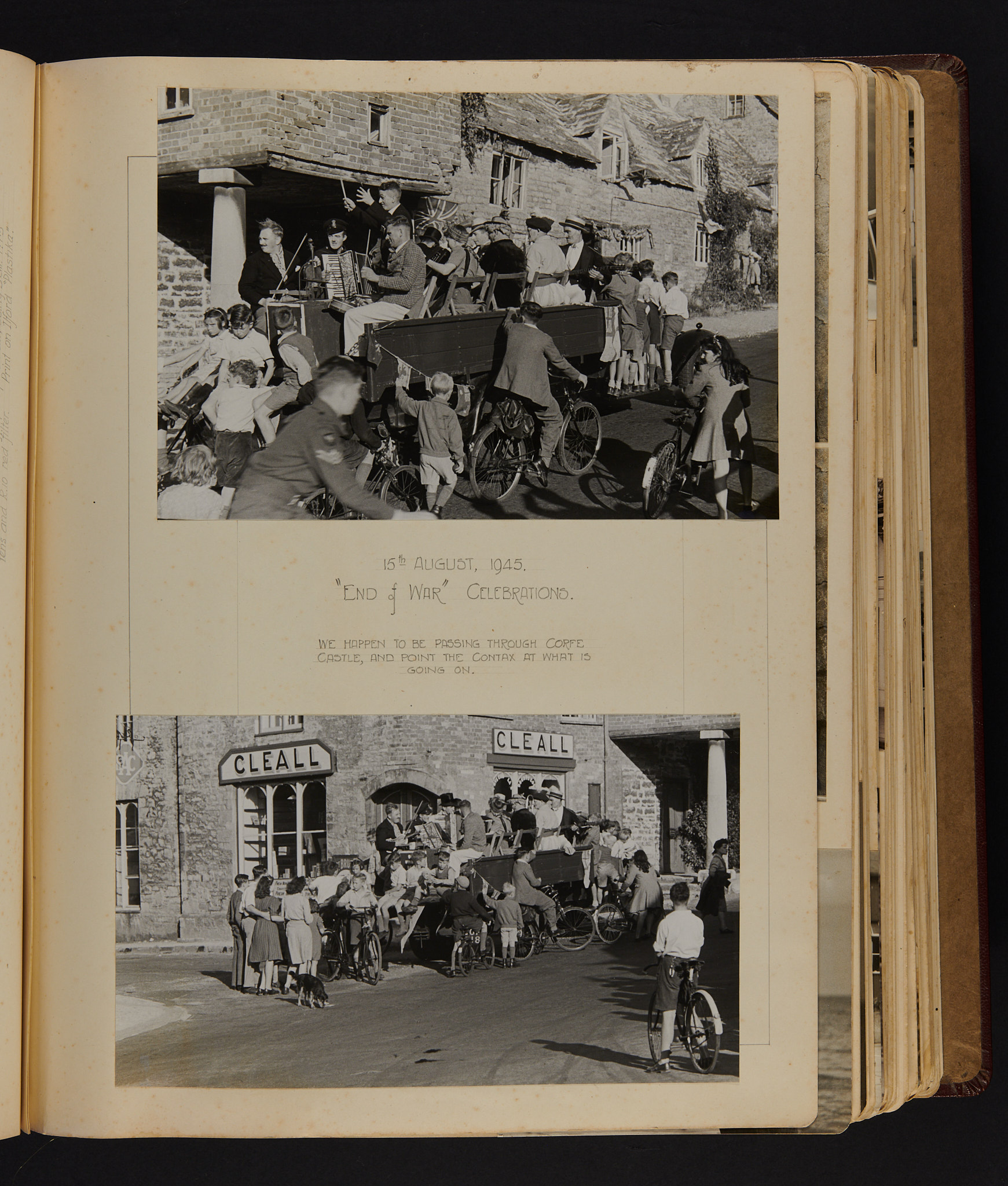
But best of all is the marking of the end of the war…
—
Onto more technical matters, many of you may remember some of the old photographic papers produced by Kodak and Agfa, sadly long ago discontinued. Crispin Redshaw would experiment with a range of different papers, such as Kodak BRSWF, 2Z – a silver bromide paper that was popular and renowned for rich deep blacks and a neutral tone, or Kodak Bromesko. Silver halides are the light sensitive ingredients in darkroom photo paper – silver would be combined with either bromide or chloride, each producing a different aesthetic finish and a different light reactive speed. Silver bromide was very popular, producing neutral black & white tones, and with a faster reaction to light than silver chloride papers, which tended to be slower, but produced a warmer tone – those warm brown tones often seen in older prints can often be attributed to this.
This page clearly illustrates the difference between a bromide paper and a chloride paper with the top photograph having been printed on Kodak Bromesko, and the bottom photograph on Kodak Clorona:
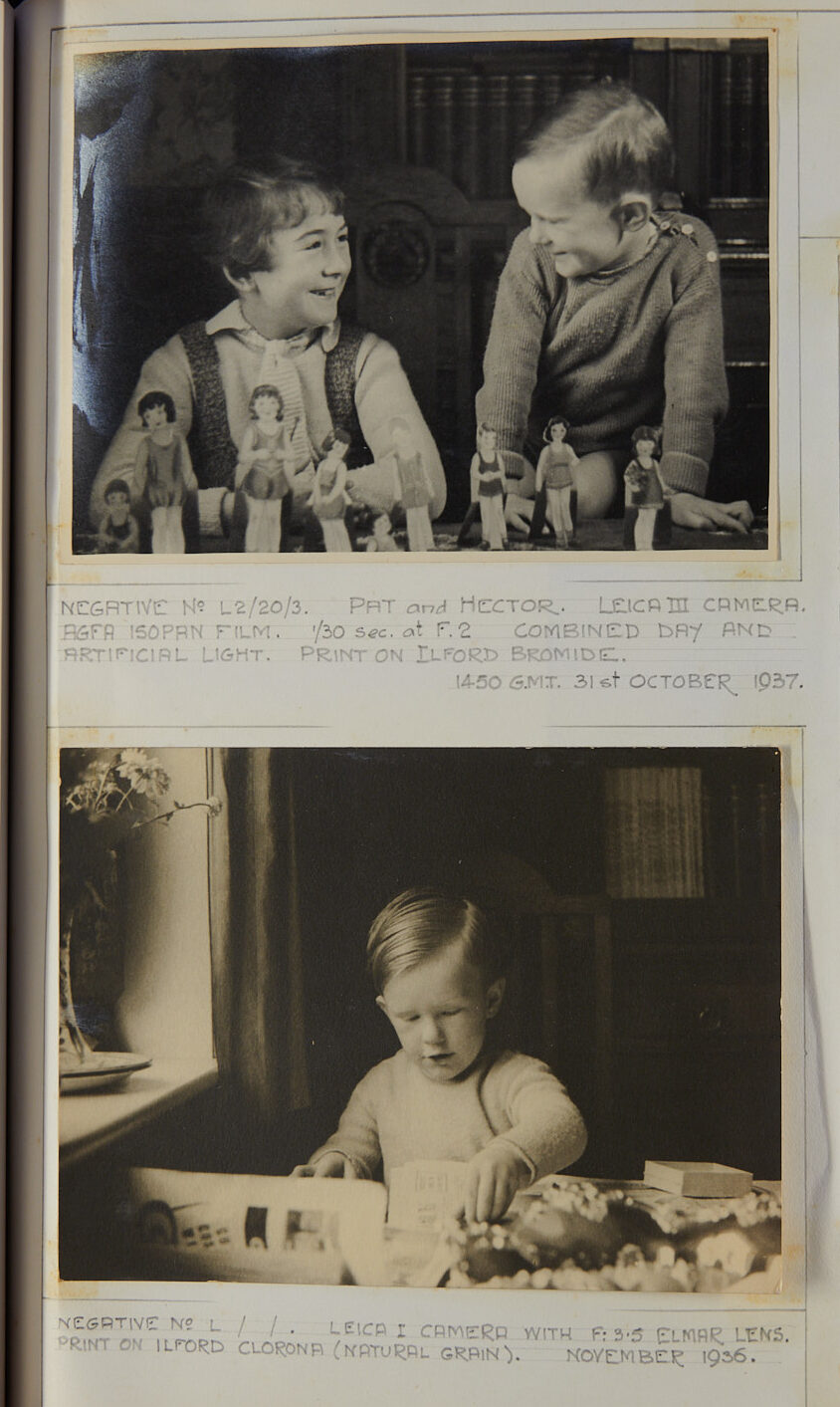
Bromesko paper, however, came in different base shades, such a white or cream. which, depending on how the paper was processed, could produce much warmer tones,
“the warm black tones of Bromesko produced by either Kodak Special Developer or Kodak Developer No.2 can be readily changed into rich sepia or brown tones of equal permanence by the sulphide, hypo alum or selenium toning process” (Kodak Black & White Papers)
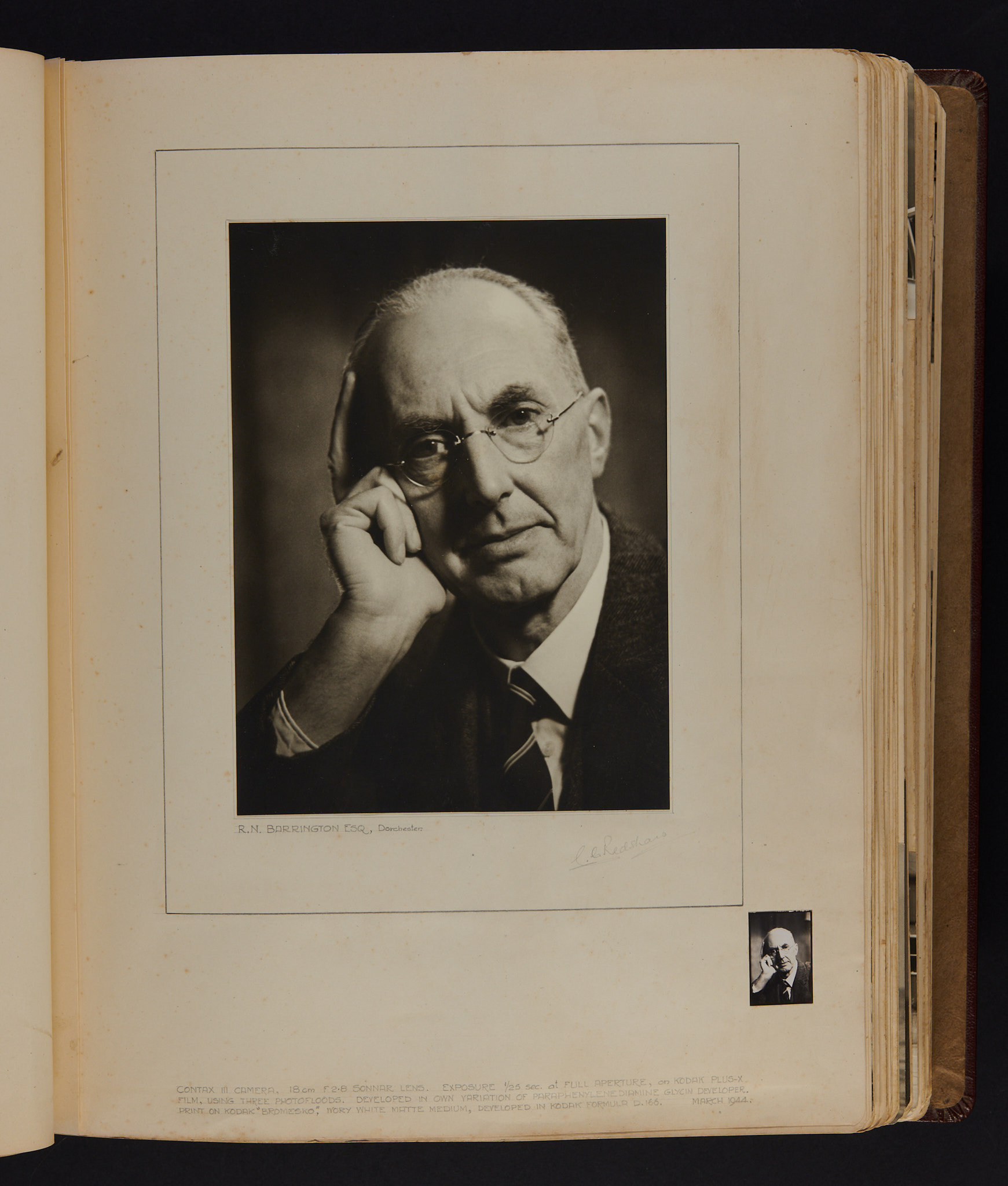
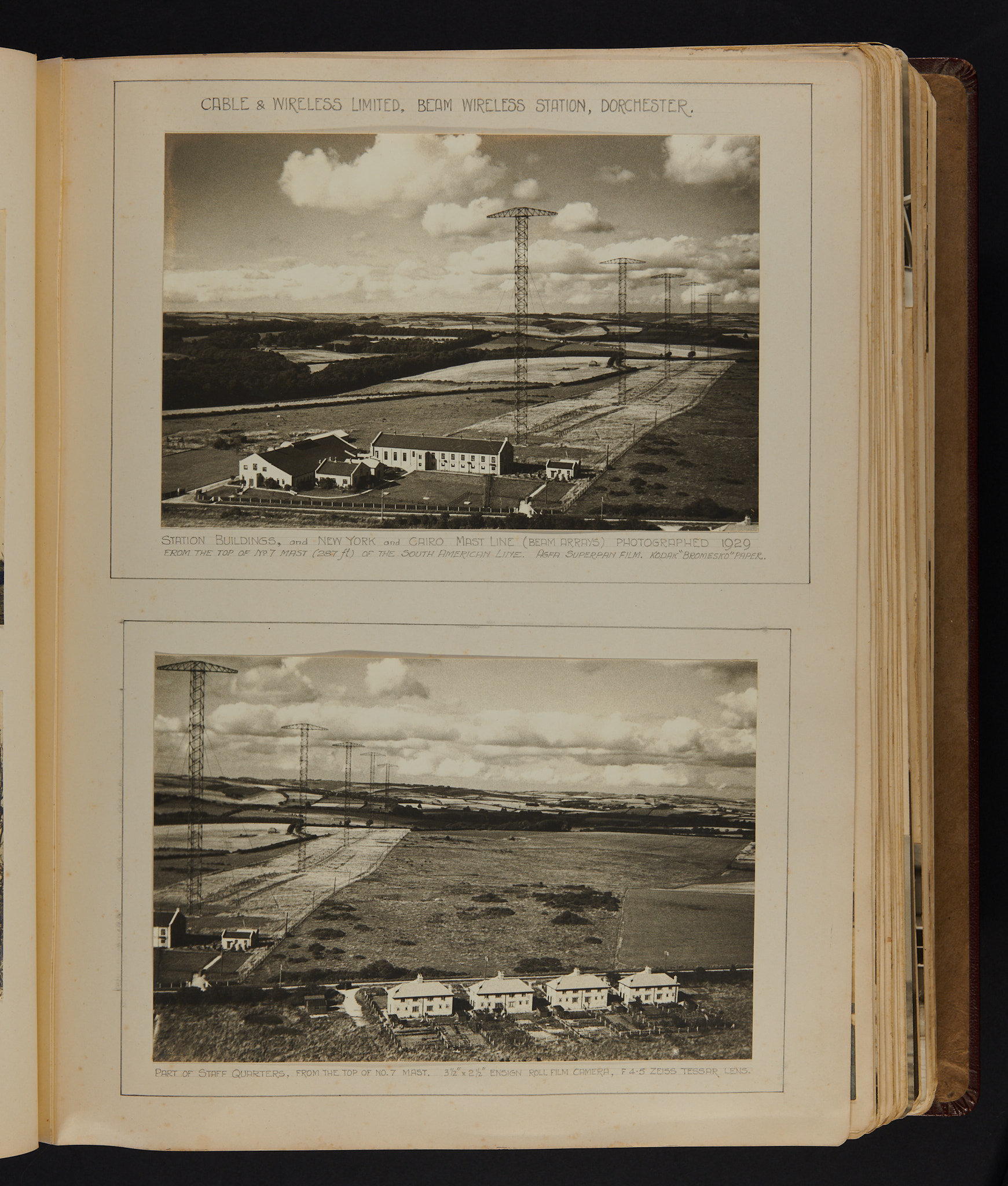
The two images below were printed on Kodak Bromesko, with figure 10 having used the Ivory White Matte medium grade paper, which in combination with Crispin Redshaw’s ‘own variation’ of developer must have contributed to the warm tone.
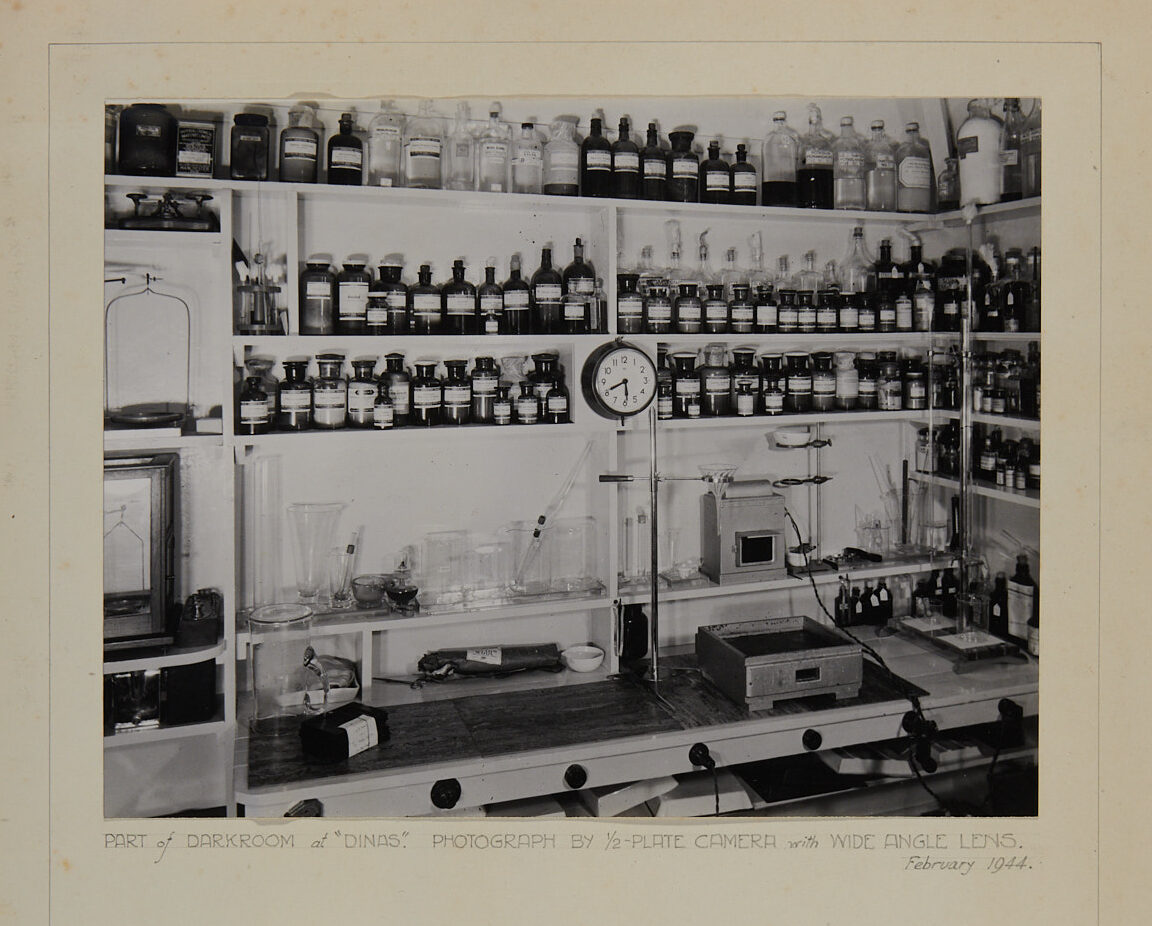
Crispin Redshaw was highly experimental in his use of chemicals. He had an extensive array of bottles in his darkroom, as this photograph shows:
Toning a print was and still is another common practice; toning is a process undertaken after the print has been made. It involves another series of chemicals and must be washed thoroughly before-hand to ensure there is no contamination from the previous chemicals. A well-known toner is sepia, which forms a yellow-brown tone, depending on the mixture. Toning can extend the life of the print, with selenium toning being a key process in archival photographic printing. Mr Redshaw experimented extensively with toning, as can be seen in this image:
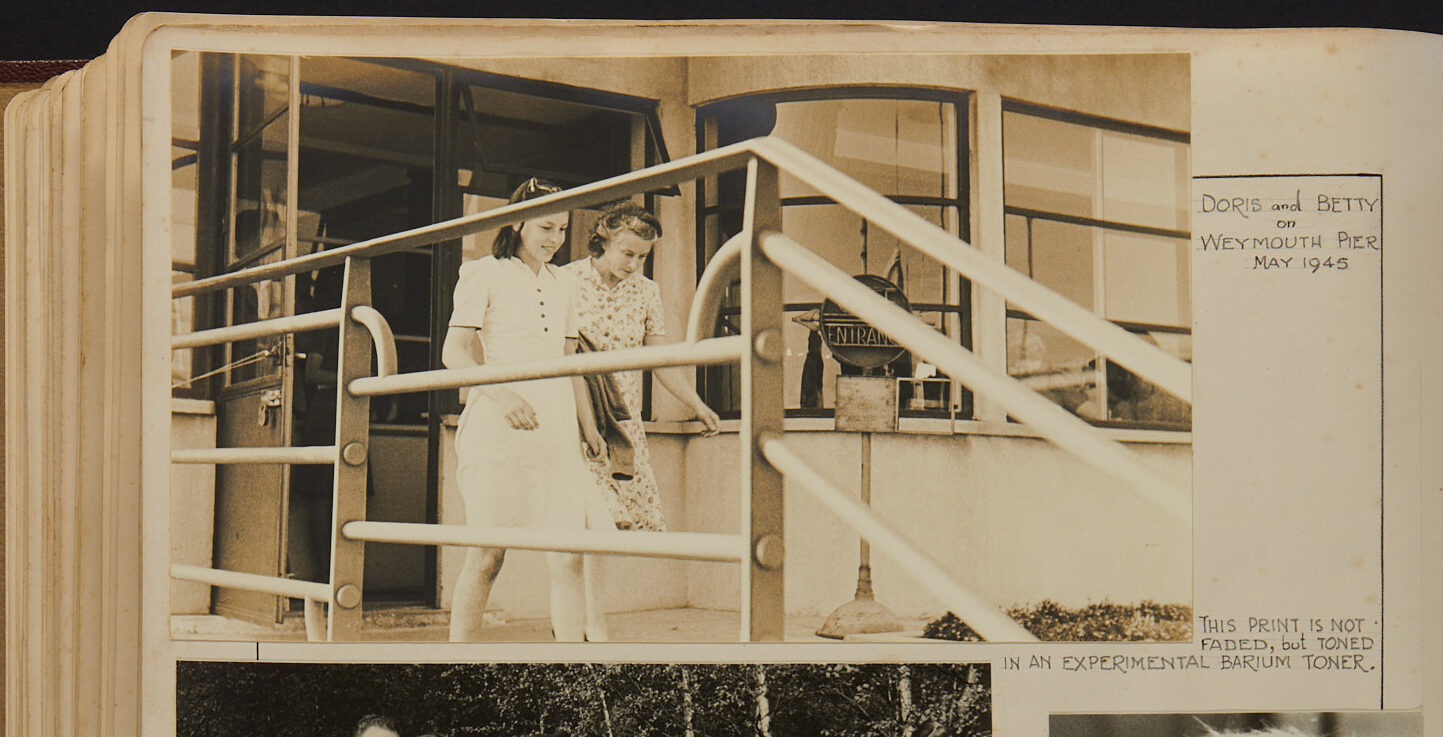
Barium, used here, is a soft silvery white metal. Today it is often used as a base coating for both traditional and digital photo papers, often termed as Baryta paper, as it provides a soft light diffusing effect and a clean bright base. It is therefore intriguing as to how it was used in this example to obtain this reddish tint. Perhaps there are some scientists amongst you who could help to shed light on this (excuse the pun!)
This next image discusses the use of Barium Sulphide Meta nitrobenzene-suphonic acid, which sounds rather scary!
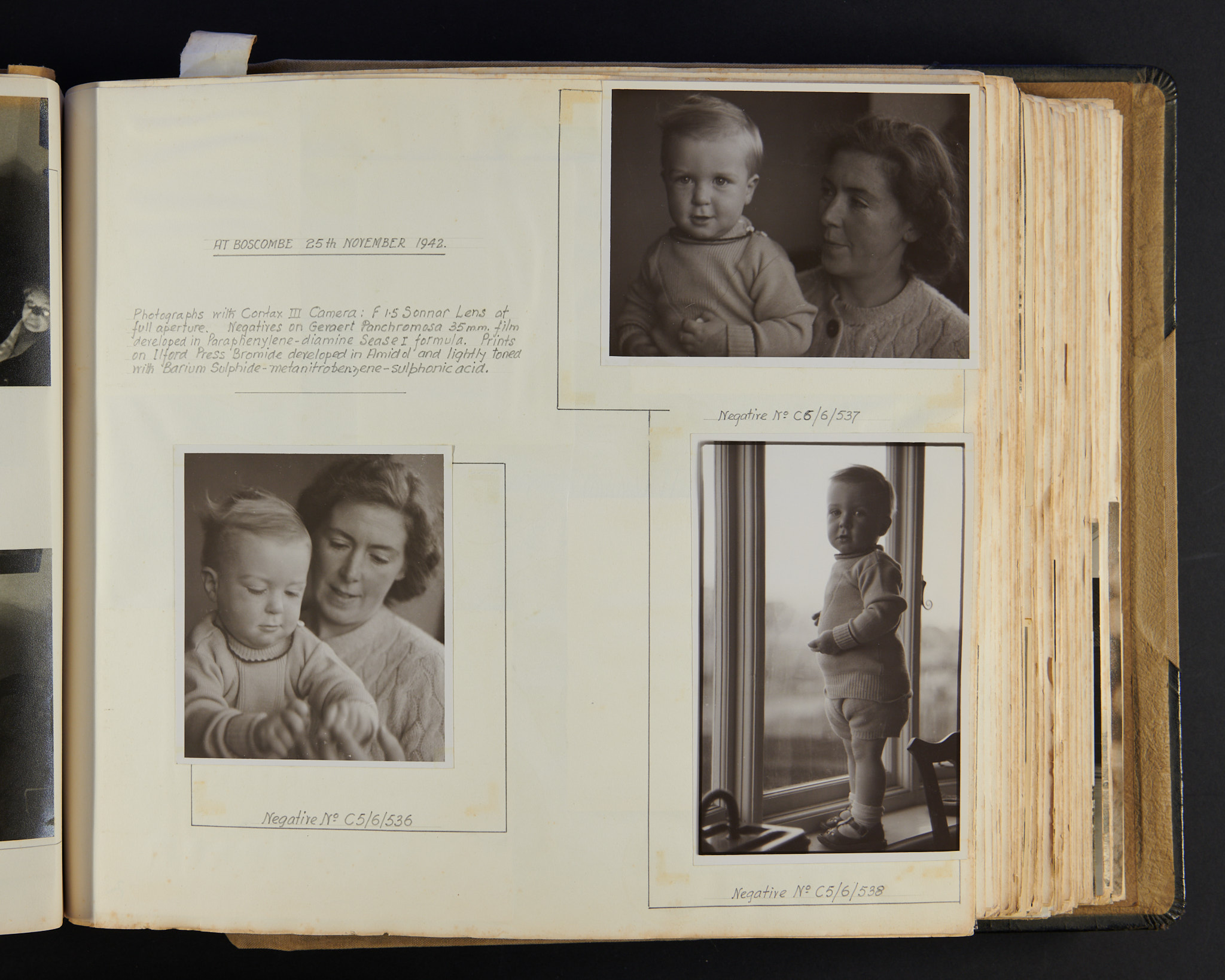
We decided to do a little research and found that Barium suphide’s “reactivity and potential to release toxic gases demand careful handling and strict controls.” (ref: Barium Sulfide: Properties, Uses, and Safety) and that it will “react with acid to form hydrogen sulfide….contact with acid liberates toxic gas” (ch.9.1.13 Barium sulfide | BaS | CID 6857597 – PubChem). Meta nitrobenzene-sulphonic acid, however, is also termed as sodium salt, so not an acid in fact (phew!) and is used as a ‘resist salt’ to fix colour in textiles as well as being an anti-reduction agent in photography. Our best guess based on the above research is that the combination was used to add depth and brightness to the image. However, again, we call on scientists to help explain this as neither available photography history and science books, nor google had the answer as to this particular combination!
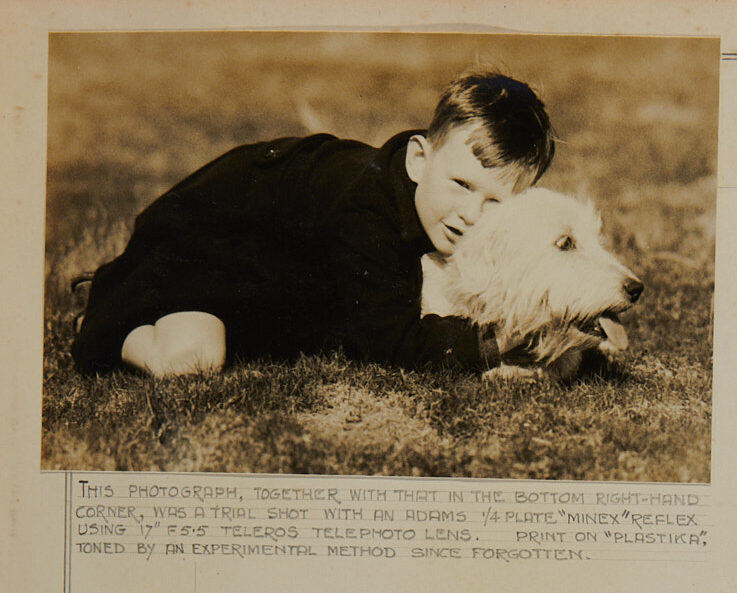
Like everyone Mr Redshaw was not infallible and on the odd occasion had failed to do his usual meticulous notetaking, as in this image, where he could not remember what toning method he had used.
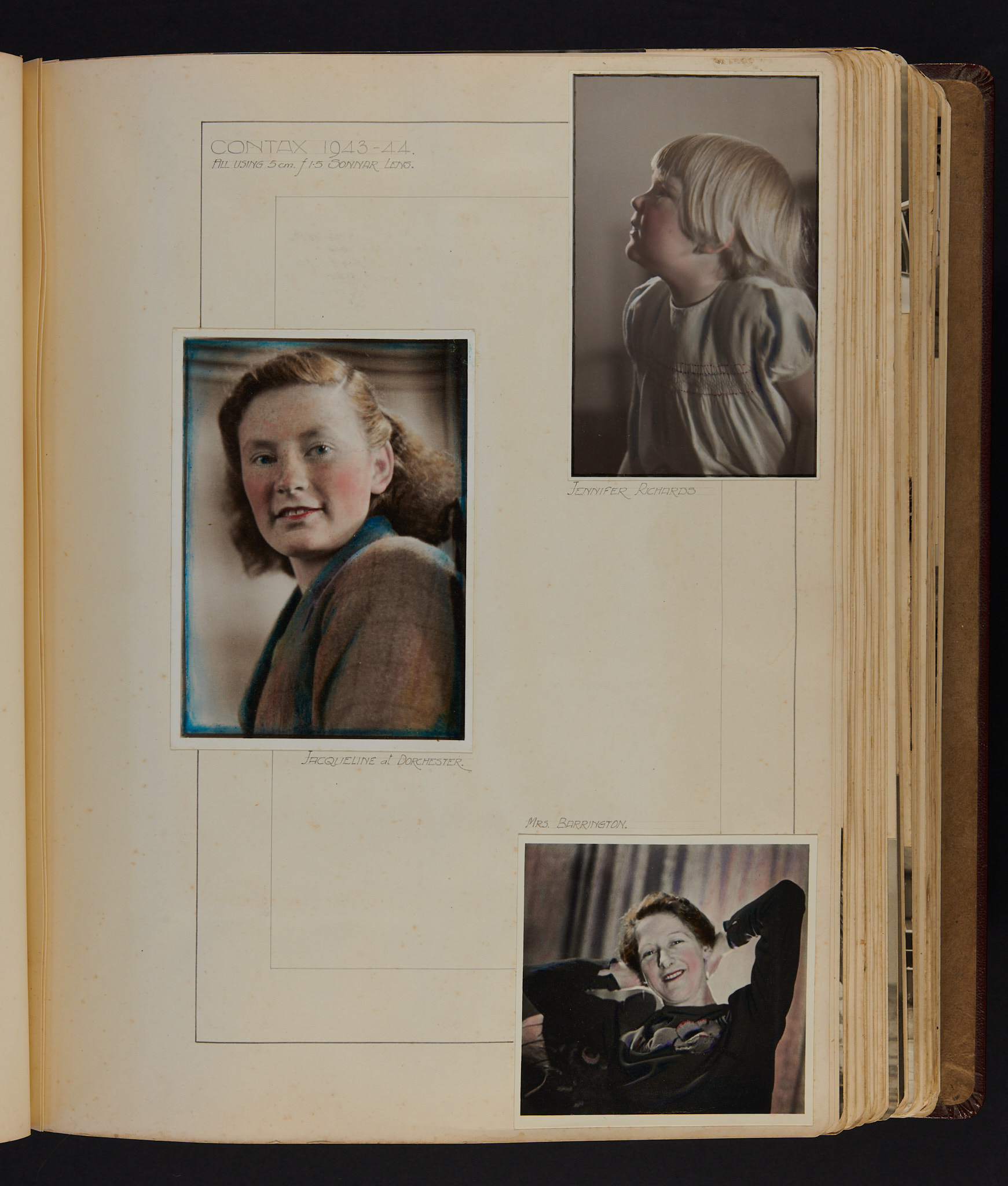
Hand colouring was a popular way of introducing colour to a black & white print (colour photography was very expensive and often prohibitive, certainly to home-processing). These photographs have been beautifully hand-coloured by Mr Redshaw. The photographic paper, unlike modern machine prints which are effectively coated in a plastic, had a real paper surface finish, onto which the silver halide emulsion was painted (silver halides have been suspended in gelatine since around the mid 19th Century when it began to replace albumen and collodion as a substrate). This provides a more absorbent surface into which watercolour paint can gently absorb, allowing for the gradual build-up of colour, either across a whole print, or selected areas.
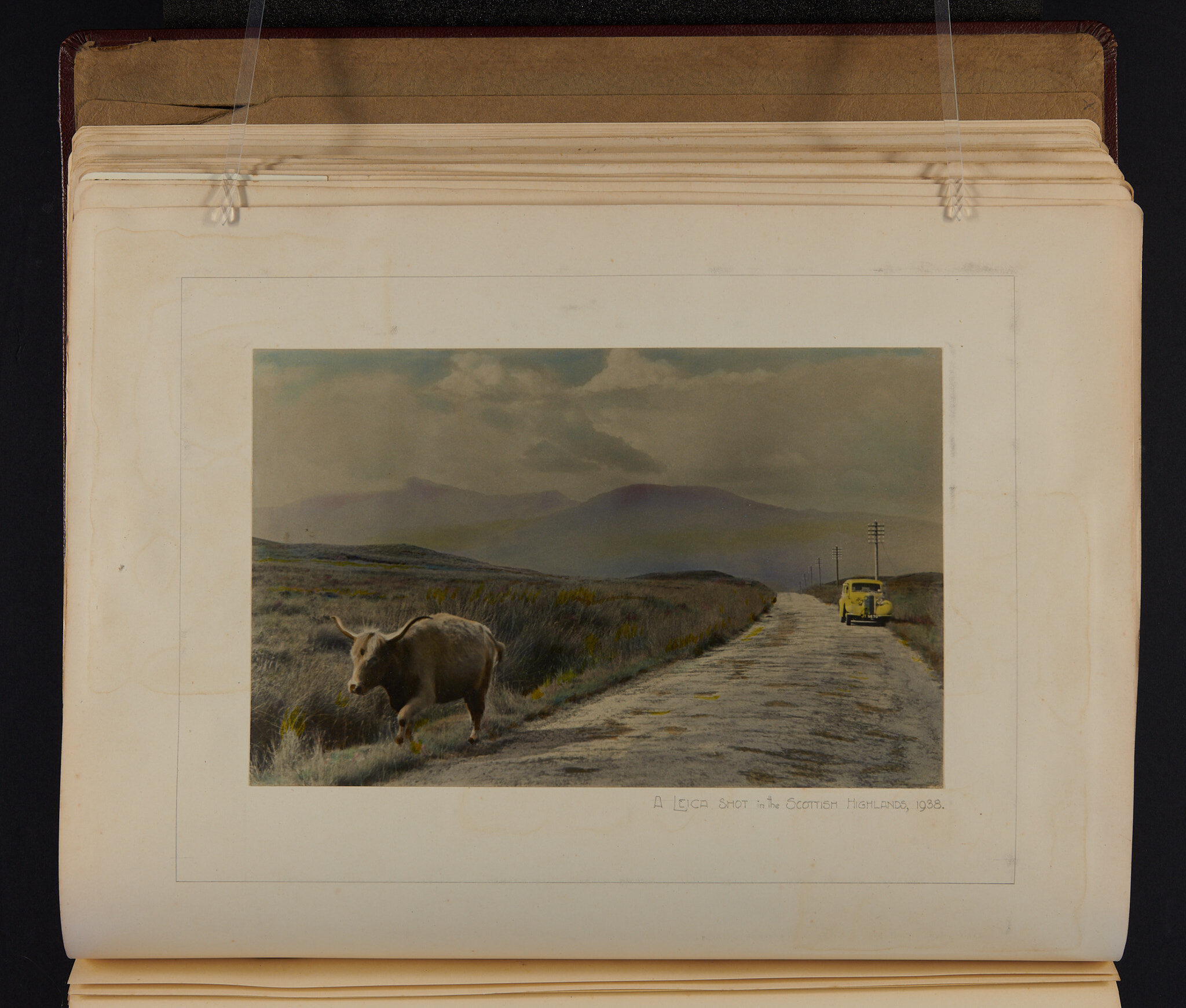
We just love the yellow car in this one!
We have many postcards in our Film and Sound Archive that used this technique. You may be interested in our blogs on our postcard collection https://news.dorsetcouncil.gov.uk/dorset-history-centre-blog/2025/03/14/the-dorset-postcard-collection-bournemouth/
Further experiments
Mr Redshaw’s photograph of Gold Hill in Shaftesbury is not only beautiful but also demonstrates the extent of his determination and skill as a photographer. This series shows clearly the original photograph, followed by the removal of an unwanted figure in the scene (the rather more painstaking version of photoshopping!), and the finished and toned final photograph that went on to win the bronze medal at Antwerp in Belgium at their Christmas International Salon. He was a member of Dorchester Photographic Society and in January 1943 also won ‘best picture on exhibition’ with a photograph of a baby.
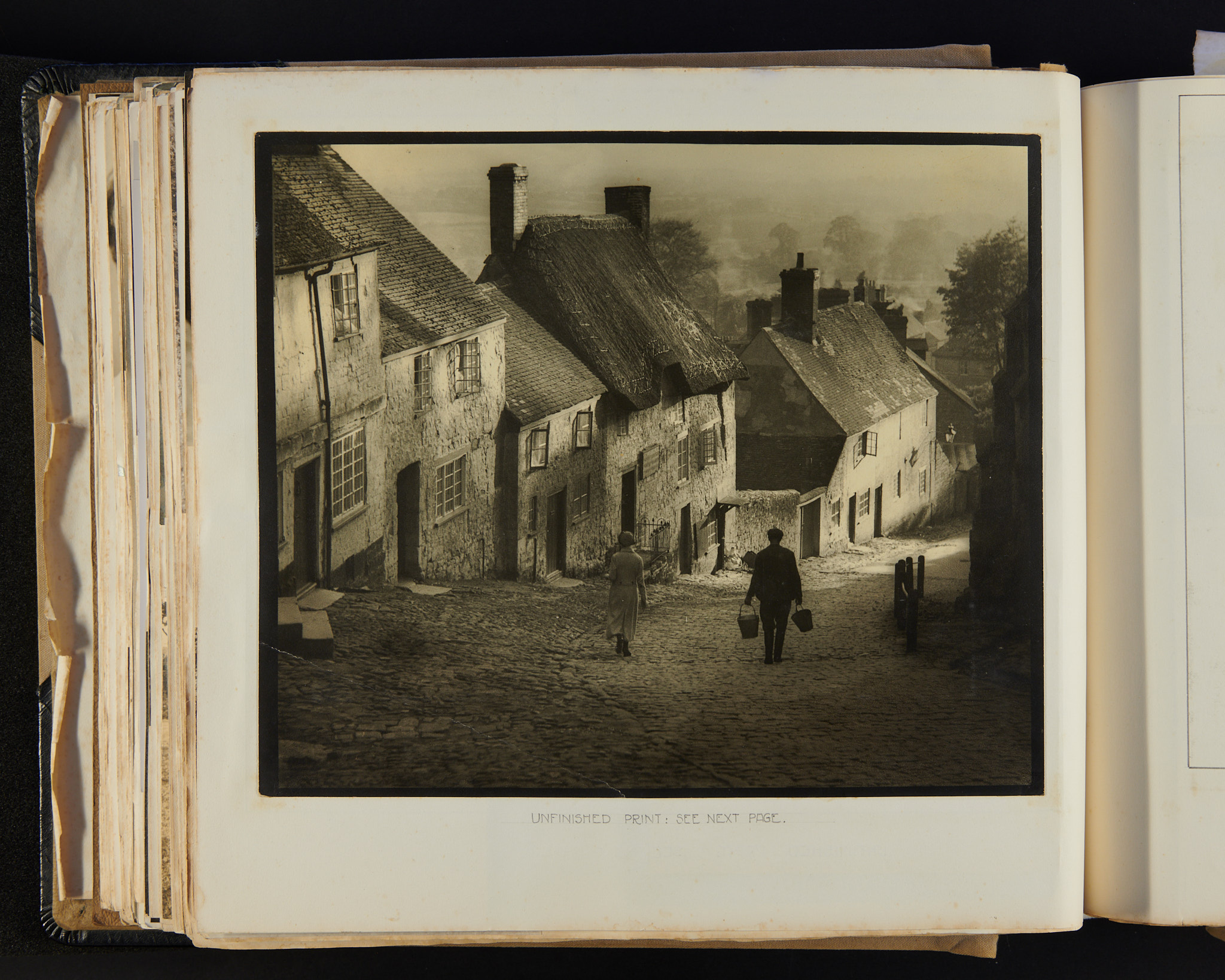
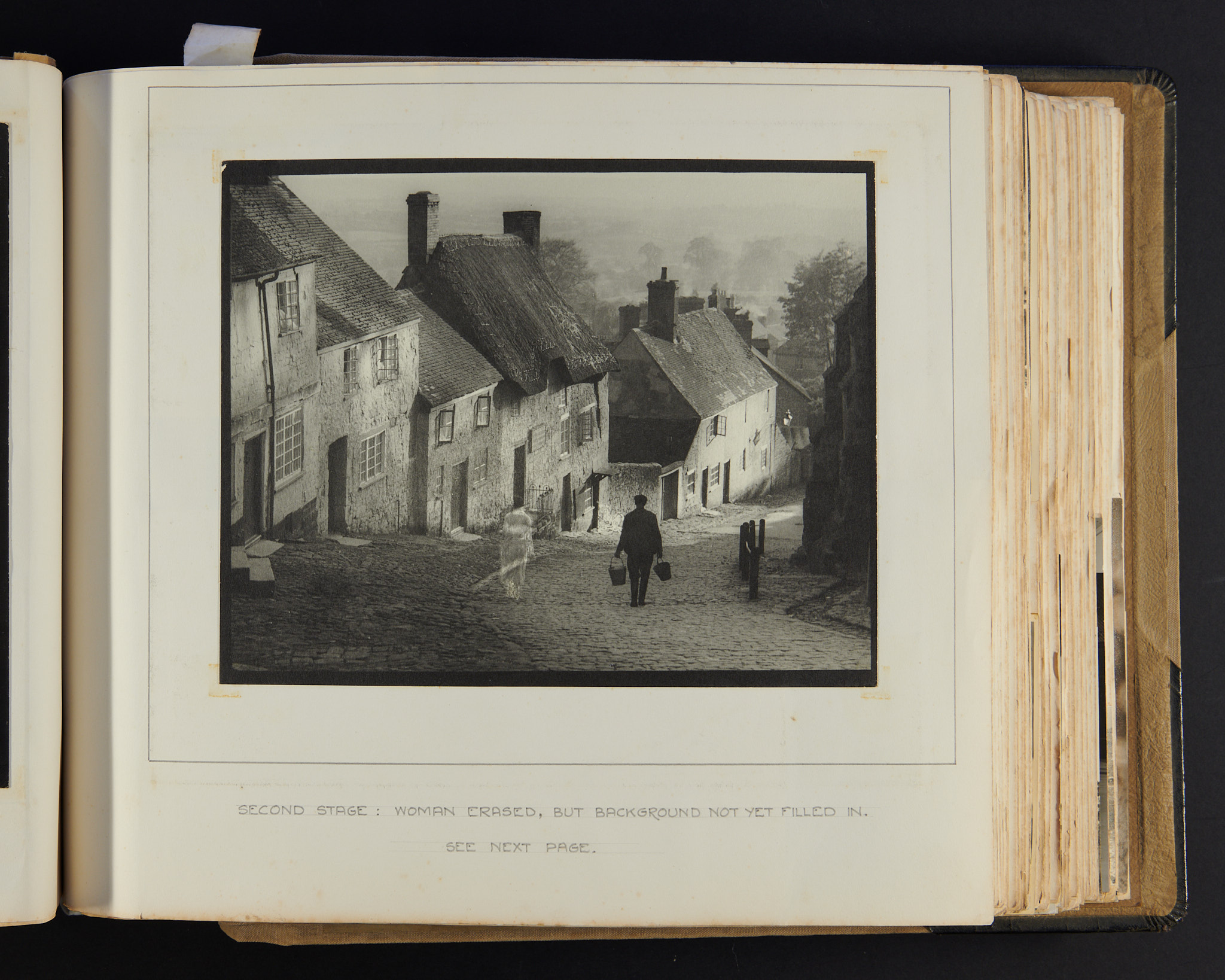
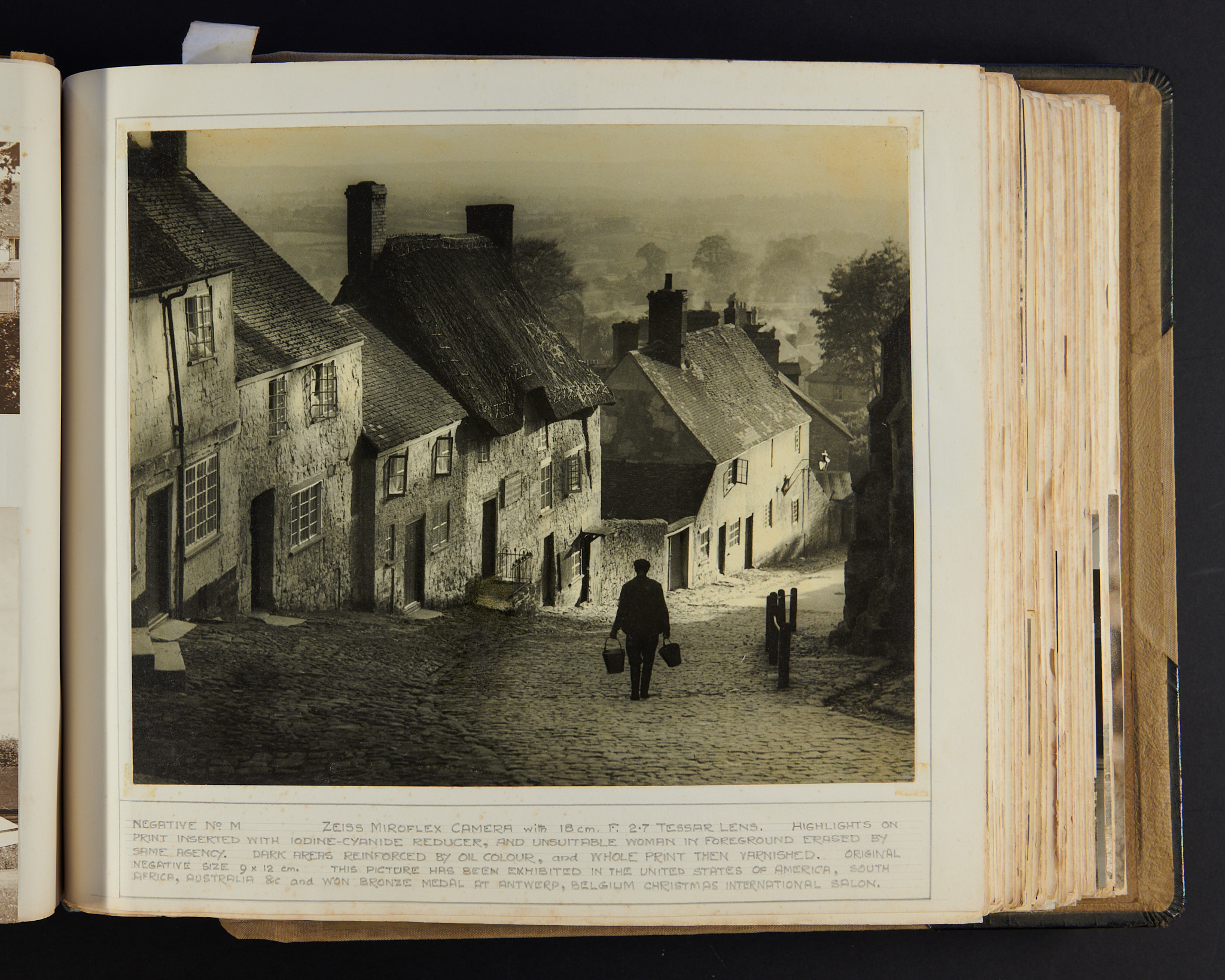
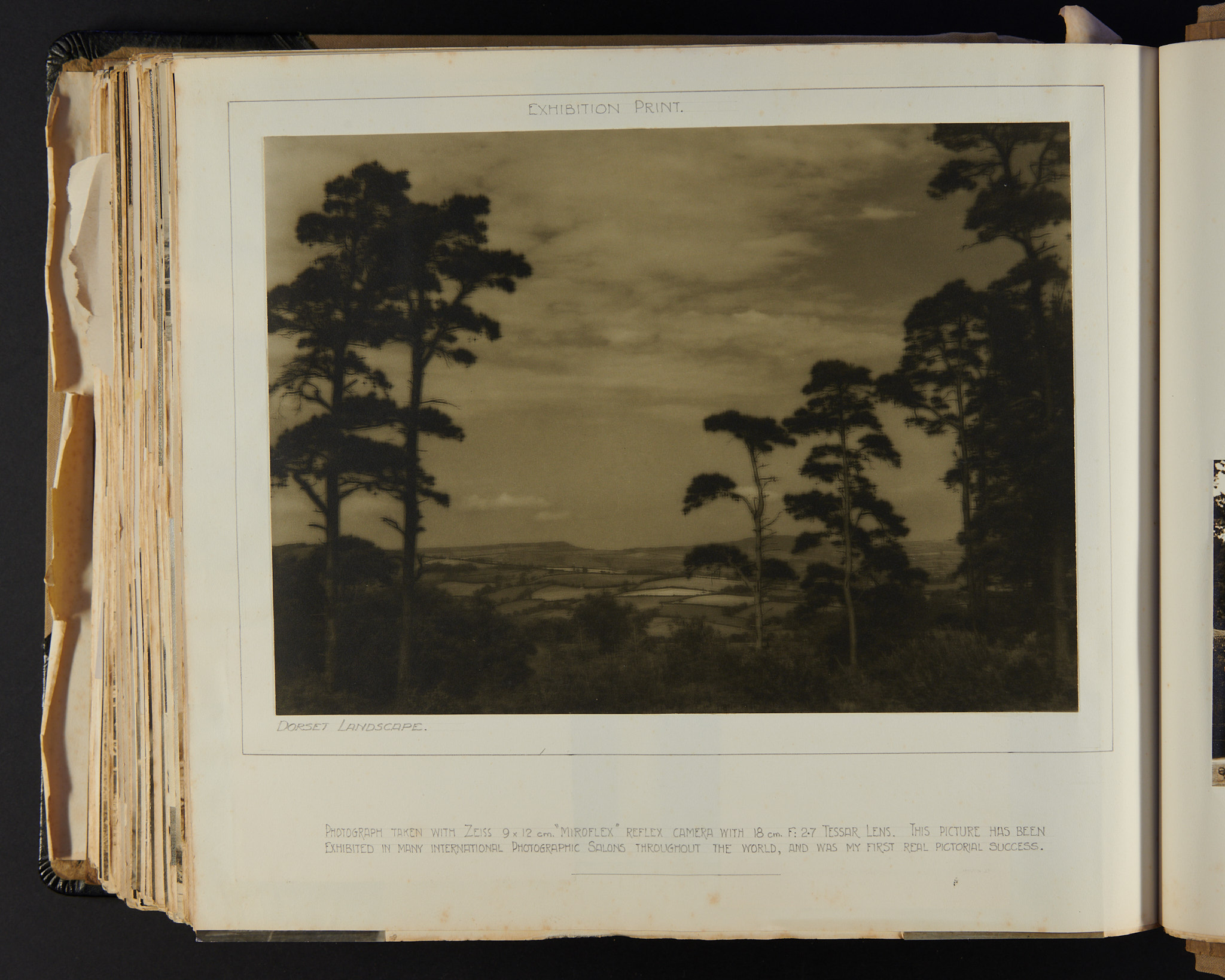
This photo was also exhibited in several International Photographic Salons:
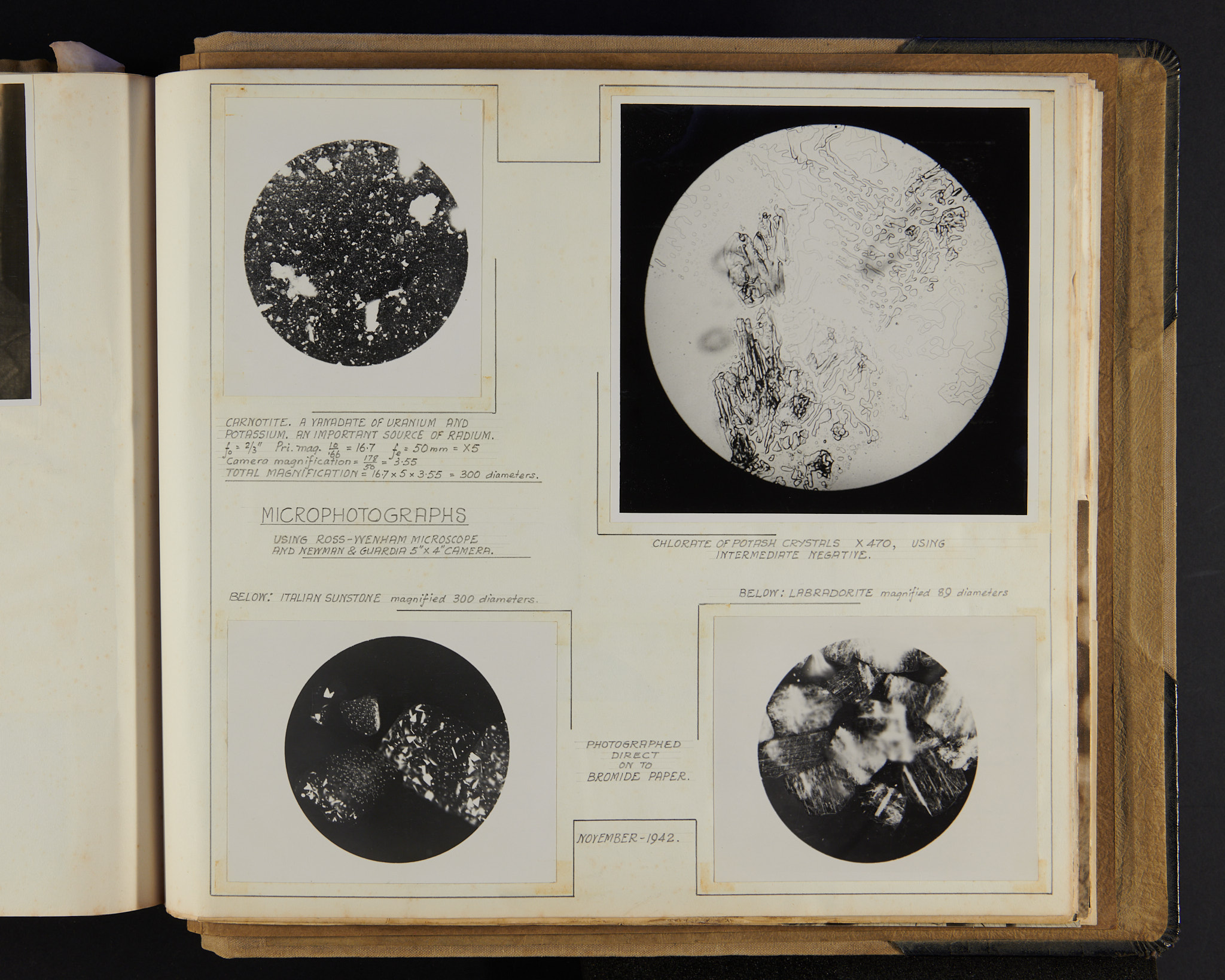
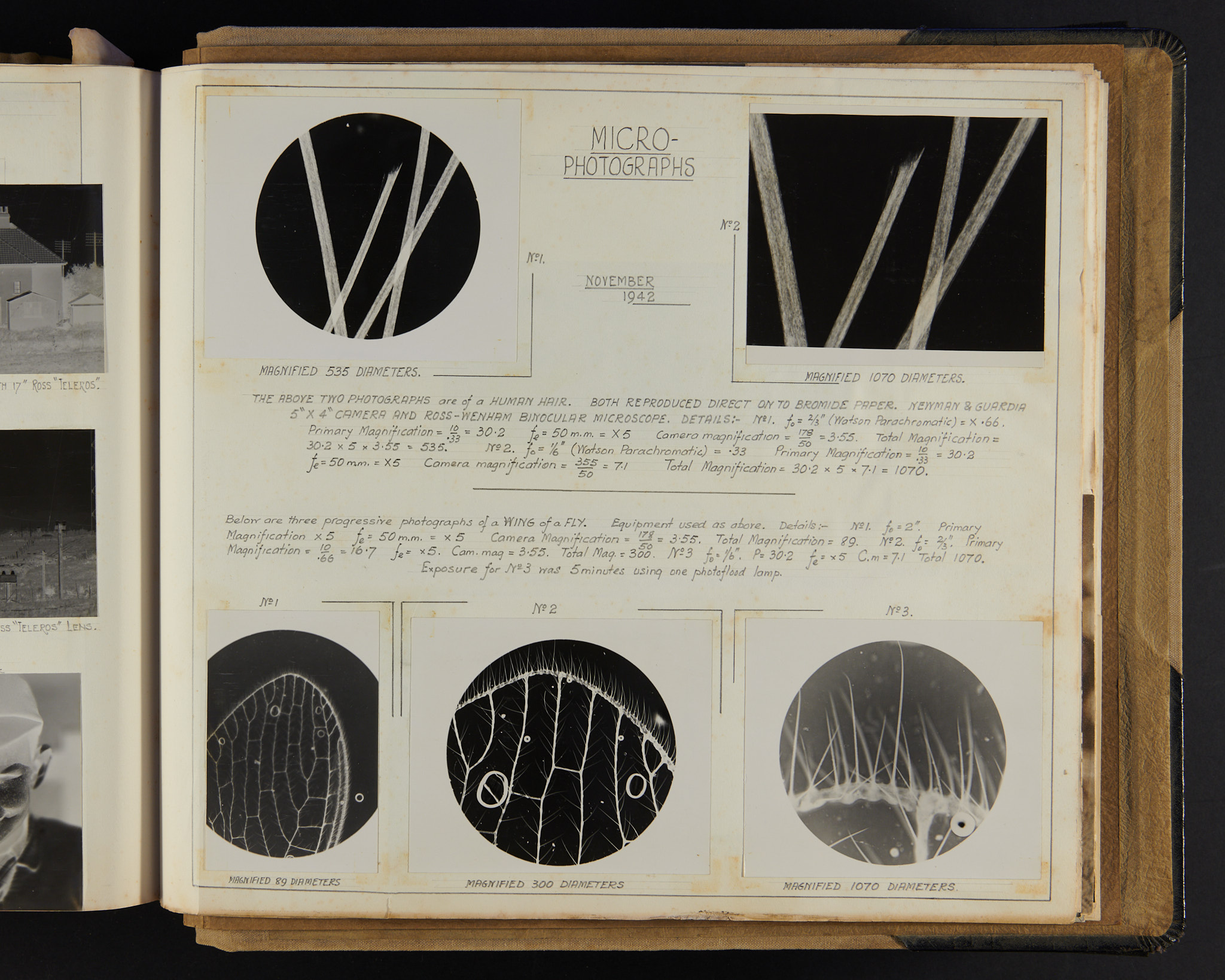
Mr Redshaw also enjoyed exploring a little microcopy:
Mr Redshaw had a good range of camera equipment and lenses, which he regularly put through their paces in various tests he undertook. One such example demonstrates his depth of knowledge:
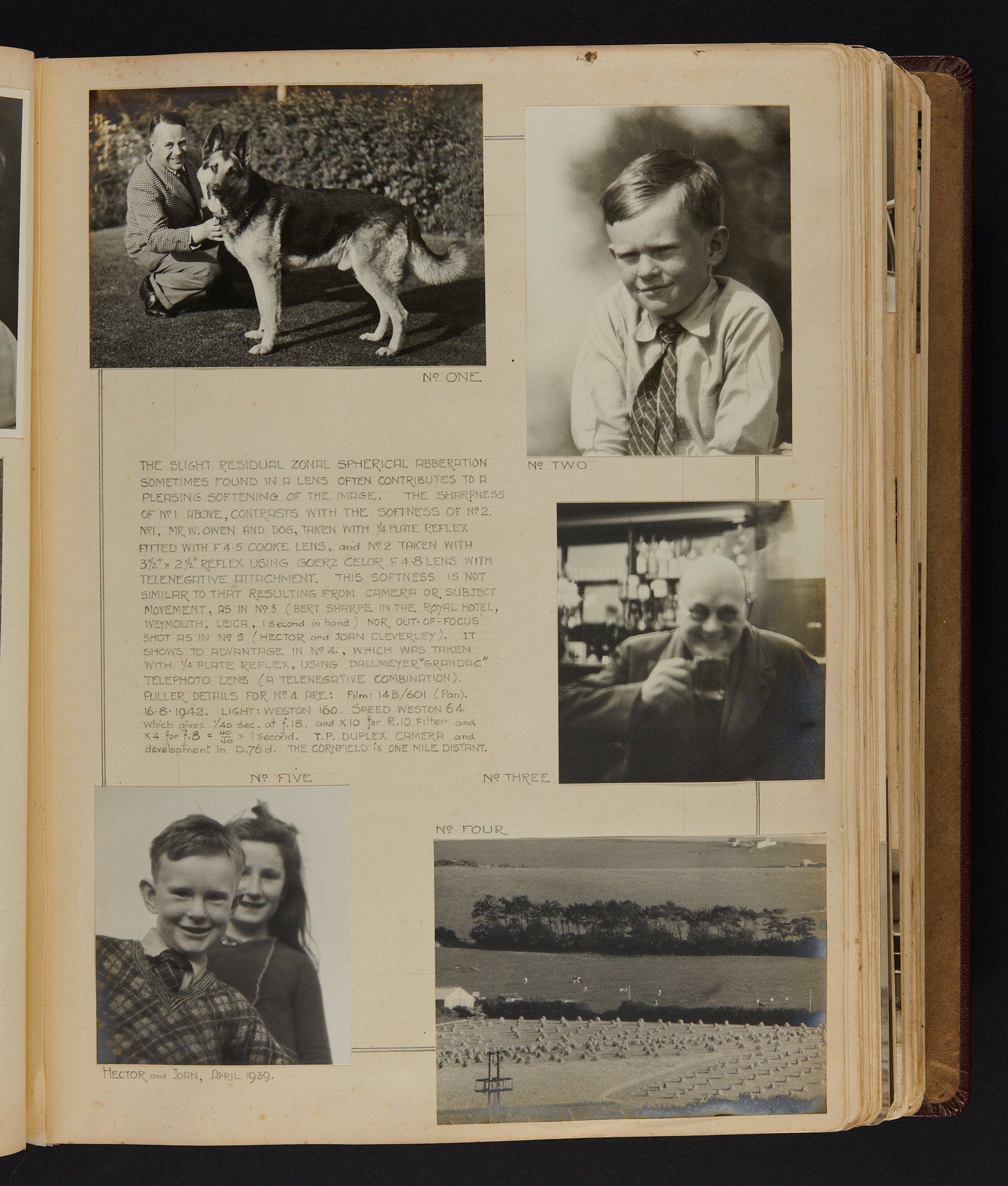
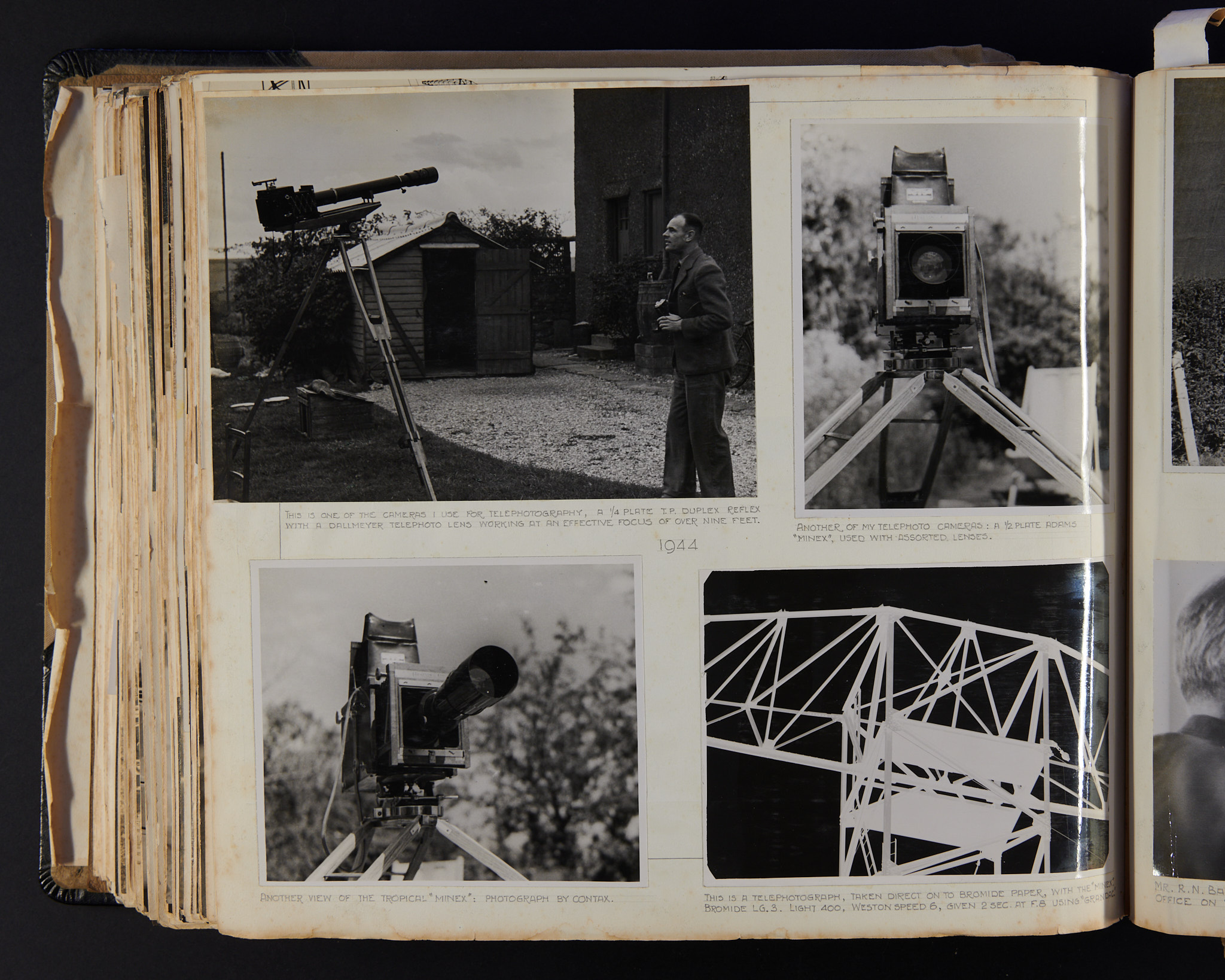
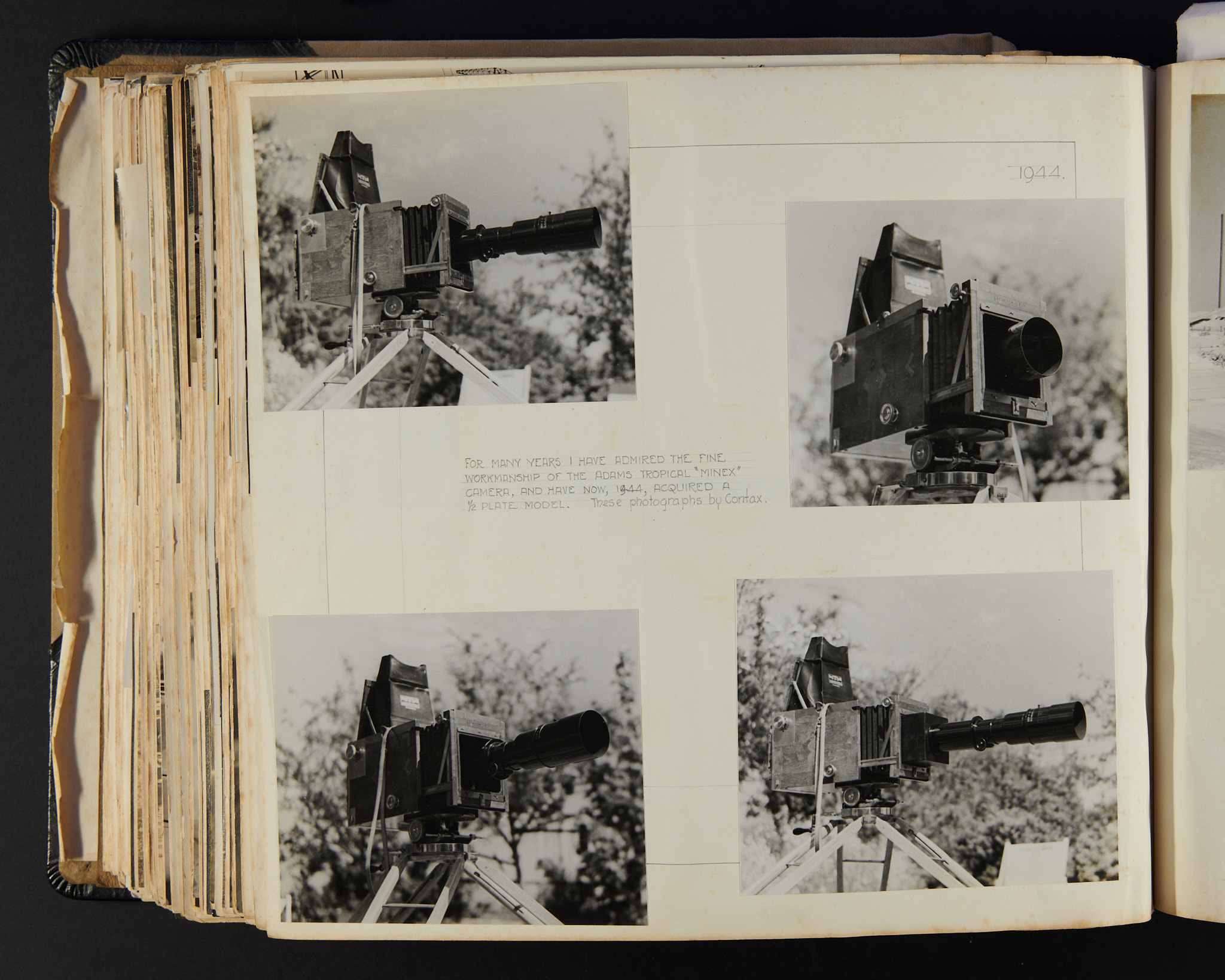
His equipment ranged from 35mm format through to large format cameras including Contax, Leica, 5×4 Newman & Guardia, Thornton Pickard ¼ plate duplex camera, together with a range of lenses icluding Zeiss, Sonnar, Ross, and Dallmeyer. It would appear that his favoured ‘go-to’ camera was the Contax.
We feel privileged to have been able to digitise these wonderful photograph albums, and to soon be the guardians of them, which hold so many stories from a very talented and energetic man. We invite you to explore this magnificent collection further, along with our other photographic collections held in our film and sound archive, which include original Daguerreotypes (the first patented form of photography in 1835, albumen prints, glass plates and much more!