

Dorset is unsurprisingly rich in maritime heritage given its multiple bays, harbours and coastline that stretches for close to 100 miles. However, that heritage is comprised of a mixed bag of fortunes and we have a newly catalogued box of images of shipwrecks that have occurred along our coast (D-DPA/2/WY/2/9). These are heavily concentrated around Portland where, despite the counter measures of a coastguard station, lighthouse and light ship, Portland Race and The Shambles create one of the most dangerous areas to shipping in the English Channel.
As we approach the anniversary of the collision, we have delved into our archives to explore the tale of tragedy and heroism that unfolded on the stormy night of 11th September 1877 when the passenger vessel, ‘Avalanche’, was struck by the Nova Scotia vessel, ‘Forest’, 12 miles South-West of Portland Bill.
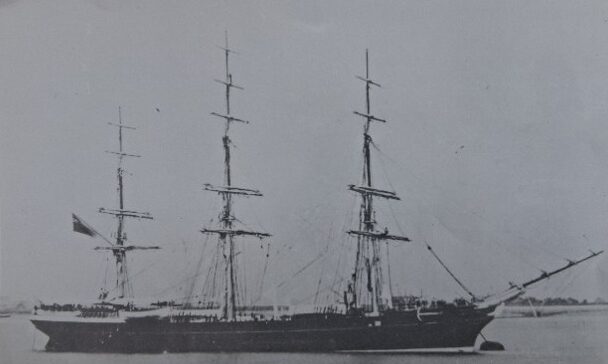
The Avalanche sank quickly and all bar three souls, who managed to clamber onto the Forest, were lost. As the Forest floundered, three boats with twelve men aboard them (the three from the Avalanche and nine from the Forest) put forth in a desperate bid for survival. After a turbulent night in wild seas, they were rescued the following morning off Chesil Beach by local Portland men who launched two lerrets, specially designed rowing boats for use in that treacherous location, to bravely come to their aid.
Our collections include the transcription of a contemporary account from The Somerset Gazette of 20th September 1877 (D-1767/1) which describes the incident as ‘one of the most disastrous catastrophes at sea which has been known for years.’ The Gazette also includes narratives from the survivors, which need to be read for the sheer horror of the events to be fully appreciated. William Meyer, a seaman of the Forest, stated of the Avalanche that:
‘There was a great rattling noise and in less than 3 minutes there was nothing of the strange ship to be seen – only some people on the top of the water who were screaming for help.’
He observes that the ‘shrieks and cries were dreadful’ and of his own escape remarks:
‘We then found our vessel leaking very much and took to our boats…..We were tossing about all night and expected every moment to be our last. It was with great joy we saw Portland beach at daylight, but this was counteracted by the heavy sea breaking on it and which we knew would render it impossible for us to land in our boat.’
These conditions could not deter the dauntless crews who ventured forth in the lerrets with The Gazette observing
‘no matter what the danger the brave Portland men have not been known to flinch from their noble duty of attempting to rescue shipwrecked people.’
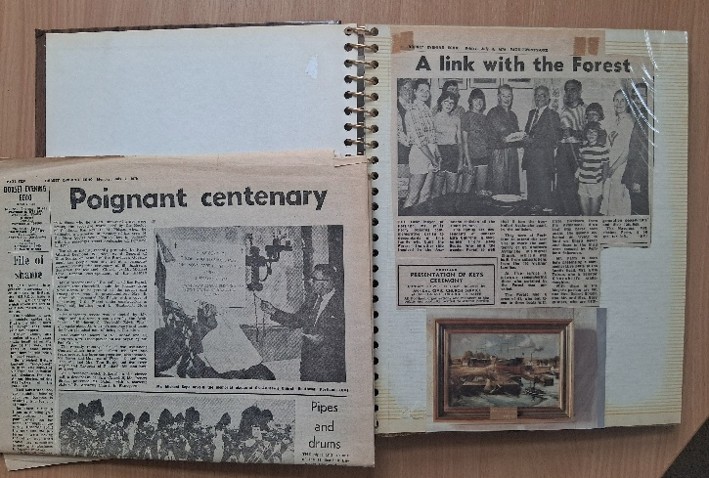
Those who risked their lives to save those of others neither were nor have been forgotten. An appeal made by the Rector of Portland raised funds for each of the lerret’s fourteen crew-members to be provided with a testimonial and a further £2,000 was raised by Public Subscription for a memorial, which took the form of St Andrew’s Church at Southwell, locally known as ‘Avalanche Church’, with the road which it faced being renamed ‘Avalanche Road’. A 1977 publication to mark the centenary of the wrecks includes details of the legacy borne out of the disaster as well as a copy of a poem framed on the wall of Avalanche Church that was written just a few days after the event and immortalizes the rescuers with the following lines:
‘For braver or more gallant men
Ne’er float in storm or clam.’